Ode to the dead: Why Gaya fills up every Pitripaksha season
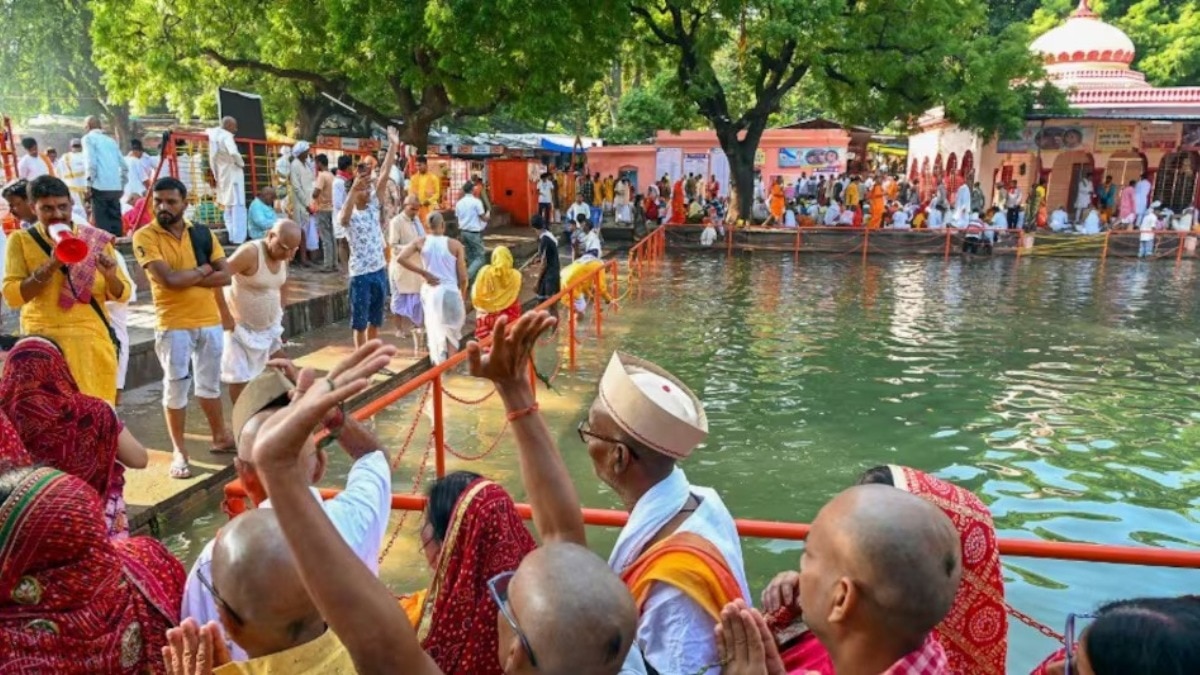
Every autumn, Gaya in Bihar becomes a city of the living praying for the dead. For a fortnight, families arrive with names, photographs, a little rice and a great deal of unfinished love. They come to perform pind daan for parents, grandparents and ancestors—a ritual through which the dead are remembered, fed and, in the religious imagination, helped towards release.
This is Pitripaksha, the annual fortnight devoted to ancestors. In 2026, the main pilgrimage season is being observed from September 25 to October 10 when this historic pilgrimage town would swell with people carrying the departed ones in their minds.
This is the time when, say, a son recalls his departed father and mother—and, with them, the unfiltered, overwhelming love they once gave him. Although pind daan is rooted in religious ritual, for the family it can become something deeply personal: a moment to bring the departed back into memory through tangible recollections—their voice, habits, sacrifices and the small gestures that once seemed ordinary but become precious with absence.
The ritual of memoryPind daan is deceptively simple. The pinda, usually made from cooked rice or other ritual ingredients, is offered as part of a sequence of prayers and rites. But the object is more important for what it represents. A small ball of rice becomes a vessel of memory: a father who died years ago, a mother whose photograph has travelled across states, a grandparent known perhaps only through stories.
Gaya occupies a special place in this ritual geography. The town's sacred landscape is spread across the Falgu river, Vishnupad Temple, Akshayavat and a much larger network of vedic and pilgrimage sites, including Pretshila and Sita Kund. The Gaya district's official pilgrimage portal lists numerous such ritual locations.
The religious traditions surrounding Gaya are much older than the modern pilgrimage economy. Puranic literature and local tradition associate the place with Gayasura, the demon whose body became the ground on which the tirtha was established. The story is theological rather than historical, but its influence on the ritual imagination of Gaya is profound.
Another deeply embedded tradition associates the town with Lord Rama performing pind daan for his father Dasharatha. That is the enduring power of Gaya: it turns an abstract idea—that the dead still matter to the living—into a physical journey.
The pandas and their booksAt the centre of this system are the Gayawal pandas, hereditary priests whose families have served pilgrims for generations. Their claim to ritual authority is rooted in tradition and lineage. Gayawal Brahmins have historically claimed hereditary and exclusive rights over particular ritual spaces and client relationships at Vishnupad. Their most remarkable possession, however, may not be the temple or the ritual platform. It is the bahi—the genealogical register.
For generations, pandas have maintained family records: names, villages, relationships, marriages and deaths. Pilgrims returning after decades may find their ancestors recorded in the same register that earlier generations consulted. The books are a private archive of Indian kinship.
They also explain something fundamental about the pilgrimage economy. The relationship between a panda and a family is not simply that of priest and customer. It is traditionally a continuing yajmani relationship, built around lineage and inherited association. The bahi establishes that traditional relationship, and that relationship remains central to the economic system surrounding the pilgrimage.
When tradition meets the modern pilgrimThe old system, however, is changing. More pilgrims now travel with smartphones rather than handwritten addresses. Families are increasingly dispersed across cities and countries. Some cannot make the journey at all. That is where the state's intervention becomes interesting.
The Bihar government and its tourism arm are no longer merely managing crowds. They are packaging parts of the pilgrimage experience itself. For the 2026 Pitripaksha season, the Bihar State Tourism Development Corporation (BSTDC) has listed special pilgrimage packages covering Gaya, Bodh Gaya, Rajgir, Nalanda, Patna and Punpun. It has also offered e-Pinddaan, priced at Rs 23,000, for people who cannot be physically present.
The service includes the priest, ritual materials, dakshina and rituals at specified sacred locations, along with video documentation. The state is not replacing the panda. Instead, it is inserting itself as organiser, price-list and, for the absent, proxy. That is a significant shift.
For centuries, access to the ritual has depended heavily on hereditary priestly networks. Now the government is attempting to make the pilgrimage legible to the modern tourist: packages, accommodation, helplines, online booking, transport and standardised information. The transformation is subtle. Tradition remains at the centre, but the state is increasingly building the infrastructure around it.
A city preparing for the deadThe logistical challenge is enormous. The administration is preparing temporary accommodation, transport arrangements, sanitation facilities, medical and security infrastructure and crowd-management systems for the annual influx. For the 2026 season, the state has also planned a 2,500-bed tent city in Gaya. The BSTDC has issued a tender for establishing the tent city for the Pitripaksha Mela.
The railways and district administration are preparing for heavy daily movement of pilgrims. Officials have been reviewing arrangements around Vishnupad and other major ritual points, including sanitation, safety and crowd management.
This is not merely an administrative exercise. Gaya's Pitripaksha season is now an important part of Bihar's religious-tourism economy. The government has, therefore, begun to treat the pilgrimage as both a sacred obligation and a large-scale public event.
For the families who come, the emotional centre is intensely private. Women have increasingly performed pind daan in Gaya, challenging older assumptions about who can undertake the rite. Back in 2016, for instance, a group of 35 American women travelled to Gaya and performed pind daan.
The change reflects a broader reality. Families are no longer organised around a single male heir living close to the ancestral home. Children live abroad. Daughters may be the closest relatives. In many families, the person carrying the strongest memory of a parent is not necessarily a son.
The economy of griefThere is another side to Pitripaksha: money. Pilgrims need transport, accommodation, food, priests, ritual materials and guides. The town's hotels, guesthouses, eateries, transport operators, vendors and priests all become part of the seasonal economy.
That creates a delicate balance. The pilgrimage has to remain accessible enough to preserve its religious character while the infrastructure around it becomes increasingly commercial. The state's packaged tours are one manifestation of this transition. So is e-Pinddaan.
There is an obvious tension here. Can a ritual that is rooted in family, memory and lineage be turned into a service that can be booked online? The answer, in practice, appears to be yes. The more interesting question is what is gained and what is lost in the process.
An online ritual can carry out prescribed acts. It can connect a family to a priest. It can provide photographs or video evidence that the ritual was performed. But it cannot reproduce the journey. And that journey matters.
For many pilgrims, Gaya is not simply the place where a ritual is completed. It is the place where grief becomes tangible, where a family stands at a river, says a name aloud, offers food and then walks away. The Falgu is an unusual centrepiece for such a pilgrimage.
In the dry season, much of the river can appear almost empty, its sandy expanse stretching beneath the sky. Yet this is precisely where generations of pilgrims have come to perform rites for their ancestors. That contrast—an apparently barren river carrying an enormous burden of memory—is part of Gaya's peculiar power.
Pitripaksha survives because it answers a need that neither technology nor modernity has erased. Families may now live in Delhi, Mumbai, Bengaluru, London or New York. They may book trains, consult digital maps and arrange rituals online. But the fundamental impulse remains old. A person dies. The family remembers. Someone must carry that memory forward. That is why Gaya continues to fill up every year.