Oh Se-hoon “I suspect the president may not be receiving proper reports···regret over ‘remark-passing’” - 경향신문

This article was translated by an AI tool. Feedback Here.
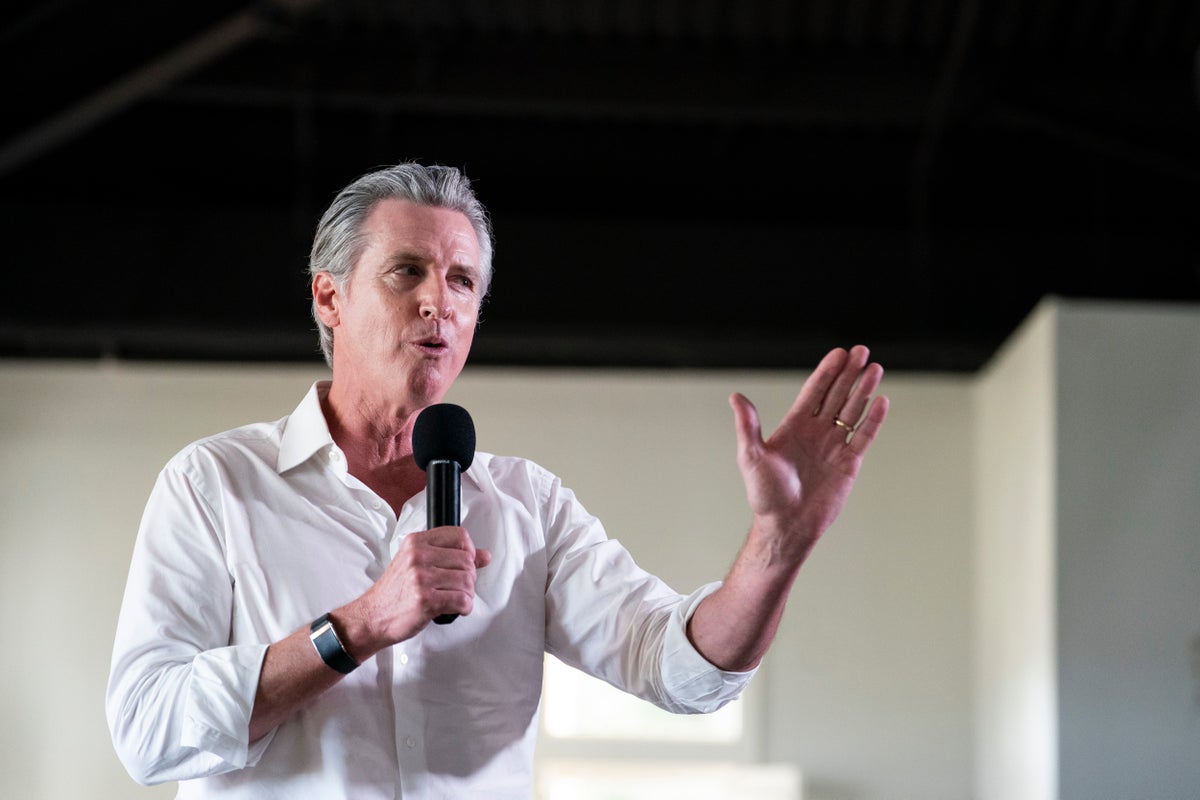
Seoul Mayor Oh Se-hoon speaks in the Seoul City Hall briefing room on the afternoon of the 14th about his impressions after attending the Cabinet meeting that morning. Provided by the Seoul Metropolitan Government
Seoul Mayor Oh Se-hoon, who attended the Cabinet meeting chaired by President Lee Jae Myung at Cheong Wa Dae on the 14th but did not receive an opportunity to speak, said, “I find it very regrettable and unfortunate that no chance to speak was provided.” He also voiced suspicion that the president may not be receiving proper reports from the relevant government ministries regarding housing supply issues in Seoul.
At a press briefing that afternoon, Mayor Oh repeatedly expressed regret over matters including ‘remark-passing’.
Earlier, at the Cabinet meeting, Mayor Oh sought to make a public statement regarding the real estate policy of the government but was stopped by Prime Minister Han Sung-Sook. Saying “I will accept it in writing,” Han blocked Oh from speaking, and Oh submitted only a 30-page policy proposal report prepared by the Seoul Metropolitan Government.
At the press briefing, Oh said, “A Cabinet meeting has procedures and time constraints, so I did not intend to present my suggestions at length,” and added, “I planned to summarize within about 10 minutes and ask that the rest be consulted in the report, but only the report was delivered and I did not have an opportunity to speak, which is quite disappointing.” He added, “I do not wish to view it as intentional passing.”
Oh continued, “As the president is expressing his own views on tax reform and measures to stabilize the housing market, it can be expected that presenting opposing opinions among Cabinet members would be very uncomfortable and difficult,” and said, “In that sense, I, as the mayor of Seoul, wanted to present at that venue some analysis and recommendations that might feel somewhat uncomfortable or awkward, and to convey them as smoothly as possible without resistance, but I am very sorry that my intent could not be realized.”
He also hinted at suspicion that the contents of more than ten recommendations that the Seoul Metropolitan Government has made to the Ministry of Land, Infrastructure and Transport do not seem to have been conveyed to the president at all. In other words, the president may not be receiving proper reports regarding housing policy for Seoul. Mayor Oh and Minister Kim Yun-Deok of the Ministry of Land, Infrastructure and Transport held an official luncheon in November last year and agreed to establish an official communication channel between Seoul and the Ministry of Land, Infrastructure and Transport for ongoing exchanges of views related to normalizing the housing market.
Oh said, “The president made a request along the lines of 'Please mention in the report the reasons why redevelopment and reconstruction in Seoul are being delayed,' but that is a misunderstanding,” adding, “It sounded like the president was entirely unaware that although the Seoul Metropolitan Government is doing its utmost, delays are occurring because cooperation is lacking from the Financial Services Commission, which oversees lending, and from the Ministry of Land, Infrastructure and Transport, which needs to handle the details of redevelopment projects.” He went on, “I believe there is a very high possibility that the president does not have an accurate perception of the situation.”
Oh continued, “I hope the president comes to know how the Ministry of Land, Infrastructure and Transport has behaved over the past year under the Lee Jae Myung administration, and that despite the Seoul Metropolitan Government directly delivering more than ten recommendations to the ministry and submitting materials, there has been no response at all. We will provide a second report detailing the background to date.”
Meanwhile, the report that the Seoul Metropolitan Government submitted to the government that day, under the theme ‘Three Areas and Eight Policy Tasks for Normalizing the Seoul Real Estate Market,’ sets out institutional improvement tasks in three areas: private redevelopment projects, private rentals, and taxation. The intent is to improve conditions for advancing redevelopment projects, restore the functions of private rental operators, and ease burdens on end-users to alleviate market instability.
Seoul Mayor Oh Se-hoon gives opening remarks at a Cabinet meeting chaired by President Lee Jae Myung at Cheong Wa Dae on the 14th. [Cheong Wa Dae Press Photographers Association]
By area, for private redevelopment projects, the city proposed raising the LTV for relocation financing to 70%, easing restrictions on the transfer of association member status, and relaxing to 1.2 times the legal maximum floor area ratio for private redevelopment projects. In the private rental area, it suggested easing LTV limits for purchase-type rental operators and applying exclusion from aggregation for the comprehensive real estate tax, as well as introducing a corporate-style private rental operator system. In taxation, it proposed freezing the fair market value ratio, maintaining the current long-term holding special deduction, and adjusting the tax bases for property tax and the comprehensive real estate tax to reflect inflation.
The city of Seoul particularly pointed out that, as a result of regulation-centered real estate policies, apartment prices in Seoul rose 11% year-on-year as of May, and that although the government, through the 10·15 measures, expanded the designation of regulatory zones and land-transaction permit zones across the entire city, the upward trend in housing prices has spread beyond the Gangnam area to outlying districts such as Yeongdeungpo, Gangseo, Gwanak, Dongjak, Seongbuk, and Seongdong.