Once-in-a-century crater discovered on the Moon after giant asteroid crash
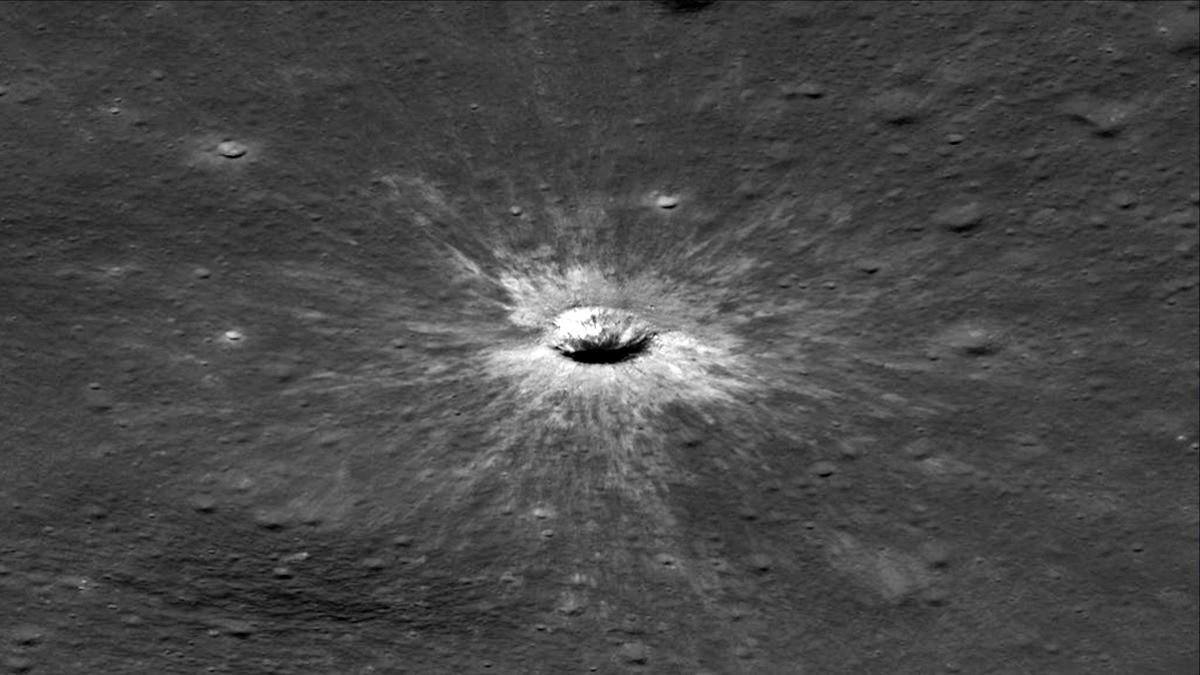
A giant crater formed on the Moon after a space rock potentially as large as a six-storey building slammed into the lunar surface in 2024 has been discovered by Nasa’s Lunar Reconnaissance Orbiter (LRO).
The newly formed crater, officially named McGetchin, is the largest newly formed impact crater ever identified in the Solar System, according to scientists reporting the discovery in Science Advances.
The crater formed on the Moon’s eastern edge sometime between April 11 and May 22, 2024, when a comet or asteroid estimated to be roughly the size of a three- to six-storey building struck the surface. The pattern suggested that lunar material had been disturbed by a recent impact. (Photo: Nasa)
The collision carved out a crater about 728 feet (222 metres) wide and 141 feet (43 metres) deep, roughly the length of two football fields across. Scientists estimate that an impact of this magnitude occurs on the Moon only about once every century or even less frequently.
The discovery began during what appeared to be a routine data-quality check. Robert Wagner, an image-processing specialist from Intuitive Machines working with LRO’s Lunar Reconnaissance Orbiter Camera (LROC), was comparing global lunar maps when he noticed an unusually bright spot surrounded by a dark halo.
The pattern suggested that lunar material had been disturbed by a recent impact.
Wagner compared images taken before and after the suspected collision and identified the telltale debris thrown outward from a new crater. Follow-up observations by LRO’s high-resolution Narrow-Angle Camera revealed the crater itself and allowed researchers to determine its dimensions.
LRO has been orbiting the Moon for more than 17 years, mapping its surface and monitoring changes. During its mission, scientists have identified at least 1,000 new impact craters and around 1,00,000 other surface changes associated with impacts and their debris.
The Moon is particularly vulnerable to such collisions because it has virtually no atmosphere to slow down or destroy incoming space rocks.
The impact also changed the lunar surface well beyond the crater.
Data from LRO’s Diviner instrument revealed a four-mile-wide cold region surrounding McGetchin. At night, this area is around 16 degrees Fahrenheit (9 degrees Celsius) cooler than the surrounding terrain.
Scientists say the cooling occurs because the impact churned and “fluffed up” the lunar soil, or regolith, making it less dense and reducing its ability to retain heat.
The finding shows that a major lunar impact can alter the surface far beyond the crater itself — changes that could eventually matter for lunar rovers, landers and future human exploration.- EndsPublished By: Sibu Kumar TripathiPublished On: Sep 17, 2026 10:54 IST