One year of Madlanga: 110 witnesses, 26,000 pages and arrests that rocked SA’s criminal justice system - IOL
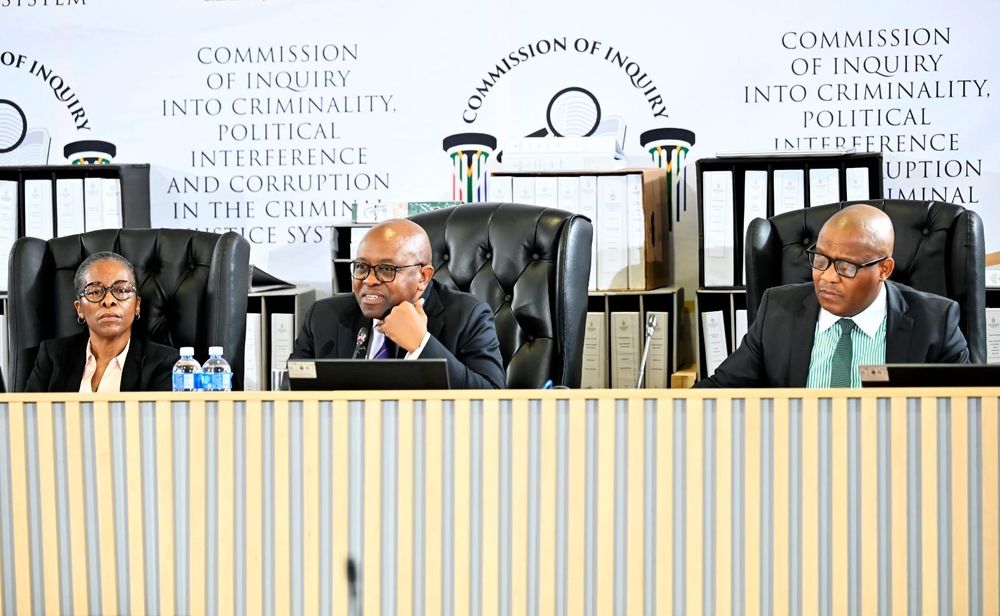
The Madlanga Commission reaches one year milestone.
After a year of hearings, the Madlanga Commission says it has gathered a vast body of evidence and that its work has already been followed by arrests, charges, suspensions and resignations in the criminal justice system.
The commission reached the one-year milestone on September 17, after 174 days of hearings and testimony from 110 witnesses.
Chaired by Justice Mbuyiseli Madlanga, the commission was established after President Cyril Ramaphosa, following allegations by Lieutenant General Nhlanhla Mkhwanazi during a July 6 media briefing.
Its mandate is wide-ranging: to investigate whether criminal syndicates, including drug cartels, have infiltrated or exerted undue influence over key institutions responsible for policing, prosecution, intelligence, corrections and justice.
Among the institutions under scrutiny are the South African Police Service, the Hawks, the National Prosecuting Authority, the State Security Agency, metropolitan police departments in Johannesburg, Ekurhuleni and Tshwane, the Department of Correctional Services and the Judiciary.
The commission said the inquiry has produced a substantial evidentiary trail.
By September 16, testimony had generated 26,352 pages of transcripts, while documentary evidence amounted to 105,282 pages spread across 750 files or bundles.
The witnesses have included 36 SAPS officers, 25 Hawks officers, officials from metropolitan police departments, the NPA and anti-corruption bodies, as well as members of Parliament, a Cabinet minister, private individuals and experts assisting with possible institutional reforms.
But the inquiry's impact has extended beyond the hearing room.
The commission said a number of people who appeared before it have since been arrested, charged, brought before courts, suspended or resigned.
Those developments, however, do not amount to findings of guilt by the commission, with criminal allegations remaining subject to due legal process.
The inquiry has also highlighted the risks faced by those who provide evidence.
The commission paid tribute to Marius van der Merwe, who testified as Witness D before he was assassinated on December 5, 2025 in front of his family.
His death has become a stark reminder of the dangers confronting people who come forward with information.
Public interest has also been substantial. The commission's hotline received 1,894 calls, although 78% fell outside its mandate. Of 4,548 emails received, 72% were likewise deemed out of scope.
The inquiry has faced legal challenges, including three High Court applications. One was dismissed and two were withdrawn. A recusal application against an Evidence Leader was also dismissed.
The commission said its work is not yet finished.
Its next phase will continue examining evidence and developing recommendations on possible reforms to criminal justice institutions.
The commission said it will continue its work without fear, favour or prejudice.