One year on, Master case reshapes Brazil’s financial oversight - Valor International
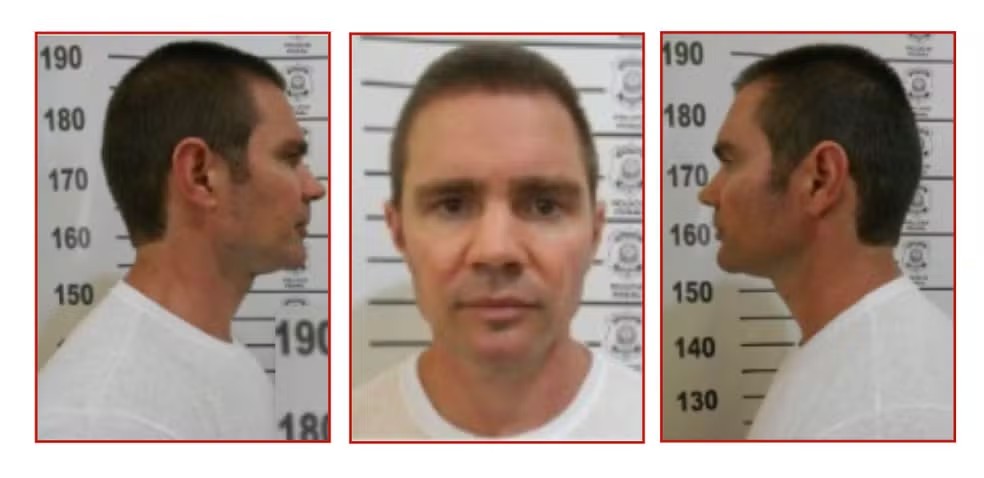
“Are you in the air?” lawyer Walfrido Warde asked at 11:05 p.m. on November 17, 2025. The WhatsApp message was addressed to Daniel Vorcaro, then the controlling shareholder of Banco Master. There was no immediate reply. The two spoke briefly by phone 14 minutes later, records from the former banker’s cellphone show.
By then, a Federal Police officer had already placed Vorcaro under arrest at Guarulhos Airport as he attempted to board his private jet bound for Dubai, with a stopover in Malta. The following morning, his unconventional banking career would come to an end when regulators ordered Master’s extrajudicial liquidation. The widespread damage caused by the case, however, was only beginning.
One year on, the bank’s collapse has left nearly R$76 billion in losses, Valor estimates. It has also led to the extrajudicial liquidation of 15 financial institutions, including those directly affiliated with Master and others with close ties to the bank. The scandal shook Brazil’s institutions by exposing the co-optation of officials across all three branches of government and revealed the inner workings of a lavish lifestyle marked by favors for friends and intimidation of adversaries.
Brazil’s Credit Guarantee Fund (FGC) absorbed R$58 billion of the losses, compensating depositors who had purchased Master’s bank certificates of deposit (CDBs) and covering losses on financial assistance provided to the group. Because the fund is financed by banks, lenders such as Itaú Unibanco, Bradesco, Banco do Brasil, and dozens of others effectively picked up the tab for Vorcaro’s financial conglomerate, potentially increasing borrowing costs in a country where interest rates are already exceptionally high.
Master’s dealings with Banco de Brasília (BRB) also inflicted substantial damage on the lender, which now needs a capital injection of more than R$8 billion to repair its balance sheet. The bank, controlled by the Federal District government, purchased fraudulent loan portfolios and subsequently attempted to acquire Master itself—a move later found to have been driven by corruption. Paulo Henrique Costa, BRB’s former CEO, who is now in custody, received luxury apartments as bribes, Federal Police investigators say.
State and municipal public pension funds (RPPS) were also hit hard after investing in CDBs and financial notes issued by Vorcaro’s group, particularly when Master was already struggling to sustain its FGC-backed fundraising machine. Losses at these pension funds total R$3.2 billion, leaving thousands of retirees facing uncertainty. Rio de Janeiro state pension fund Rioprevidência accounts for the largest share, at R$2.3 billion.
Companies that purchased Master securities suffered an estimated R$2.2 billion in losses. Some were pushed into financial distress by the bank’s collapse and began restructuring their debts. Most are businesses backed by Vorcaro and his partners or by businessman Nelson Tanure, an ally of the group. Oncoclínicas, Emae, Dia, and Ambipar are among the companies whose investments in securities linked to Master were wiped out.
The scandal also engulfed the little-known Fictor, which had been expanding outside the regulatory perimeter of Brazil’s Securities and Exchange Commission (CVM). Hours before his arrest, Vorcaro announced a surprise agreement to sell Master to Fictor. Not only did the deal fall through, but the crisis also brought down Fictor, which filed for judicial restructuring with R$4.3 billion in debt.
The final bill, however, is likely to far exceed the losses identified so far. There have been numerous indirect repercussions, and additional costs may still emerge. Banco Digimais, for example, was already struggling before purchasing loan portfolios originating from Master that showed signs of fraud. The bank, owned by evangelical bishop Edir Macedo, has requested a multibillion-real loan from the FGC to facilitate its acquisition by BTG Pactual.
Despite the turmoil it unleashed, Master’s failure reaffirmed the resilience of Brazil’s financial system, which absorbed the shock without major difficulties. The FGC spent nearly half its cash reserves compensating Master depositors, but the banking industry agreed to bring forward contributions. The reserves, designed to safeguard financial stability, will gradually be replenished.
The Central Bank continued to act diligently despite revelations from police investigations that two of its employees, now suspended, had received bribes from Vorcaro. Since Master’s liquidation, the regulator has moved to shut down a series of institutions it identified as being linked to the scheme.
Among them was Reag, the asset management firm founded by João Carlos Mansur, who recently signed a plea agreement. Banco Pleno, owned by Augusto Lima, a former business partner of Vorcaro, was also liquidated, along with Banvox and Trustee, both owned by Maurício Quadrado, another former Master partner.
Also brought down were Entrepay and two other companies owned by Antônio Carlos Freixo Jr., known as Mineiro. He transferred money from Vorcaro to finance the production of “Dark Horse,” a biographical film about former President Jair Bolsonaro of the Liberal Party (PL).
Two weeks ago, Renato Gomes, a former Central Bank director responsible for financial system organization and resolution and now president of the Brazilian Association of Banks (ABBC), said the financial system would emerge stronger.
“It prompted changes to the FGC, sparked a debate about investment funds, and led to improvements in Central Bank governance. It was a costly event, but the financial system will be more resilient as a result,” Gomes told Valor.
A prominent banking industry figure shares that assessment. He noted that the Central Bank has introduced new regulations, including leverage limits and clearer asset eligibility rules for institutions raising funds backed by FGC guarantees.
More recently, the regulator launched a public consultation on the role of investment platforms, which profited from distributing Master’s CDBs without alerting customers to the risks. Next year, the Central Bank is also expected to introduce measures to address “moral hazard” among investors.
“The traditional approach to banking supervision has always focused heavily on liabilities and leverage. The Master case turned out to be a lesson for Brazil and even for the world about the importance of examining assets. There’s little point in keeping fundraising within regulatory limits and even maintaining low leverage if the bank is buying court-ordered government payment claims. The risk increases substantially,” the source said.
Fábio Coimbra, who spent 21 years at Brazil’s Central Bank and also worked at the Bank for International Settlements (BIS), known as the central bank for central banks, said it would eventually be necessary to review the findings of investigations and supervisory proceedings to determine whether the regulator failed in its duties.
“Sophisticated fraud does not eliminate the need for supervisory scrutiny and action. At the same time, the existence of fraud does not prove a supervisory failure.”
Coimbra said there was no guarantee that a similar episode would not happen again.
“No financial system can promise that no institution will fail or that no fraud will occur. The goal is to make it harder for the same modus operandi to be used again.”
Roberto Luis Troster, former chief economist at the Brazilian Federation of Banks (Febraban), takes a somewhat more critical view. He said the Master case demonstrates the soundness of the financial system but also underscores the need for structural reform of regulatory bodies.
“It’s something of a déjà vu of Banco Santos 20 years later. There were a series of failures involving the Central Bank, the CVM, auditors, and rating agencies. It’s time to overhaul the entire framework for supervising financial intermediation, as the United Kingdom did. We need to reorganize the Central Bank, the CVM, and Susep [Brazil’s insurance regulator] and create a second line of defense. Otherwise, this could happen again.”
Master used an intricate network of layered investment funds to conceal holdings of illiquid, hard-to-value assets, including court-ordered government payment claims and claims awaiting formal issuance.
It also relied on a circular lending scheme involving companies, some of them fronts and others required to reinvest the borrowed money in Master’s own funds, allowing the bank to divert resources.
In April, the Central Bank and the CVM signed a technical cooperation agreement extending the coverage of Brazil’s Credit Information System (SCR) to securitization companies and other CVM-regulated entities. Experts say, however, that blind spots remain where the two regulators’ jurisdictions overlap.
Master’s liquidation also brought down Reag, which had become Brazil’s largest independent fund administrator. Although Mansur had consistently denied any wrongdoing, he agreed to cooperate with investigators under a plea agreement.
Last week, the Central Bank closed the inquiry associated with Reag’s liquidation. Although serious administrative violations and indications of criminal activity were identified, a technical accounting review concluded that third parties had suffered no losses.
The decision, however, does not end other investigations into Reag and its controlling shareholders, who remain under scrutiny by law enforcement and regulatory authorities.
Entrepay’s Freixo also signed a plea agreement. The payment acquirer’s liquidation affected not only its direct customers but also Nubank, which had purchased receivables from Entrepay. In its quarterly results released last week, the fintech disclosed a financial impact of approximately $100 million stemming from the episode.
The dispute between Nubank and Entrepay’s liquidator sparked a broader debate within the payments industry. The Central Bank’s legal department weighed in, reaffirming its interpretation that financial flows associated with payment arrangements are governed by Brazil’s Payment Transfer Law.
At issue is the registration of card receivables transactions between participants further upstream in the payment chain. Such transactions may now become subject to registration requirements to prevent the same receivables from being assigned twice.
Another structural debate followed the collapse of Will, Master’s subsidiary targeting low-income consumers. Its liquidation resulted in billions of reais in losses for Mastercard, the payment network behind Will’s cards, which is seeking to share the financial burden with merchant acquirers.
In November last year, the Central Bank approved regulations clarifying that payment networks are responsible for ensuring that all transactions are settled with payment recipients. Card networks had until the end of May this year to submit revised operating rules, which still require regulatory approval.
In the investment industry, Fictor’s judicial restructuring has triggered a legal and regulatory debate over the use of silent partnerships (SCPs). The structure allowed Fictor to raise billions of reais from individual investors through contracts promising periodic returns but offering no FGC protection.
One year after Master’s liquidation, BRB’s fate remains uncertain. The Federal District-owned lender has not published financial statements since the second quarter of last year, has lost nearly one million customers, and risks losing some of the court deposits that represent an important source of revenue.
Bahia’s Court of Justice intends to transfer its funds to Caixa Econômica Federal but has been prevented from doing so by a Supreme Court ruling.
BRB has managed to survive because the Federal District government has directed an even greater share of its financial transactions through the lender. Unless a solution to its capital shortfall is found soon, however, the bank risks some form of regulatory intervention.
Vorcaro’s legal defense did not respond to a request for comment. Last week, his lawyers renewed their request for the Supreme Court to revoke his detention and asked its longest-serving justice, Gilmar Mendes, to rule on urgent matters.
This article was translated from Valor Econômico using an artificial intelligence tool under the supervision of the Valor International editorial team to ensure accuracy, clarity, and adherence to our editorial standards. Read our Editorial Principles.