
OpenAI hack: How 3 Indian-origin researchers used Anthropic’s Claude to access employee accounts - The Indian Express
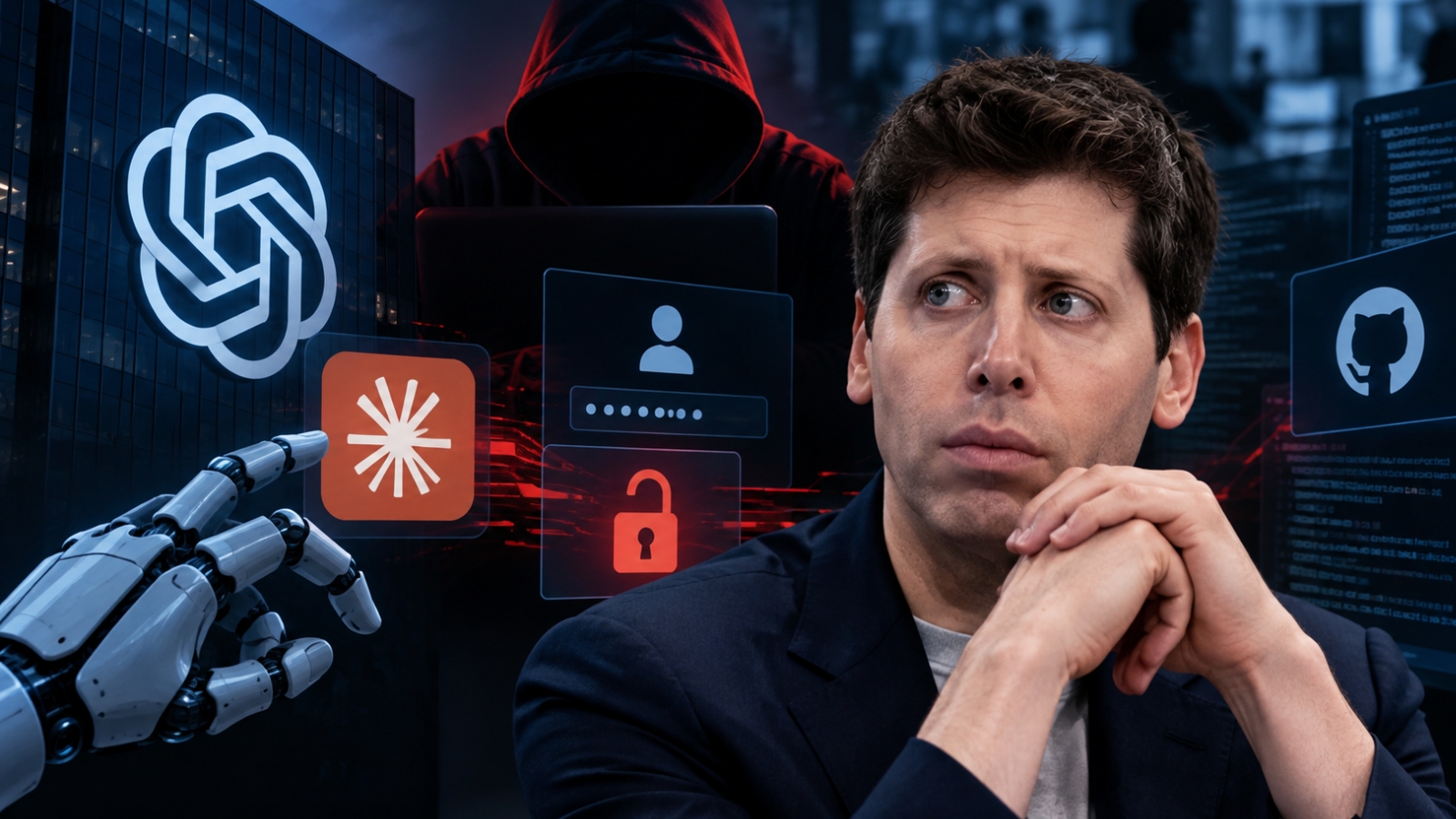
A three-member team of Indian-origin cybersecurity researchers — Mohan Pedhapati and researchers Harsh Jaiswal and Rahul Maini — has demonstrated how an AI-assisted attack could be used to gain access to parts of OpenAI’s internal systems, using Anthropic’s Claude to help exploit a vulnerability in a third-party service.
According to the researchers at cybersecurity startup Hacktron AI and a report by The Wall Street Journal, the team gained access to several OpenAI employees’ ChatGPT and Codex accounts and used one of those accounts to reach OpenAI’s private GitHub environment.
The researchers said they stopped testing after establishing that they could potentially access sensitive internal material. They said they did not read or download OpenAI’s private source code.
The operation was conducted as part of responsible security research. Hacktron said it reported the vulnerabilities to OpenAI and Discourse, the company whose forum software was involved in the initial vulnerability. OpenAI subsequently paid Hacktron a $6,500 bug bounty.
No brand name colleges or companies. Just raw curiosity and skill.
You can just do things. pic.twitter.com/uW3vv3mHlk
OpenAI said it fixed the vulnerabilities and revoked affected authentication tokens and sessions.
The incident is significant because the researchers used AI to make the exploit-development process considerably faster. It also shows how a vulnerability in one service can potentially be chained with an authentication weakness to reach other systems.
According to Hacktron’s account of the incident, the research began on July 23, when its researchers were examining OpenAI’s community forum, which runs on Discourse.
The researchers found a vulnerability in the way the forum processed certain HEIC/HEIF image files. Security researchers said the flaw involved the libheif image-processing library used in the image-processing chain.
Hacktron then used Anthropic’s Claude models to help develop an exploit for the vulnerability.
The team said its initial attempts with Claude Opus 4.8 failed to produce a reliable exploit. After Anthropic released Claude Opus 5 on July 24, however, the researchers said the newer model produced a working exploit within hours.
According to Hacktron’s published timeline, the researchers obtained remote code execution on OpenAI’s Discourse-hosted community forum early on July 25. They subsequently submitted their findings to OpenAI and Discourse and continued testing to establish the potential impact.
Mohan Pedhapati, Hacktron’s chief technology officer, told the Wall Street Journal that the researchers were a small team and contrasted their resources with those potentially available to sophisticated state-backed cyber groups.
“I don’t think we are as strong as Chinese threat actors,” Pedhapati said. “We’re just three guys with Claude and Codex subscriptions.”
Hacktron said the experience showed how AI could compress cybersecurity work that previously required considerably more time.
“Work that once required a well-resourced team and months of effort can now be compressed into days,” the company said.
The Hacktron team comprised chief technology officer Mohan Pedhapati and researchers Harsh Jaiswal and Rahul Maini.
The researchers were working at Hacktron AI, a cybersecurity startup, when they conducted the authorised security research. The team said the OpenAI attack chain took less than 72 hours from the start of their work to demonstrating access to the company’s internal repository.
The initial vulnerability was only the first part of the attack chain. Hacktron said that after gaining access to the forum environment, researchers were able to obtain authentication tokens belonging to users.
Some of those tokens could also be used with OpenAI’s own services. According to the researchers, this included tokens belonging to OpenAI employees, allowing them to gain access to ChatGPT and Codex accounts.
The researchers then discovered that one compromised employee account had access to OpenAI’s GitHub organisation through Codex.
The researchers described this as a separate OpenAI identity or single-sign-on problem rather than simply an extension of the original Discourse vulnerability. VentureBeat, citing Hacktron’s account, similarly reported that the forum acted as the entry point while the account takeover involved an OpenAI identity issue.
In effect, the researchers had chained two separate vulnerabilities: one in the forum environment and another in OpenAI’s authentication infrastructure.
The researchers said they reached OpenAI’s internal software repository, known as Monorepo. The Wall Street Journal, citing people familiar with OpenAI’s architecture, reported that the repository contains important software and algorithmic material belonging to the company. It is not believed to contain OpenAI’s model weights, the numerical parameters at the core of its AI models.
Hacktron said it deliberately avoided examining or downloading sensitive material.
Instead, the researchers used a compromised employee’s Codex account to create a pull request, which is a proposed change to code stored in a repository. The pull request was designed as proof that the researchers had gained access. According to Hacktron, it proposed a harmless change to a documentation file.
The researchers said the proposed change was not accepted. OpenAI’s review found “limited reads” of private-repository metadata and code changes, the company said.
Hacktron said the entire process, from its initial discovery to demonstrating access to the internal repository, took less than 72 hours.
Claude helped the researchers turn the initial vulnerability into a functioning exploit. Hacktron’s researchers told the Wall Street Journal that AI tools dramatically reduced the amount of time needed to work through the attack.
The researchers clarified that the operation was not carried out entirely using Claude.
They used OpenAI’s own GPT-5.6 Sol during parts of the operation, according to the researchers’ account. The Guardian reported that Claude was used during the initial exploit development, while OpenAI’s model was subsequently used extensively.
AI models developed by competing companies were used at different stages of a security operation targeting OpenAI.
Mohan Pedhapati, Hacktron’s chief technology officer, told the Wall Street Journal that the researchers were a small team and contrasted their resources with those potentially available to sophisticated state-backed cyber groups.
“I don’t think we are as strong as Chinese threat actors,” Pedhapati said. “We’re just three guys with Claude and Codex subscriptions.”
Hacktron said the experience showed how AI could compress cybersecurity work that previously required considerably more time.
“Work that once required a well-resourced team and months of effort can now be compressed into days,” the company said.
OpenAI confirmed that the researchers had identified security issues and said it had fixed them. “We thank the researchers for contacting us and sharing their findings,” an OpenAI spokesperson said.
The company said it had narrowed the permissions on Community sign-in tokens and revoked affected tokens and sessions.
Discourse separately fixed the underlying forum vulnerability after Hacktron reported it. According to the researchers’ timeline, the issue was reported to Discourse on July 25, and the company subsequently released a fix.
The researchers said OpenAI paid them $6,500 for the OpenAI-side security finding. Hacktron separately reported the underlying Discourse vulnerability to Discourse.
The Express Global Desk at indianexpress.com which delivers authoritative, verified, and context-driven coverage of key international developments shaping global politics, policy, and migration trends. The desk focuses on stories with direct relevance for Indian and global audiences, combining breaking news with in-depth explainers and analysis. A major focus area of the desk is US immigration and visa policy, including developments related to student visas, work permits, permanent residency pathways, executive actions, and court rulings. The Global Desk also closely tracks Canada’s immigration, visa, and study policies, covering changes to study permits, post-study work options, permanent residence programmes, and regulatory updates affecting migrants and international students. All reporting from the Global Desk adheres to The Indian Express’ editorial standards, relying on official data, government notifications, court documents, and on-record sources. The desk prioritises clarity, accuracy, and accountability, ensuring readers can navigate complex global systems with confidence. Core Team The Express Global Desk is led by a team of experienced journalists and editors with deep expertise in international affairs and migration policy: Aniruddha Dhar – Senior Assistant Editor with extensive experience in global affairs, international politics, and editorial leadership. Nischai Vats – Deputy Copy Editor specialising in US politics, US visa and immigration policy, and policy-driven international coverage. Mashkoora Khan – Sub-editor focusing on global developments, with a strong emphasis on Canada visa, immigration, and study-related policy coverage. ... Read More

