
Opinion | Before you vote: Why the GTA needs every type of home — not just condos - Toronto Star
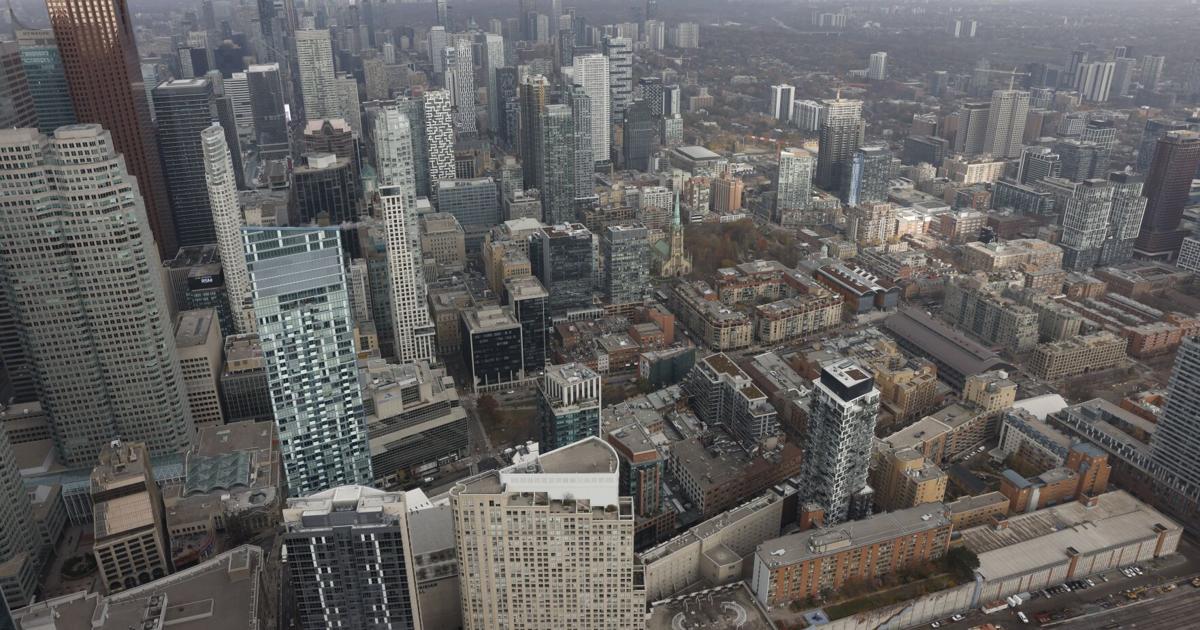
When more normal market conditions return — and they will — we will be right back to needing more of everything.
Toronto’s skyline tells the story of a region hemmed in by geography and economics.
Dave Wilkes is President and CEO of the Building Industry and Land Development Association (BILD), the voice of the home building, land development and professional renovation industry in the GTA. For the latest industry news and new home data, visit www.bildgta.ca.
Ahead of municipal elections, it is customary for me to use this column to provide perspective and insights into housing matters affecting the Greater Toronto Area (GTA). My objective is to share information that will help voters evaluate platforms and campaign promises before voting day.
Recently, commentators have argued that the mix of new housing being built in Toronto and the GTA is wrong, and that government policy is responsible for the mismatch and the resulting slowdown in sales of condominiums. These are gross oversimplifications to a complex challenge.
While government land use policies do call for intensification and increased density, this is only one reason we have seen a proliferation of highrise and higher-density housing.
Geography has placed Lake Ontario on the region’s southern border, and many municipalities — including Toronto, Mississauga, Pickering, Newmarket and Burlington — are built out to their boundaries — with no room to expand.
The city of Toronto, for example, has rigid borders and no prospect of municipal expansion, meaning large-scale greenfield suburban development simply isn’t possible there.
This brings us to economics. Available land is scarce, and because it is scarce, it is expensive. That scarcity makes single-family homes or townhomes unaffordable for most buyers, pushing development toward higher-density, multi-family infill housing. The closer to downtown Toronto, the greater the economic pressure.
One common argument — that municipal development charges (DCs) actually encourage condominiums because a condominium DC is typically half that of a single-family home — doesn’t hold up under scrutiny.
Development charges are imposed based on the municipal services and infrastructure that residents generate. Larger homes can house more people, triggering greater demand for services and infrastructure — hence higher charges.
There is also infrastructure efficiency built in by high-density construction, assuming that the infrastructure is in a state of good repair and not in need of upgrading.
On a per-square-foot basis, condominium or apartment DCs are actually nearly double those applied to a single-family home — running counter to the idea that policy favours intensification. To absorb those costs while keeping units affordable, developers have faced downward pressure on unit sizes.
Which brings me to the “shoebox” debate.
Critics often deride new apartments as “shoeboxes in the sky.” But according to Altus — BILD’s official source of market intelligence — the average GTA condominium unit sold in July measured 800 square feet.
A quick comparison of other major cities will show that the average apartment in New York City is 779 square feet; in Montreal, 750 to 880; in Chicago, 748; in London, U.K., 667 to 721; and in Washington, D.C., 745.
The overall GTA average, across all buildings regardless of age, is roughly 850 square feet.
The “shoebox” label is a convenient shorthand. The data doesn’t support it.
There are many other factors reshaping the GTA market. Demographic shifts, declining immigration levels, the intentional reduction of international students and non-permanent residents, international trade tensions and tariffs, and shrinking household sizes are all weighing on demand.
On the flip side, the federal government has extended the new home HST rebate program to all buyers of new homes, and municipalities are announcing development charge reductions with increasing frequency.
These measures are working their way through the market, but most are temporary. When they expire, we will be back where we started: a region that needs more housing of every type.
As October’s municipal election approaches, please keep this in mind: yes, we need changes to land use policy to ensure a better mix of housing (although this is largely a provincial matter). But when more normal market conditions return — and they will — we will be right back to needing more of everything — condominiums, rental apartments, townhomes, stacked townhomes, semis, single-family homes and everything in between.
Dave Wilkes is President and CEO of the Building Industry and Land Development Association (BILD), the voice of the home building, land development and professional renovation industry in the GTA. For the latest industry news and new home data, visit www.bildgta.ca.
Dave Wilkes is President and CEO of the Building Industry and Land Development Association (BILD), the voice of the home building, land development and professional renovation industry in the GTA. For the latest industry news and new home data, visit www.bildgta.ca.
Opinion articles are based on the author’s interpretations and judgments of facts, data and events. More details


