
Opinion | Carol Off: Here’s what the American midterms mean for Canada - Toronto Star
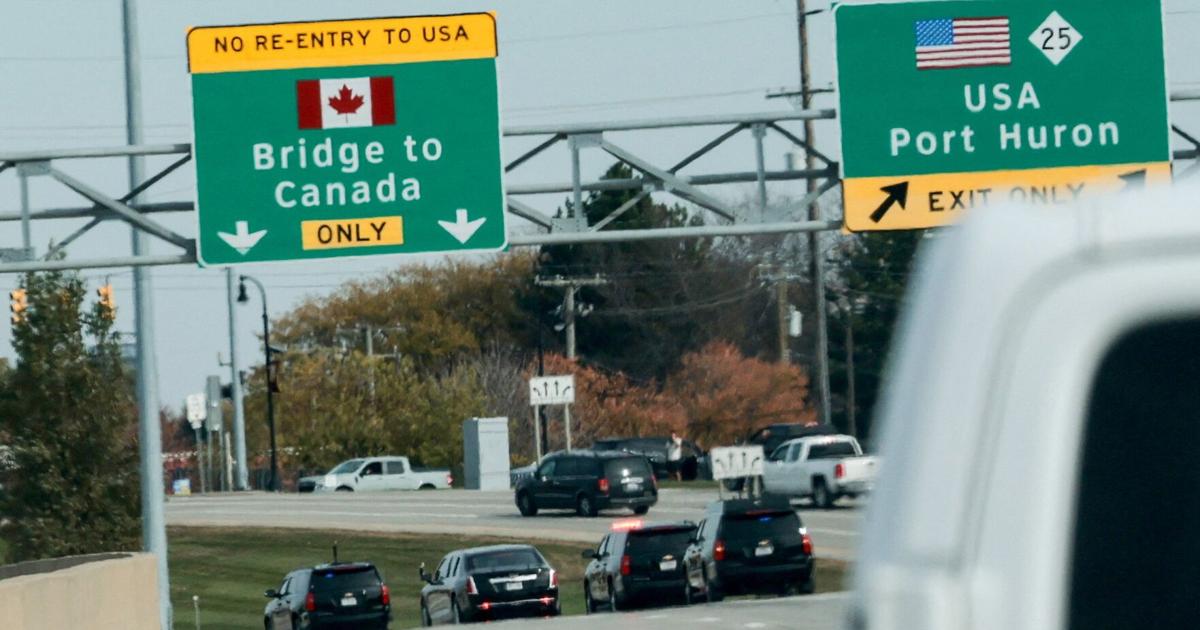
What will the U.S. midterms mean to Canada? According to Carol Off, the big changes have already been made.
Carol Off is a veteran journalist and for sixteen years was the host of CBC Radio’s “As it Happens.” Her latest book is "True Patriot Love: Reporting from the Front Lines of Canadian Sovereignty”
What might change for Americans after the midterm elections on Tuesday? Possibly a lot.
We will still have a US president determined to bring us to our knees. And we’ll still have an American public that seemed only to really care about Trump’s threats to annex Canada, or to at least cripple its economy with tariffs, when it began to impact their own lives.
But politically, everything has already changed for Canadians. In a good way.
We have a newfound confidence and, along with it, more clarity on what we want for a sovereign Canada. Albertans have just overwhelmingly decided to remain a part of this national experiment in pluralism and democracy just as the United States is abandoning those principles. And there’s a new sense of what true patriot love might mean for Canadians in the third decade of the 21st century.
Donald Trump may have thought he was being mischievous when he first challenged our right to exist as an independent nation in North America. But mischief is often bullying, and bullying can backfire. Trump’s talk of annexation forced many Canadians to focus on a difficult subject — Canadian identity. We didn’t immediately have satisfactory answers for questions raised by Trump’s offensive jibes: What is Canada? Why do we even exist? Is it just that we’re not Americans? We took our sovereignty for granted even if we were unable to articulate its meaning. Were the symbols of our independence sufficient? A flag. A Parliament. A constitution. A belief in our moral purpose.
The suggestion that Canadian sovereignty was basically a myth, that our nation had no inherent right to belong, was a possibility we had never really thought about. Unlike Indigenous Peoples who were driven off their land, we’ve never been forced to qualify our right to be here. But now we’re living in a new reality where we need to be able to articulate what was, until now, little more than a feeling. As we watch the United States deteriorate, succumbing to violence at home and abroad while flirting with authoritarianism, we can see what it is we don’t want to be. And the picture of the Canada we want to be is coming into focus.
My first sense of this new Canada came in February, 2025, during the 4 Nations Face-Off hockey series. That was just a month after the inauguration of Donald Trump, at a time when he made it clear that his ambition to turn Canada into the fifty-first American state was more than just a tasteless joke. Those game nights had all the raw ingredients for full-on jingoism, and yet the swelling Canadian national anthem, belted out by tens of thousands of Canada jersey — wearing fans in Montreal (with Quebec nationalists likely among them), was, as the announcer said of Canada’s victory, “the tournament we didn’t know we needed.”
Just as powerful, and more poignant since it was completely unexpected, was the opening performance of “Swan Lake” at the Four Seasons Centre in Toronto weeks later. The elegant hall was packed to the rafters with wealthy patrons of ballet. Conductor David Briskin strode to his podium and raised the baton not to elicit the first chords of Tchaikovsky but to trigger the kettle-drum opening rumble of “O Canada.” In videos of the moment, you hear a gasp from the audience and then a cheer goes up. Some people leap to their feet while others don’t seem to know the drill, struggling to rise in their bespoke suits and evening dresses.
The audience clearly feels a shock of recognition and, at the same time, is somewhat dumbfounded as they are swept up into something they had likely consigned to sports arenas, not highbrow concert venues. Maybe they even found the anthem’s familiar words awkward in their mouths, like an old song remembered from childhood. Conductor Briskin later said of his unannounced tribute to Canada, “This is just a straightforward moment of clarity and unity and a little bit of catharsis.”
The singing of “O Canada,” in English and often mangled French, has since become a staple of public events as the Canadian flag has suddenly become ubiquitous. There’s a fine line between patriotism and tribalism, but I think we are well within the bounds of civility. Glimmers of civic pride now catch us unaware. It seems unlikely that we will turn away from these feelings of belonging.
Our chances for survival as a nation now depend on our resistance. The threats to our sovereignty aren’t limited to Trump. But he’s planted an idea in the minds of many Americans, and once they have the taste of conquest in their mouths, it will be hard for them to forget it.
How do we resist? By decoupling as much of our economy, our security and our culture from the United States as possible, even though that won’t be easy. Our business leaders have enjoyed the spoils of their corporate subjugation for too long. Our provincial governments are clinging to their fiefdoms. And we have become complacent.
There are other dark forces that we must resist. Belonging is, on its surface, a benign quality, a potentially warm wrap of acceptance. But belonging is at the behest of others. To legally belong in the United States and in Europe is an ever-narrowing question of identity. And it’s not a stretch to compare the 2020s of the United States with the 1930s of Germany; echoes of Nazism are a hallmark of the speeches Marco Rubio and JD Vance are making around the world. We know those echoes reverberate in many parts of Canada.
As attitudes harden, Canadians may soon ask themselves difficult questions about the nature of belonging in this country. Will it come to mean the belonging of exclusion, a fear of the other, an identity that shrinks and tightens into something mean and narrow? Will it deny a job to a woman in a hijab, refuse to acknowledge a young person’s gender, decline health care to a refugee, develop land and resources without recognizing treaties and agreements, turn against immigrants? Or will it be a belonging that finds a larger purpose for Canada, an expansive, tolerant and shared reason for being?
Some years ago, an Afghan friend of mine was forced to flee his country when warlords he had denounced wanted him dead. Asad Aryubwal lived in exile with his family for years in hostile Pakistan, before finally finding refuge in Hamilton, Ontario.
In his early weeks of life in his new country, with his family cramped in a small shelter space, Asad looked for things to do on cold winter days. He discovered Tim Hortons and the simple, inexpensive pleasure of a double-double, buying along with his coffee a chance to sit for an hour in a window seat overlooking the streets as he tried to make sense of the bewildering, often terrifying, years he had spent before arriving here.
One day a sneering woman approached him and demanded, “Why don’t you go home to where you belong?” Asad calmly responded, “I am home.” He might have added, “And I belong here now.” I couldn’t have been prouder of him or the country that took him in. And I’m not prepared to give up on that country or its values.
I made many trips abroad during my career in TV and radio, covering stories in countries that were suffering war, invasion, natural disasters or breakdowns of one kind or another. Each time I returned to Canada, I was immensely grateful, not just to be home but also to have one. I was in a safe refuge with clean water, friends and family, where I could speak my mind freely and not look over my shoulder for the authorities. I took those things for granted. Living in a place of peace, order and good government was enough for me. And Canada didn’t ask for much in return.
Donald Trump’s threat to take this away from me, this place where I belong, has forced me to re-evaluate the meaning of the word “home.” And now, awakened to a deeper understanding of its value, I intend to be vigilant. Everything has changed. We have a lot of questions about who we are. Now we can find those answers closer to home.
Error! Sorry, there was an error processing your request.
There was a problem with the recaptcha. Please try again.
You may unsubscribe at any time. By signing up, you agree to our terms of use and privacy policy. This site is protected by reCAPTCHA and the Google privacy policy and terms of service apply.
Carol Off is a veteran journalist and for sixteen years was the host of CBC Radio’s “As it Happens.” Her latest book is “True Patriot Love: Reporting from the Front Lines of Canadian Sovereignty”
Opinion articles are based on the author’s interpretations and judgments of facts, data and events. More details


