Opinion | Does Pierre Poilievre know who his actual enemy is? Hint: it’s not Mark Carney - Toronto Star
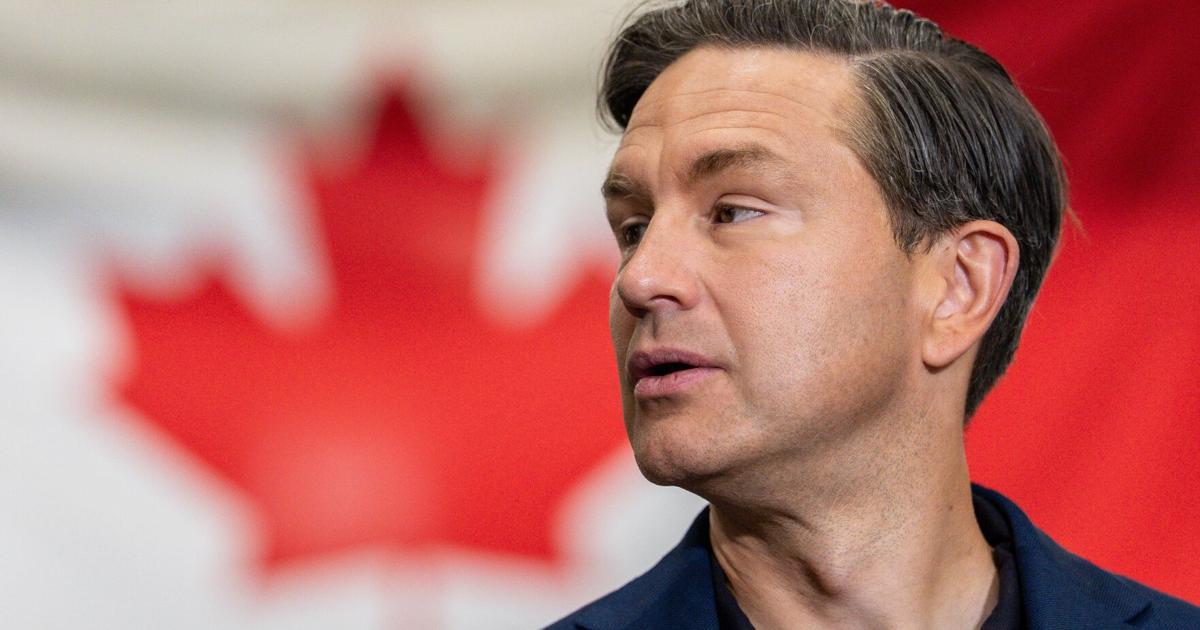
Conservatives in Canada pay too much attention to online partisans.
Conservative leader Pierre Poilievre needs to find better ways to form an opposition than what his online fans are focused upon, writes Andrew MacDougall.
Andrew MacDougall is a director at Trafalgar Strategy and was communications director to former prime minister Stephen Harper. He is a senior policy fellow at the Centre for Media, Technology & Democracy at McGill University
“Our people hate trade deals. Like, they f—king hate them. Do you understand?”
The morning meetings between the prime minister’s top advisers were sometimes punchy affairs. But it was also where the government was connected to the political party guiding said government. The verbatim(ish) quote above was the kind of thing said by the person tasked with reporting what the Conservative party was hearing about the Conservative government on doorsteps across the country. If memory serves, those bon mots were delivered in response to Canada joining the Trans Pacific Partnership (which wasn’t a vote winner for Sally in Saskatoon).
But how quickly that feedback comes and in what format matters. During my time in government, the loop between government action and party feedback could be quick (see: Mike Duffy) or slower (trade deals), depending on the size of the sin. But in almost all cases it didn’t come at internet speed. Real people had to have conversations with real people only for other real people to collate said conversations and relay them to the mother ship. There was time to digest and consider before making any course corrections.
Which brings us to Pierre Poilievre and the digital forces now fracturing his leadership. The Conservative leader appears caught between a hyperactive online army that thinks one thing, and a country that wants another. And right now, Prime Minister Mark Carney is carrying the country.
In a properly functioning opposition leader’s office, there should be someone around the table saying things like: “Some of our people love Donald Trump, but the country hates him. Like, they f—king hate him. Do you understand?” But even if that person exists, they are not effective.
How else to explain the Conservatives coming out hard against a prospective deeper partnership with Europe or moaning about a carbon tax when Donald Trump threatens to buy potash from Belarus? Memo to the Conservatives: There is an enemy in this story, but his name is Donald Trump, not Mark Carney. That’s why people like Stephen Harper and Jason Kenney are happy to support their prime minister.
Meanwhile, Poilievre said Canada will “never be the 28th state” of the European Union, to a rally of, surprise surprise, Conservative supporters. That is not the proposition as it stands, and neither is it a good idea to remind voters about Trump’s incendiary calls for Canada to become the 51st state. Literally the only people thinking these are good lines of attack are the denizens of the online Conservative filter bubble.
And it’s not just Poilievre who is struggling to “touch grass,” as those who spend too much time online are often told to do. A similar digital spasm turned into the chasm that swallowed B.C. Conservative leader Kerry-Lynne Findlay, who never recovered from her narrow win over Christine Elliott in the recent leadership race, a contest that turned into a proxy fight between “liberal lobbyists from out east,” as Poilievre labelled Kory Teneycke (my former boss in the Harper PMO) and Findlay’s more “true blue” Conservatives. Team “True Blue” might have won the battle but they’ve now lost the war, with Findlay resigning earlier this week.
In the proto days of digital politics, the caution was that Twitter wasn’t real life. That applies even more so today. Platforms like X are suffering from what digital commentator Cory Doctorow calls “enshittification,” the final stage of which is the platforms becoming unusable as they maximize their returns for shareholders which, in Elon Musk’s case, is extreme free speech and all of the far right nuttery it encourages, even if it hammers revenue. What this means in practice is that you now have to act like a complete jackass to cut through online. Sound familiar?
Going highbrow, think of politics as the software to a government’s hardware. If the digital platforms on which politics are now conducted are corrupted and funhouse mirror versions of reality, the results of those politics will, by definition, also be corrupted, making the attainment and operation of government all but impossible.
In other words, it’s time for Poilievre to find other, nondigital inputs for his politics.
Error! Sorry, there was an error processing your request.
There was a problem with the recaptcha. Please try again.
You may unsubscribe at any time. By signing up, you agree to our terms of use and privacy policy. This site is protected by reCAPTCHA and the Google privacy policy and terms of service apply.
Andrew MacDougall is a director at Trafalgar Strategy and was communications director to former prime minister Stephen Harper. He is a senior policy fellow at the Centre for Media, Technology & Democracy at McGill University
Opinion articles are based on the author’s interpretations and judgments of facts, data and events. More details