Opinion | How one Canadian industry can lead the way in the trade war with the U.S. - Toronto Star
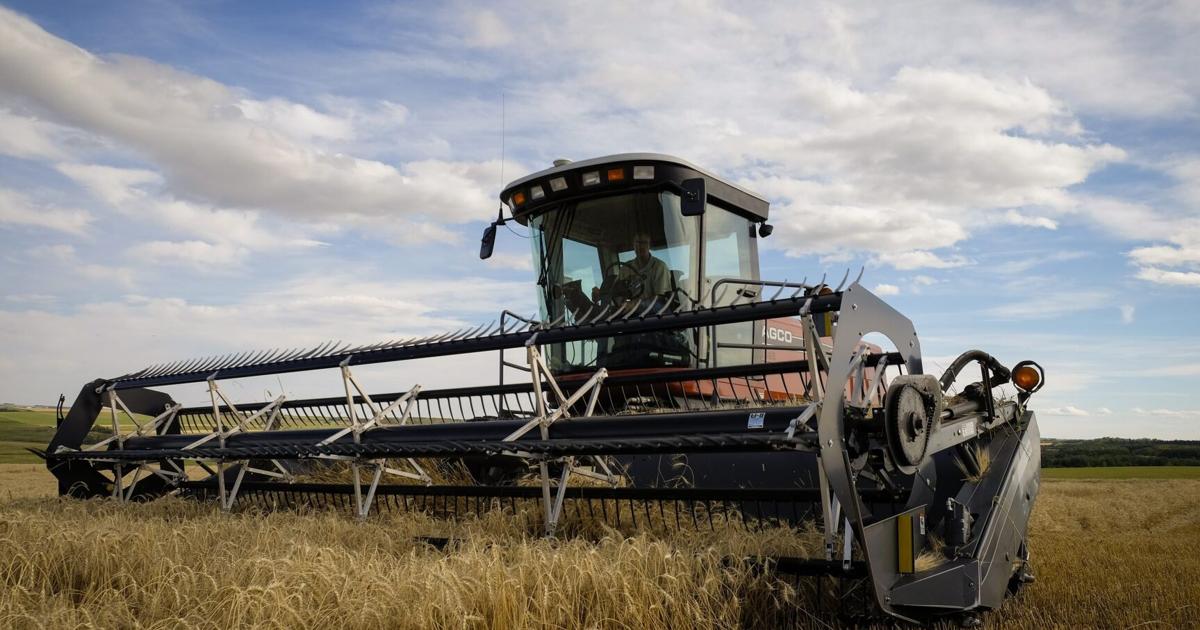
The current trade dispute is not just a wake-up call about relying too heavily on one market; it’s an unprecedented opportunity for Canadian food processors to lead our country toward a more balanced trade model.
“The current trade dispute is not just a wake-up call about relying too heavily on one market; it’s an unprecedented opportunity for Canadian food processors to lead our country toward a more balanced trade model,” write Craig Johnston and Craig Klemmer.
Craig Johnston, PhD, is the chief economist of Farm Credit Canada. Craig Klemmer manages FCC's Thought Leadership team.
Canada’s relationship with the United States has long been the bedrock of international trade for our food manufacturing sector. In 2023, three-quarters of our food and beverage exports went south of the border, generating about $35 billion.
The current trade dispute is not just a wake-up call about relying too heavily on one market; it’s an unprecedented opportunity for Canadian food processors to lead our country toward a more balanced trade model.
To that end, a recent report by Farm Credit Canada (FCC) proposes a bold goal: Maximize opportunities already present in our existing trade agreements by dramatically expanding exports to other nations by roughly $10 billion.
This is an achievable goal for our food processors — the hard-working, unsung Canadians who turn our raw agricultural products into packaged goods for our grocery store shelves as well as our export channels. They are in a prime position to lead a pivot for Canada’s entire food and agriculture value chain by making three key changes.
• It starts with retooling for new markets. That means adjusting formulations, packaging and certifications to meet the specifications required by buyers in Europe, Asia and beyond, rather than automatically defaulting to American requirements.
• It also means aggressively addressing the sector’s productivity growth, which has been declining for the past two decades. Adoption of artificial intelligence and automation will help boost a sector plagued by persistent labour shortages. So will recruitment of workers highly skilled in technology. This productivity boost could mean better prices for Canadian customers as well as a more adaptable supply chain for export.
• The final step is devoting more attention to the 15 free trade agreements Canada already has in place, giving us access to 51 countries and over 1.5 billion consumers. Canada has built much of the policy foundation needed to support export diversification. Our current network of free trade agreements gives our exporters preferred access to key markets around the world.
“Asia represents an estimated $4.3-billion opportunity for value-added meat products, seafood, prepared foods, and vegetable oils, such as canola (pictured),” write Craig Johnston and Craig Klemmer.
Europe has the largest potential for Canadian food manufacturers, an opportunity estimated at nearly $5 billion. Canada already has a strong foundation there through the Canada-European Union Comprehensive Economic and Trade Agreement, as well as trade agreements with the United Kingdom and European Free Trade Association countries. There is strong growth potential in European markets for prepared foods, vegetable oils, sugar and confectionery, processed fruits and vegetables, and alcoholic and non-alcoholic beverages.
Asia represents an estimated $4.3-billion opportunity for value-added meat products, seafood, prepared foods, and vegetable oils, such as canola. Realizing this potential will require targeted market development, stronger buyer relationships, and continued investment in Canada’s reputation for safe, high-quality food.
Of course, there is no quick fix. Redirecting exports isn’t just about finding an overseas buyer. It means building relationships, infrastructure, logistics, and brand recognition to successfully compete overseas. Food processors who do this are creating a template others can follow as new trade agreements are reached with more countries.
Not every manufacturer will move at the same speed. Animal feed, for instance, has real potential to be redirected toward new buyers relatively quickly. Vegetable oils are a tougher sell and will need a more aggressive, longer-term push into new markets. Realistic, sector-by-sector targets matter more than a single blanket goal.
None of this will happen in isolation. While the food processors can lead the charge, it will take investment and collaboration across the entire food system. Farmers, manufacturers, lenders, innovators, grocers, transportation companies, researchers, educators, governments, and crown corporations like FCC each hold a piece of the puzzle.
The tariff fight isn’t going away soon. But it also marks a beginning. The next decade of Canada’s food system will be shaped by the choices made today.
Canadian food processors who invest now in new markets, new capacity and new relationships won’t just be riding out the storm, they will build a blueprint for others to follow.
Error! Sorry, there was an error processing your request.
There was a problem with the recaptcha. Please try again.
You may unsubscribe at any time. By signing up, you agree to our terms of use and privacy policy. This site is protected by reCAPTCHA and the Google privacy policy and terms of service apply.
Craig Johnston, PhD, is the chief economist of Farm Credit Canada. Craig Klemmer manages FCC’s Thought Leadership team.
Opinion articles are based on the author’s interpretations and judgments of facts, data and events. More details