Opinion | How Trump’s trade war gave Canada a starring role in the U.S. midterms - Toronto Star
In the later stages of campaigning, Trump tried to sound more accommodating on the trade war with Canada but it came too late, and Americans delivered a decisive ballot-box body blow to their president, and his MAGA contingent.
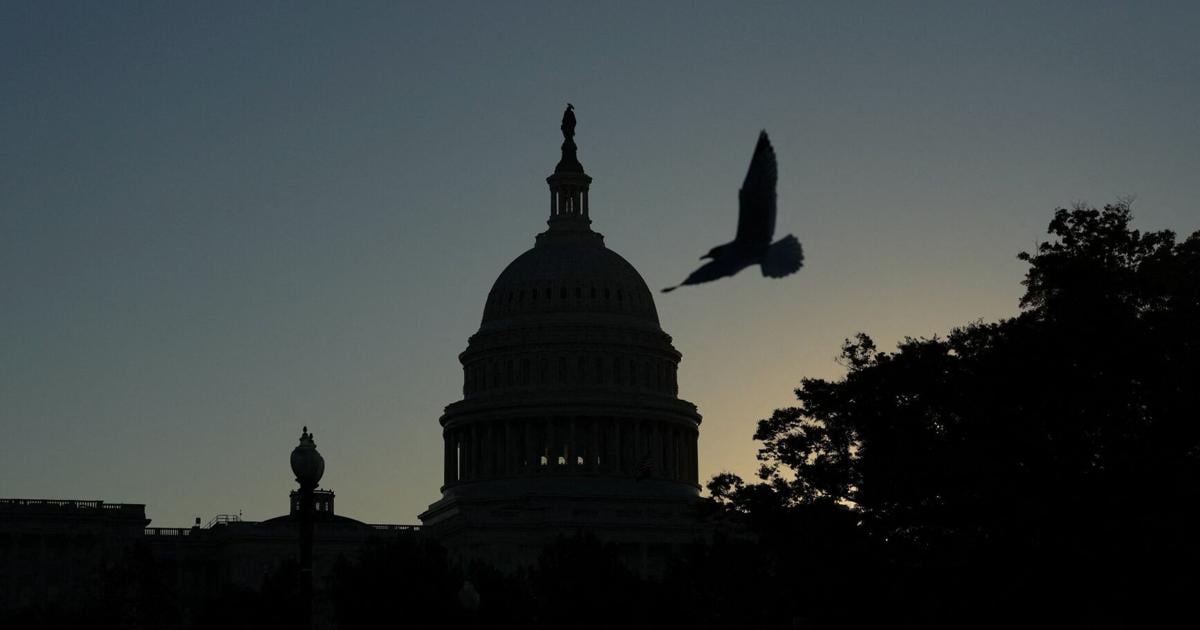
Bird flies outside the US Capitol Building following the U.S. midterm elections in Washington, DC, U.S., Nov. 4, 2026. REUTERS/Eric Lee
Barbara Yaffe is a former national columnist and longtime editor and reporter for newspapers across the Canada.
Over the years, self absorbed Americans have mostly ignored dull, reliable Canada and, when midterm campaigning began, few foresaw the outsized influence this country ultimately would have.
Of course it had little to do with American warm, fuzzy feelings for their northern neighbour. Voters in states that had done robust trade with Canada were simply apoplectic about the increased costs of the tariffs and how it worsened their cost of living.
In the latter stages of campaigning, U.S. media jumped on this runaway train which by last week prompted Trump to suddenly at least sound a lot more accommodating on the ongoing trade war. Much of the media had concluded, the trade war with Canada was a dumb strategy from a man who heeds no one and nothing but his own brain.
But the accommodating version of Trump came too late and was not credible. Americans this week delivered a decisive ballot-box body blow to their president, and his MAGA contingent.
In an October article in the lead up to the vote, right-leaning Washington DC-based Dispatch magazine’s David M. Drucker reported: Canadians “are furious. It’s an emotional anger born of feeling betrayed, disrespected, and insulted, and to a degree, scared.”
Warned Drucker, ”A jilted but proud Canadian public may never view the U.S. the same way again … regardless of which political party controls Congress or who occupies the Oval Office.”
A piece, in the Washington DC-based left-leaning New Republic, noted, ”Canada is a particularly appealing ally: reliable and rich, not to mention well-resourced.
Wrote John Last, “It is no surprise Europe leaped so quickly to the idea of Canadian ‘associate’ membership.”
Further, “ the United States will not fully recover after Trump … this new phase of American bellicosity and dysfunction may be a generational phenomenon.”
The Global Trade Magazine, based in Dallas, asserted: “Tariffs on Canadian imports have become a political liability for the President, with Republican candidates in border states calling for an end to the trade war with Canada.”
Of course none of this coverage would ever convince Trump to drop his tariff strategy going forward. For reasons known only to himself, he continued as recently as last week to whine about Canada “ripping off” the U.S.
Trump. Meanwhile, has vigorously defended both his tariffs and gas prices that keep climbing as a result of his Iran war.
“We are making a freakin’ fortune,” he boasted to a crowd at one of his recent pre-midterms rallies. “I don’t give a damn, I’m going to say it — we’re making a freaking fortune.”
Trouble is, it’s the U.S. Treasury that pockets that fortune — $167.3 billion in the first 11 months of 2026, while U.S. consumers, now confronting 3.7 per cent inflation, are having trouble feeding their families.
Why would Trump antagonize his own citizens with such provocative statements? Because he’s Trump.
Of course the Republican Congressional losses this week were not entirely due to Trump’s hate-on for Canada — he has made messes in many, many areas. Even America’s positive economic numbers are not helping him.
The U.S. economy will have grown at 2.3 per cent in 2026 compared to Canada’s anticipated growth of 0.9 to 1.3 per cent this year. Ontario last week boosted its deficit forecast for 2026–27, to $16.9 billion from $13.8 billion projected last March, blaming the trade war and economic conditions.
Still, most Canadians stand united behind Carney and his plans to diversify trade and depend less on the U.S. A Canada Pulse Insight poll last week showed 73 per cent of respondents supported this country’s push for a closer alliance with Europe. And even with a hobbled economy, 47 per cent believe Canada is heading in the right direction, according to an Abacus poll.
Meanwhile, according to an August CBS poll, nearly two-thirds of U.S. respondents felt their economy was doing “very or fairly badly.”
So, exactly which side has been losing the Canada-U.S. trade war?
To be sure, David is struggling economically. But signs increasingly point to Goliath being the one in real trouble.
Error! Sorry, there was an error processing your request.
There was a problem with the recaptcha. Please try again.
You may unsubscribe at any time. By signing up, you agree to our terms of use and privacy policy. This site is protected by reCAPTCHA and the Google privacy policy and terms of service apply.
Barbara Yaffe is a former national columnist and longtime editor and reporter for newspapers across the Canada.
Opinion articles are based on the author’s interpretations and judgments of facts, data and events. More details