Opinion: Immiserizing growth in the Amazon - Valor International
The Amazon region in Brazil has been experiencing a process of “immiserizing growth” over the past two decades, in an apparent paradox. Although aggregate income is rising, the formal economy, in the presence of organized crime and driven by activities which degrade the region’s natural capital, give signs that is shrinking.
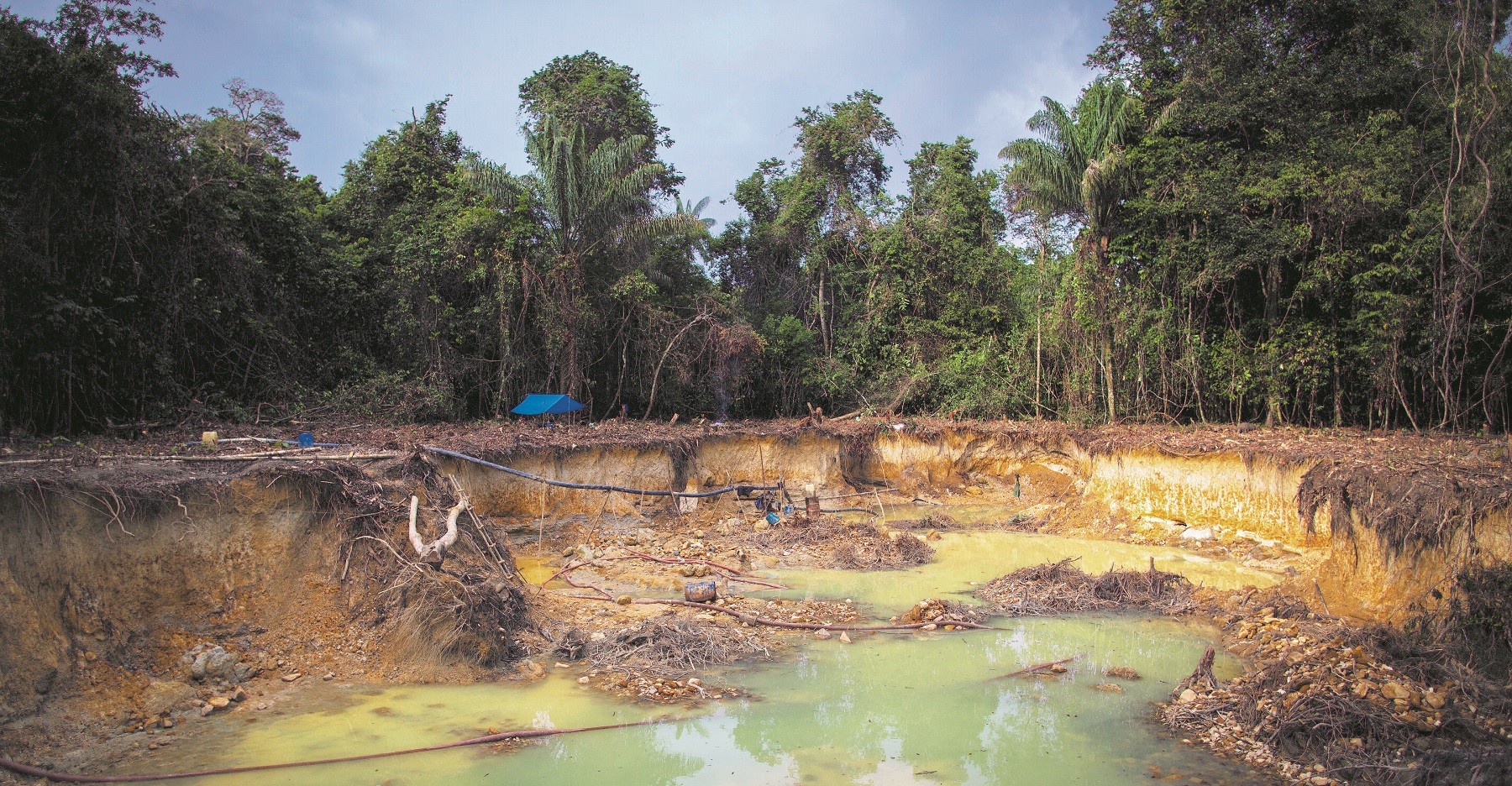
Deforestation leaves a trail of destruction, with few economic gains, and is associated with public land grabbing, predatory and illegal logging, and mining. The latter poses serious risks to human health by polluting water with poisonous materials. In the Amazon, Brazil faces criminal groups’ growing control over territory, which bring about the growth of the illegal economy, and the concomitant destruction of the environment.
This unsustainable pattern evokes a contemporary version of the concept of “immiserizing growth,” introduced by the Indian economist Jagdish Bhagwati in 1958 to describe an economic expansion that might result in a reduction of income and welfare. In the case of the Amazon, impoverishment would come about not through international prices, as in the original argument, but through the negative externalities associated with frontier expansion, propelled by rising deforestation and the arrival of organized crime.
In recent years, cocaine has been routed through the Brazilian Amazon toward export markets and domestic consumers. It sets off a domino effect of forest destruction, land grabbing and the proliferation of illegal activities. The territorial control by criminal organizations becomes a barrier to the legal economy. As a result, income gains produce only ephemeral economic growth, while the business environment in these regions deteriorates.
The state of Amazonas has 62 municipalities, 60 of which have fewer than 102,000 inhabitants (2022 Census, IBGE). In 2025, according to the Brazilian Public Security Forum (FBSP), organized crime groups exercised territorial control in 23 of these 60 municipalities, with a growing presence in the remaining 37. When the municipalities are divided into these two groups, their growth trajectories do not differ in a statistically significant way after 2018. By contrast, in municipalities where criminal groups gained a foothold, earnings from formal employment fell sharply. Wherever organized crime exercises territorial control, socioeconomic conditions deteriorate and formal-sector jobs are destroyed.
Faced with the difficulties of operating in an environment of physical insecurity and legal uncertainty, formal activities shrink, as “transaction costs” rise in markets that must coexist with organized crime, including formal labor markets. In 2018, within the legal boundaries of Brazil’s Amazon region (spanning nine states), 13% of the Brazilian population were accounted for but only 9% of formal jobs, with just 19% of its population holding formal jobs, compared with 28% in the rest of the country. In 2024, one-fifth of those aged 15 to 29 were neither studying, working, nor looking for work. They become potential recruits for organized crime.
In the Amazon, the homicide rate has been rising relative to the rest of Brazil. The region, which did not have high levels of violence until the late 1990s, has become rife with violence. Were it a country, it would rank fourth in the world in homicide rates, only behind El Salvador, Venezuela, and Honduras¹. Violence and illegal logging (and related activities) are not independent phenomena. A recent study has demonstrated that when the government started to monitor deforestation in real time with satellite imaging, penalizing violators with heavy fines, asserting the presence of the State and its institutions, homicides fell by about 15%, equivalent to nearly 1,500 deaths averted per year².
Crime destroys the environment and livelihoods in the Amazon region. It targets its natural wealth, exploits and degrades its natural capital, and leaves little behind for those most in need. Poor families are kept in a state of bondage; young people are recruited by organized crime. Neither have a future, their lives betrayed.
The destruction of the forest cover is also the destruction of the natural infrastructure essential for regulating the climate and ensuring a stable rainfall regime. These are the rains that generate hydroelectric power, irrigate agriculture, and supply major urban centers, and on which Brazil’s economic survival depends.
It is possible to reverse the process of immiserizing growth in the Amazon. Evidence shows that fighting the most predatory forms of criminal activities by factions, such as land grabbing, illegal logging and mining, and smuggling of natural resources, is the shortest path to improving economic welfare and the standards of living of those most in need. It is also a requirement for encouraging legal activities, creating quality jobs and protecting the region’s natural assets.
The Amazon rainforest is the most threatened biome by organized crime, and its population is the most exposed to criminal organizations. There, protecting people means protecting nature. Fighting crime means securing a future. To that end, there is no alternative to effective government institutions present on the ground and fighting crime in all its forms, in cooperation with neighboring countries. Growth in the region need not be accompanied by impoverishment. Breaking this link means eradicating crime in its most harmful manifestations and providing basic services to the population. Delaying is no longer an option. The Amazon demands action, intelligence, and determination.
1.Soares, Rodrigo R., Leila Pereira, and Rafael Pucci. “Ilegalidade e Violência na Amazônia” [Illegality and Violence in the Amazon]. Amazônia 2030, December 2021.
2.Araujo, Rafael, Vítor Possebom, and Gabriela Setti. “Combating Deforestation Reduces Violence in the Amazon.” Amazônia 2030, Policy Brief 05, January 2026.
(Matheus Graf contributed research.)
Claudio Frischtak is a former World Bank economist, a senior associate of the International Growth Center (LSE/Oxford), and managing partner of Inter.B Consultoria.
Juliano Assunção is executive director of Climate Policy Initiative/PUC-Rio and professor of economics at PUC-Rio.
Beto Veríssimo is co-founder of the Amazon Institute of People and the Environment (Imazon) and COP30 Special Envoy for Forests.