Opinion | Interest rates are rising again. Here’s your five-step financial survival kit - Toronto Star
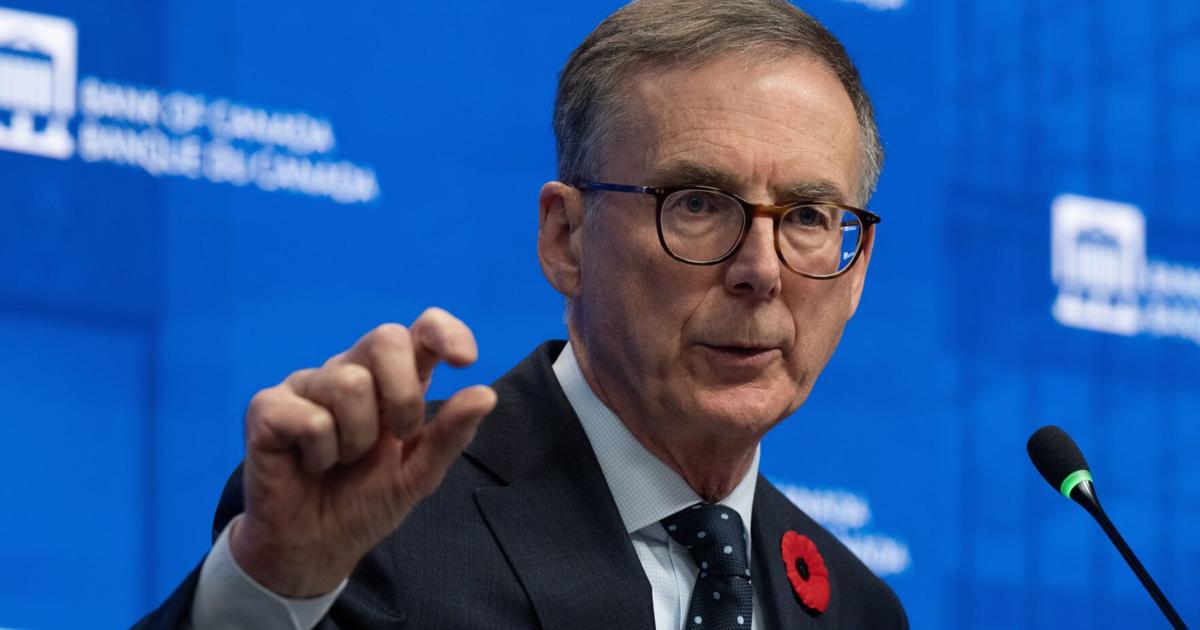
Bank of Canada governor Tiff Macklem delivered an early holiday surprise, but a few smart money moves can help keep the season merry.
Well, there go the Christmas crackers. Bank of Canada governor Tiff Macklem delivered an early holiday surprise last week, but a few smart money moves can help keep the season merry.
Lesley-Anne Scorgie is a Toronto-based personal finance columnist and a freelance contributing columnist for the Star. Follow her on Twitter: @lesleyscorgie
Well, that was fun while it lasted.
After more than three years without an increase, the Bank of Canada raised its key interest rate by a quarter percentage point last week, bringing it to 2.5 per cent.
A quarter point sounds harmless — almost cute, until you realize it can show up in several places in your financial life, none of which is offering you a loyalty discount. And this isn’t just a mortgage story.
Variable-rate mortgages, home equity lines of credit, personal lines of credit and other floating-rate loans can all become more expensive when lenders raise their rates. Fixed-rate loans generally won’t change during their current term, but renewals are another matter.
So, before you panic, refinance everything and swear off coffee and avocado toasts forever, here’s your five-step rate-hike survival kit.
Start by identifying which debts can actually change with interest rates.
Check your mortgage, lines of credit and personal loans. Look for terms such as “variable,” “floating” or “prime plus.” On a spreadsheet, list each debt, the balance, interest rate and monthly payment. Total your nonmortgage debt separately.
Seeing the full picture may reveal opportunities to pay debts down faster or consolidate them at a lower carrying cost.
Don’t assume every borrowing rate rises automatically by the same amount. Lenders set their own rates, and credit cards often have different pricing arrangements. The goal is to know where you’re exposed before the next statement delivers an unpleasant surprise.
Here’s the twist: a tiny rate increase can have a surprisingly big impact when multiplied by a large balance. If your $100,000 line of credit increases by 0.25 percentage points, that’s approximately $250 more in annual interest, or $21 monthly, assuming the balance stays unchanged. On $300,000, it’s roughly $750 annually.
That might not sound catastrophic, but add several debts together, and those little increases start adding up. Here’s an eye-opening exercise: Add a separate line for interest charges to your monthly budget. Seeing exactly how much you’re paying just to borrow money can be powerful motivation to eliminate debt faster.
For variable-rate mortgages, check whether your payment increases or whether more of your existing payment goes toward interest. In the first case, your payment may rise to keep your mortgage on schedule. In the second, you’re paying down less principal, potentially extending your repayment period.
Don’t immediately cancel everything that makes life enjoyable. Instead, identify one or two expenses you could temporarily reduce to absorb higher borrowing costs. Maybe it’s an unused subscription, unnecessary delivery fees or a purchase that can wait.
If your monthly borrowing costs rise $35, finding $40 of breathing room is more useful than declaring a dramatic, joyless spending freeze you’ll abandon by next Friday. You could also sell unused clothes, electronics or furniture and put the proceeds toward your higher borrowing costs.
Not all debt deserves equal attention. A credit card charging 20 per cent interest is still a bigger financial problem than a mortgage charging five and a half per cent.
Make minimum payments on everything, then direct extra money toward your highest-interest debt. Ask lenders whether better rates are available, but compare fees and repayment terms before consolidating or refinancing.
And avoid treating your available credit as an emergency fund. Borrowing more to cope with higher borrowing costs is a particularly expensive survival strategy. Meanwhile, start building an emergency fund, even if it’s just $15 a week. That way, the next surprise expense doesn’t automatically become more debt.
Higher rates aren’t universally bad news. Savings accounts and new GICs may offer better returns, although increases aren’t guaranteed. Check what your emergency savings are earning. If your money is sitting in an account paying almost nothing, compare alternatives that keep it accessible and protected. Just don’t lock away money you’ll need for upcoming bills to chase a slightly higher return.
Interest-rate increases aren’t an invitation to panic. They’re a reminder to pay attention.
Your survival kit doesn’t need canned beans, bottled water or a bunker. It needs a debt inventory, a little breathing room and a plan for putting your money where it makes the biggest difference.
Opinion articles are based on the author’s interpretations and judgments of facts, data and events. More details
Lesley-Anne Scorgie is a Toronto-based personal finance columnist and a freelance contributing columnist for the Star. Follow her on Twitter: @lesleyscorgie