
Opinion | The wrong comparison makes Olivia Chow’s Toronto win look narrow - Toronto Star
Why did some commentators highlight the fact that Olivia Chow didn't win by as much as her male predecessors?
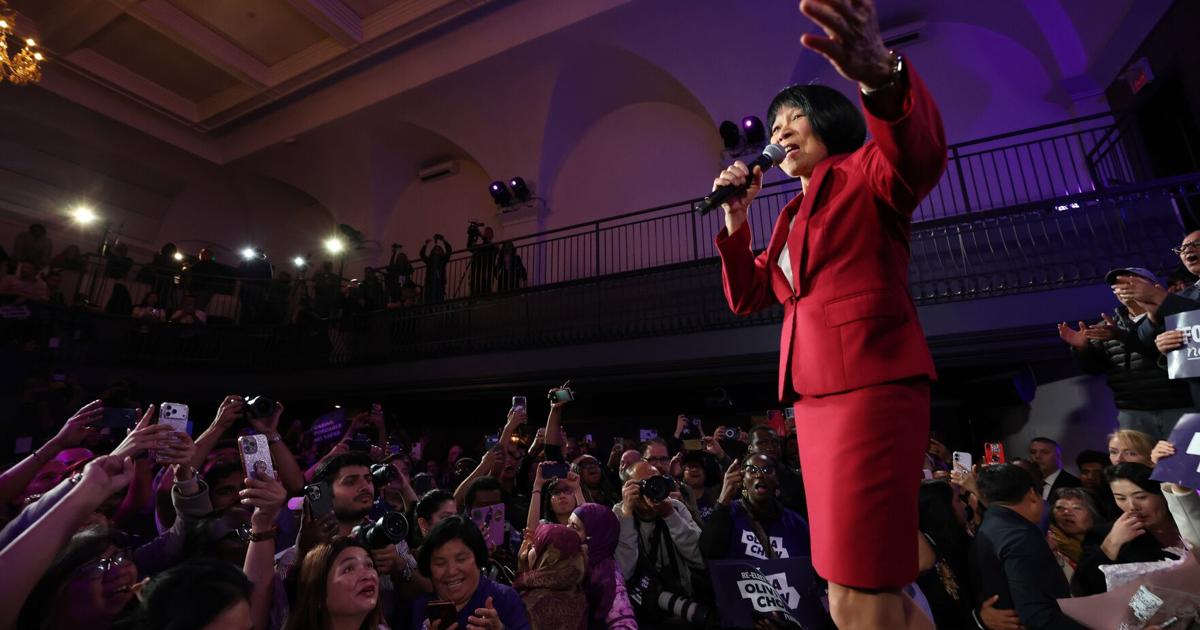
Olivia Chow delivers her victory speech to her supporters at The Great Hall on Monday night.
Yvonne Su is an associate professor in the School of Political Studies at the University of Ottawa, a visiting scientist at Harvard University and a research affiliate at the University of Oxford.
On Monday night, like almost one million other Torontonians who voted, I watched the results come in from a race billed for weeks as too close to call. I went to bed thinking Olivia Chow had won big.
By Tuesday morning, my feed couldn’t agree. The Local reported Chow “received more votes than any mayor since Toronto’s amalgamation.” The National Post said “she did worse than any incumbent mayor.”
So which was it? My friends had theories. Population growth? Higher turnout? A two-horse race? Or just partisanship?
Both sentences are true. Which one you lead with depends on the ruler you pick.
The Post’s Adam Zivo picked margins. He lists off how John Tory beat his nearest rival by 40 points in 2018 and 44 in 2022, David Miller won by 25 in 2006 and Mel Lastman by 72 in 2000. Chow beat Brad Bradford by 13, an “unusually narrow margin of victory.”

