Opposition, lawyers query Tinubu’s ‘long’ vacation, constitutional breach - The Guardian Nigeria News
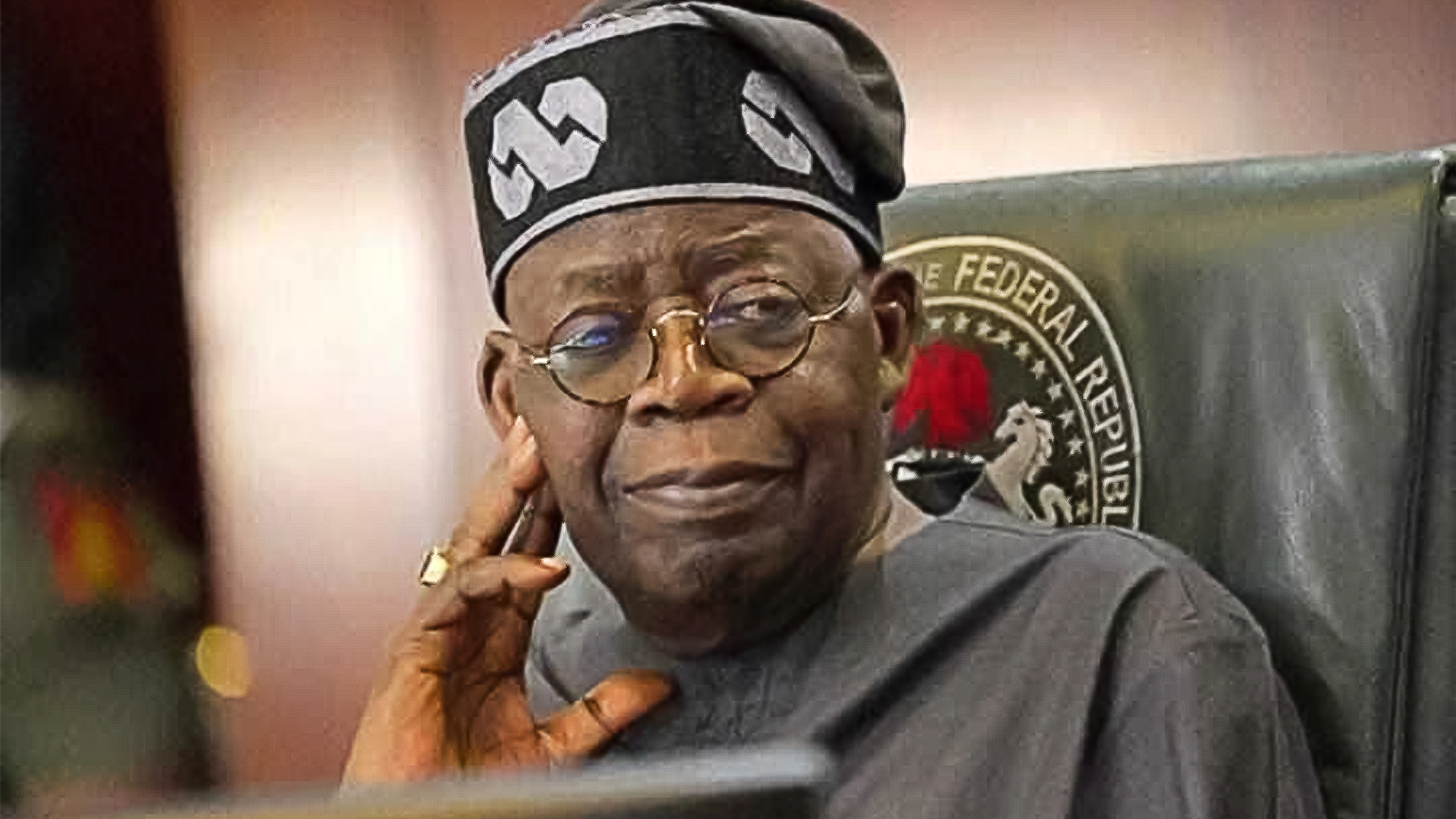
President Bola Tinubu’s prolonged absence from Nigeria yesterday triggered fresh legal and political concerns as a human rights lawyer announced plans to sue over the delayed return, while opposition figures demanded explanations from the Presidency.
The principal of Festus Ogun Legal, Festus Ogun, said he will institute a suit at the Federal High Court in Lagos over President Bola Tinubu’s delayed return to Nigeria.
Ogun, in a post on his verified X handle yesterday, said the suit would challenge what he described as a constitutional breach.
“First thing tomorrow morning, we will file a lawsuit at the Federal High Court in Lagos to challenge this constitutional breach. Except we all agree the law no longer rules in Nigeria,” he wrote.
Ogun was reacting to reports that Tinubu had postponed his return to Nigeria following a last-minute change to his travel plans.
Tinubu, who had been expected to return to the country at the weekend after spending weeks in Europe on a working vacation, is now expected to return tomorrow.
The reason for the latest change in the President’s itinerary was not immediately known.
The Presidency had on September 21 announced that Tinubu had extended his stay in Europe by a few days and would return by the weekend.
Presidency sources said yesterday that Tinubu would arrive through Lagos, where he is expected to be received at the presidential wing of the Murtala Muhammed International Airport by Governor Babajide Sanwo-Olu.
He is scheduled to mark Nigeria’s 66th Independence Anniversary in Lagos on Thursday, October 1, where he will deliver a national broadcast, before returning to Abuja next weekend.
The Federal Government has already announced that the President’s Independence Day broadcast will form part of activities marking the anniversary. Other events include a public lecture scheduled for September 30.
Tinubu’s decision to spend the anniversary period in Lagos would make it the second consecutive year he would observe Nigeria’s Independence Day in the commercial capital.
Last year, the President also marked the anniversary in Lagos amid heightened security concerns following allegations of a planned military coup.
The Federal Government subsequently cancelled the Independence Day parade scheduled for October 1, 2025.
Tinubu is expected to remain in Lagos for a few days after the anniversary to attend to official engagements before returning to Abuja next weekend.
His return will mark the end of an extended working vacation that began on August 30, when he departed Abuja for London.
The Presidency had initially announced a three-week annual leave, with London designated as his first stop.
After spending about a week in London, the President travelled to Paris, France, where he held meetings with French President Emmanuel Macron and businessman Vincent Bolloré, whose business interests include Canal+, MultiChoice and Universal Music Group.
On September 21, the Presidency announced that Tinubu would extend his stay by a few days, saying he would return to Nigeria at the weekend. The latest itinerary, however, puts his return on Tuesday.
Despite his absence from the country, the President has continued to receive briefings and issue directives on matters of national importance.
One of the major developments during his absence was his directive for an investigation into the deaths of 37 suspected illegal miners held in the custody of the Nigeria Security and Civil Defence Corps in Minna, Niger State.
The Federal Government subsequently constituted a 10-member independent investigative committee, while several NSCDC officers were suspended pending the outcome of the inquiry. The cause and circumstances of the deaths remain subject to investigation.
During the President’s absence, Vice President Kashim Shettima represented him at several official engagements, including Nigeria’s participation in the 81st United Nations General Assembly in New York.
Shettima departed Abuja on September 20 to lead Nigeria’s delegation to the UNGA, where he delivered Nigeria’s national statement on behalf of the President.
With the Vice President also out of the country, Secretary to the Government of the Federation, George Akume, has continued to represent the President at selected official functions, in line with the Presidency’s earlier arrangements.
The President’s return also comes against the backdrop of preparations for the 2027 general elections.
The Director-General of the APC Presidential Campaign Council, Abdulaziz Yari, has in recent weeks led party leaders on consultations with traditional and religious leaders in different parts of the country as part of the party’s mobilisation ahead of the elections.
With Tinubu expected back in Lagos tomorrow, attention will shift to his Independence Day address, his post-vacation engagements and the resumption of presidential activities from Abuja next weekend.
ADC, Obi demand answers over Tinubu’s prolonged absence MEANWHILE, the African Democratic Congress (ADC) Presidential Campaign Council (PCC) and presidential candidate of the Nigeria Democratic Congress (NDC), Peter Obi, have questioned President Bola Ahmed Tinubu’s prolonged absence from Nigeria, with the ADC demanding full disclosure from the Presidency over his whereabouts and Obi asking why the President was absent from the 81st United Nations General Assembly in New York.
The ADC PCC said it was deeply concerned that, as of yesterday, September 27, 2026, the President had yet to return to the country, six days after the expiration of his originally announced three-week vacation, which was reportedly scheduled to end on September 21.
In a statement by its Director of Media and Publicity, Kola Ologbondiyan, the council said the Presidency owed Nigerians a clear and transparent explanation over the continued absence of the President, without sufficient public information on his whereabouts or the circumstances surrounding the extension of his stay abroad.
The statement said: “The office of the President is a public trust. Nigerians who elected President Tinubu are entitled to know where their President is and, more importantly, who is exercising presidential authority while he remains outside the country.
“This is particularly important at a time when Nigeria is confronted by serious economic pressures, widespread hardship and persistent security challenges.
“The country cannot afford uncertainty at the highest level of government.”
The ADC called on the Presidency to immediately provide clear, verifiable information on the President’s current location, the reason for his prolonged absence and the constitutional arrangements governing the administration of the country during the period.
It also called on the Presidency to clarify the status of the President’s vacation and explain the constitutional basis for the current arrangement, particularly as the President remained away from the country beyond the period earlier communicated to Nigerians.
“Nigerians deserve openness, not secrecy. Presidential movements and the exercise of executive authority cannot be treated as matters of private convenience when they directly concern the governance of a nation of more than 200 million people,” the statement said.
The ADC also expressed concern over the reported decision to extend the President’s vacation and the directive that the Secretary to the Government of the Federation, George Akume, should continue to represent the President at official functions.
It said: “While the Presidency may provide administrative explanations for the arrangement, the ADC believes that such explanations do not answer the fundamental question confronting Nigerians: who is constitutionally and effectively in charge of the affairs of the Federal Republic of Nigeria while the President remains away?
“The ADC joins concerned Nigerians in demanding transparency, accountability and respect for the constitutional responsibilities attached to the office of President.
“President Tinubu was elected to lead Nigeria, and Nigerians have a legitimate expectation that the Presidency will keep them adequately informed about matters affecting the exercise of presidential authority.
“The ADC therefore calls on the Presidency to immediately provide Nigerians with a comprehensive and unambiguous explanation. Silence can only deepen public anxiety and fuel speculation.”
Similarly, Obi questioned Tinubu’s prolonged absence from Nigeria, asking why the leader of Africa’s most populous country was missing from the 81st United Nations General Assembly in New York.
Obi raised the question yesterday after watching an address by Ghanaian President John Dramani Mahama at the global gathering.
In a statement by Idris Zekeri Jnr, spokesman for the Peter Obi Media Office, the former Anambra State governor contrasted Mahama’s presence at the UN with Tinubu’s absence, saying the development had raised questions over Nigeria’s visibility on the international stage.
“Where is the President of Africa’s most populous nation, a country of more than 200 million people—more than Ghana—whose leader has been absent from the global stage for three consecutive UNGAs?” Obi asked.
Obi said Nigeria’s President ought to be representing the country at major international engagements, particularly at a time when the nation was grappling with significant domestic and international challenges.
The NDC candidate acknowledged that Vice-President Kashim Shettima was present at the UNGA on behalf of the Federal Government but said the Vice-President’s attendance did not settle the question over Tinubu’s absence.
Obi ended his intervention by saying: “Let us continue to pray for his return and for his leadership in addressing the many challenges confronting the nation,” while expressing hope that “a New Nigeria is possible.”
Tinubu’s absence: Yunusa faults National Assembly over failure to act ALSO, former National Chairman of the National Conscience Party (NCP), Tanko Yunusa, criticised President Bola Tinubu’s prolonged absence from the country without formally transferring presidential powers to Vice President Kashim Shettima, describing the situation as a matter that requires greater transparency from the Federal Government.
Yunusa, a supporter of Peter Obi, said Nigerians were entitled to know the President’s status, particularly amid reports and public concerns surrounding his recent trip abroad.
He said the government should provide clear information to Nigerians about the reason for the President’s absence and his current condition, stressing that the country had previously experienced controversies arising from inadequate information about a president’s health.
“Anybody can fall sick. The truth is that when people have been told lies and they are not being told the truth, that is wrong,” he said.
Yunusa also questioned the decision not to formally transfer presidential powers to the Vice President, arguing that the Constitution provides mechanisms for ensuring continuity in government when the President is unavailable.
The NDC chieftain also criticised the National Assembly, led by Senate President Godswill Akpabio and Speaker of the House of Representatives Tajudeen Abbas, for what he described as inadequate attention to constitutional issues arising from the President’s absence.
According to him, the legislature has a responsibility to ensure that constitutional provisions governing the functioning of the executive arm are respected.
“Unfortunately, we have a National Assembly that is not very strong when it comes to issues of constitutionality. That has affected the smooth running of the country,” he said.
On the effect of the President’s absence on preparations for the 2027 elections, Yunusa said opposition parties would continue their campaigns, but maintained that the situation had raised concerns that could not simply be ignored.
He said: “Many of the parties are not comfortable with it. We have been speaking. Our presidential candidate has been speaking. We as a group too have spoken.”
Yunusa, however, said the wider political environment was contributing to public frustration, arguing that many Nigerians were increasingly impatient with the political situation and waiting for change.