
‘Orders becoming a mockery’: Supreme Court pulls up Delhi govt over firecracker curbs | India News
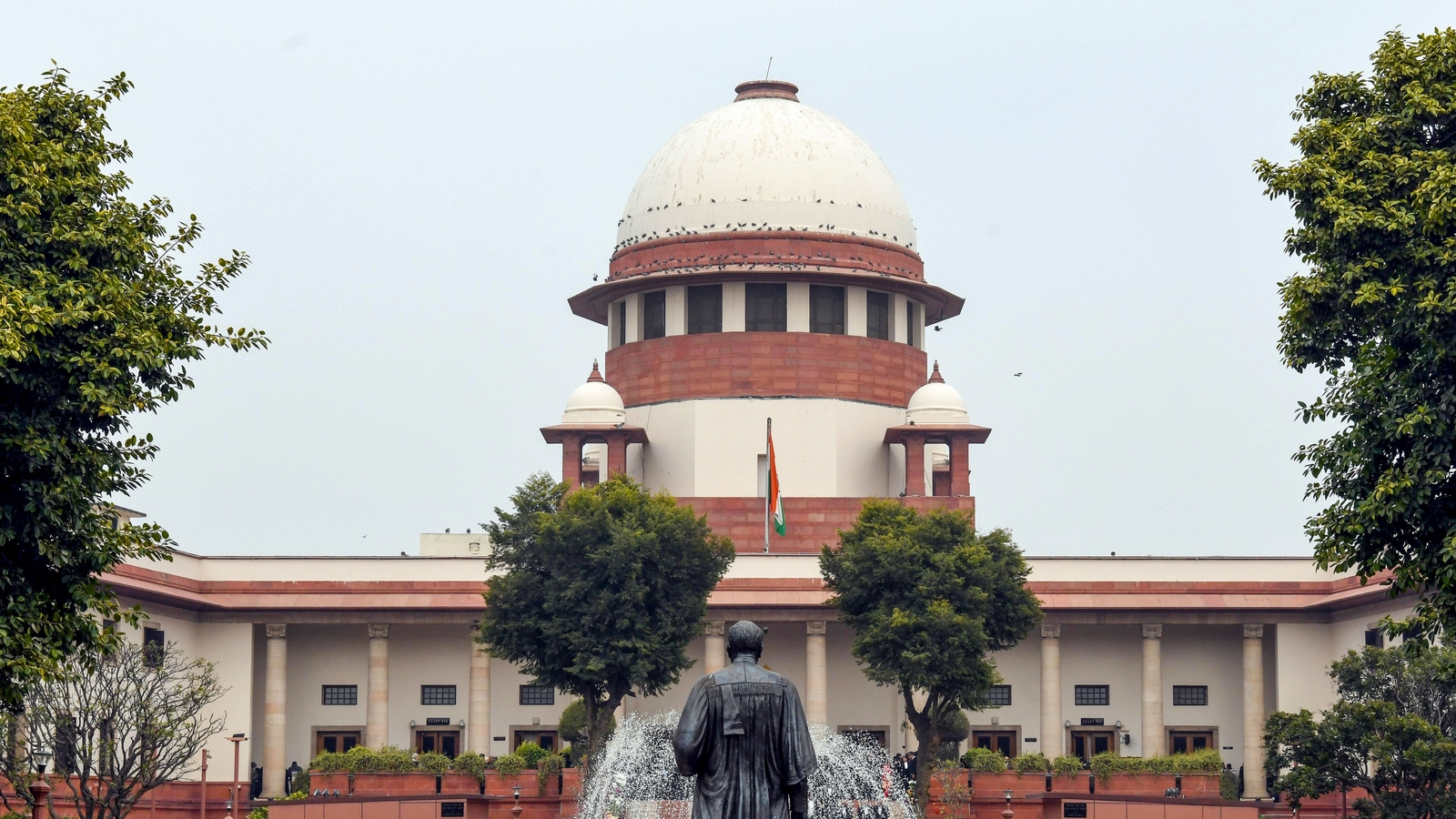
The Supreme Court on Thursday pulled up the Delhi government and the Commission for Air Quality Management (CAQM) for not adequately enforcing curbs on the sale and use of firecrackers, but reiterated its position that a complete ban was not the solution to the problem of pollution during the festive season.
The Supreme Court slammed Delhi govt over firecracker curbs. (ANI)The top court indicated that it was likely to allow the sale and bursting of green firecrackers in Delhi-NCR for a limited period on specified days this Diwali, though it reserved its order on a fresh interim arrangement. It noted that the three-day relaxation granted for the festival in October 2025 was a one-time measure that could not automatically be extended. Diwali falls on November 8 this year.
A bench of justices MM Sundresh and PB Varale spoke about the public sentiment attached to Diwali celebrations but stressed that authorities could not use festive enthusiasm as an excuse for failing to enforce firecracker restrictions.
“We also understand the sentiment of the public. Somebody wants to celebrate. Therefore, we are not inclined to impose a complete ban because, again, it will have a spiralling effect. But then, having said that, please don’t push us to take a very harsh stand on this matter,” the bench observed, pointing out that the authorities must demonstrate tangible action rather than merely promise better enforcement.
The court said that it was not asking the authorities to prevent people from celebrating Diwali but to ensure that firecrackers were used responsibly and only within the permitted window. It suggested that officials should concentrate their enforcement efforts on the designated days, even if that meant forgoing their own festival celebrations to monitor compliance, issue challans, cancel licences, and prosecute violators.
“During festivals, enthusiasm among the public is high. They are normal people. We cannot file cases against them, but what you can do is ensure our orders are implemented…Change of mind of public will take time. We have different people…children, women etc. We have to take care of everybody…Every year we pass orders. It becomes very academic,” it said.
The hearing brought into focus a recurring problem in the Capital’s battle against winter pollution: the gap between restrictions imposed by the courts and their enforcement in the marketplace and on the ground. The bench sought details of inspections, seizures and other action taken under previous orders, making it clear that claims of preparedness would carry little weight without evidence of their impact.
“After our order last year, what did you actually do? See now, otherwise, there is no point in passing orders and issuing all these conditions, unless on the ground you really give effect to it. It becomes near mockery then,” the bench remarked.
The court’s reluctance to impose a blanket prohibition follows its September 30 decision to permit specified next-generation green firecracker chains, or laris, subject to prescribed safeguards, while keeping the question of barium-containing crackers open for further scientific assessment. The bench said at the time that a total ban would hurt public sentiments, while unrestricted bursting throughout the day would seriously affect children, the elderly and the sick.
To be sure, questions remain on whether the permitted products are genuinely less polluting. There is no evidence from previous years that using green firecrackers in place of conventional ones has blunted the spike in pollution during Diwali.
The proceedings arise from a 2015 petition filed on behalf of three minors seeking a blanket ban on the sale and use of firecrackers in Delhi-NCR, citing the harmful effects of air pollution on children and other vulnerable groups. The Supreme Court subsequently imposed several restrictions, including a ban on barium salts in fireworks and on joined firecrackers, before permitting limited use of specified green crackers under regulated conditions.
In 2025, the court partially modified its ban-on-firecrackers order of April 3, 2025 in Delhi-NCR by permitting the sale and bursting of crackers between October 18 and 20, coinciding with Diwali, under specified timings. That Diwali, Delhi recorded its worst festival pollution peak since 2021. HT’s analysis of eight monitoring stations with consistent data found that average PM2.5 concentrations peaked at 785.6 micrograms per cubic metre on Diwali night, the equivalent of an AQI of 812 on an index officially capped at 500.
Additional solicitor general Aishwarya Bhati, appearing for the Union government, told the bench that an enforcement mechanism was in place for this year but had not been presented to the court. The court, however, insisted that the authorities demonstrate what had actually been done to prevent the sale and use of prohibited firecrackers and to ensure compliance with the restrictions.
The amici curiae, senior advocates Aparajita Singh and Uttara Babbar, and lawyers representing the petitioners, including senior counsel Gopal Sankaranarayanan, questioned the effectiveness of the previous year’s relaxation, pointing to the use of banned crackers, gaps in monitoring, and the lack of comprehensive data on enforcement.
The bench also sought information on the functioning of CAQM’s monitoring network, noting concerns over the number of operational monitoring units and the absence of reliable records of field inspections.
The court’s latest deliberations suggest that the immediate question goes beyond which categories of firecrackers should be allowed, to whether the authorities can ensure that only permitted products are sold and used during the limited hours authorised by the court.
The bench on Thursday also proposed a public awareness campaign involving prominent personalities and sportspersons, suggesting that cricketer Virat Kohli or other respected public figures could encourage people to celebrate a less-polluting Diwali. It sought to distinguish the festival’s religious and cultural significance from the practice of bursting firecrackers, observing that the celebration of light need not depend on fireworks.
“Otherwise, you know, we light the lamp and then everybody will do it in a necessary way and then, you know, it is so beautiful; just at the end of the day it is fire,” observed the bench, adding that religious faith and the practices associated with it were distinct.
Utkarsh Anand is the National Legal Editor at Hindustan Times, where he leads the newspaper's coverage of the Supreme Court, constitutional law, the judiciary and the Union law ministry. He joined Hindustan Times in 2020 after stints at Press Trust of India (PTI), The Indian Express and CNN-News18, and has over two decades of experience reporting on law, governance and public policy. His work has focussed on some of India's most consequential constitutional and legal developments, including the Supreme Court's judgments on Article 370, marriage equality, decriminalisation of homosexuality, the Babri Masjid dispute, electoral reforms and judicial appointments. He specialises in making complex legal proceedings and judgments accessible to readers while examining their wider social and political impact. Beyond daily reportage, Utkarsh has led investigative projects and enterprise reporting that have shaped public debate and prompted institutional responses. His work has received several journalism awards, including the Ramnath Goenka Excellence in Journalism Award. As National Legal Editor, he has also played a key role in expanding Hindustan Times' legal journalism footprint, mentoring reporters and strengthening coverage across platforms. A Chevening South Asia Journalism Programme Fellow, Utkarsh regularly writes analyses on the judiciary and constitutional issues, and his reporting is widely followed by lawyers, judges, policymakers, academics and readers seeking clarity on India's evolving legal landscape.Read More
