Over four decades, Patrick Case reshaped Ontario schools. The human rights lawyer remembered as a ‘quiet warrior’ by friends - Toronto Star
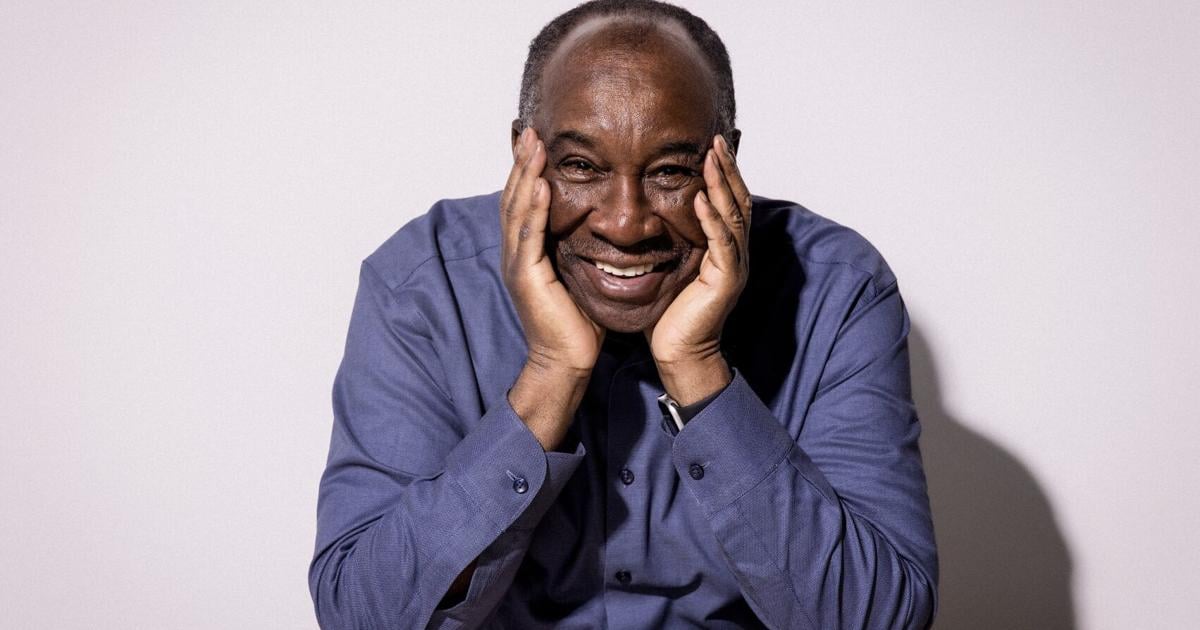
Human rights lawyer Patrick Case, who died Nov. 9, helped build the foundation for equity and discrimination policies in Ontario schools today.
Those who knew and worked with the human rights lawyer Patrick Case say the changes he ushered in over four decades made public education more accessible to all students.
Patrick Case embedded anti-racism and equity principles into Ontario’s public education system, helped pave the way to end academic streaming that disadvantaged Black children and pushed for the collection of race-based statistics at school boards across the province.
“The work that he did has literally saved kids’ lives,” said former premier Kathleen Wynne, who appointed Case as the Ministry of Education’s first equity officer in 2017.
Case died on Nov. 9 at 76, following a stroke.
Those who knew and worked with the human rights lawyer, including Toronto Mayor Olivia Chow, say the changes he ushered in over four decades made public education more accessible to all students — including policies to hire more racialized teachers, installing human rights and equity offices at school boards, and leading high-profile school board reviews examining racism and discrimination in York, Peel and Toronto.
Case “worked hard in making sure every child has the opportunity to be successful,” said Chow, who met Case when she was a trustee and he was developing equity policy at the Toronto school board, adding that he was part of the creation of the equality-focused Rosedale Heights high school.
“As school boards were grappling with, and the whole system was grappling with a kind of a built-in racism in the system, he was relentless in terms of his drive to undo that,” said Annie Kidder, co-founder of the public education advocacy organization People for Education. “He was also a very cool person.”
His advocacy for school boards to track race-based and other demographic data enabled Case and other investigators to find in 2020 that Black students in the Peel school board were being disproportionately excluded and suspended.
The data collection ”changed a lot of the work that we do as workplace investigators” and enabled systemic reviews, said employment and human rights lawyer Arleen Huggins, who described Case as a generous mentor and the “epitome” of what a lawyer and educator should be.
Case “was synonymous with equity and fighting racism in public education,” said long-time former Toronto District School Board trustee Shelley Laskin. “I think his influence was profound.”
Case was one of 12 children, born to the only Black family in Coventry, England, according to an obituary by his family. In 1968, he followed his older brother and father figure, Fred Case, to Canada, where Fred was a professor at the University of Toronto who helped develop the African and Caribbean Studies programs.
Case worked as a day labourer in Toronto and was at times homeless and subjected to racism. He had been streamed out of academics in England and as a result never graduated high school, but he was a voracious reader. His wife, Susan, recalls that Case befriended Leonard Johnston, co-owner of the Black intellectual hub Third World Books and Crafts. Johnston knew Case had no money but let him read anyway across all genres, from Greek literature to science-fiction that envisioned a better future.
Patrick Case, left, and Sue Herbert take their seats just prior to speaking about their 2017 report into the York Region District School Board concerning racism and management travel spending.
Case became a community activist, involved in a broad range of progressive movements, and was elected a Toronto school trustee in 1979 at the age of 26. He then convinced Osgoode Hall Law School to admit him as a student, despite his lack of academic credentials, and became a human rights lawyer working at Parkdale Community Legal Services, said Osgoode Law dean Trevor Farrow.
“What he would say to me in trying to convince me to go to law school … was ‘Know thy enemy,’” said his daughter, Sarah Case.
“It was necessary to gain the skills of being able to deconstruct the law and understand it, to then promote intervention.”
Case’s passion for justice and equality permeated all parts of his life, for better or for worse, his family said.
Sarah took her first steps at a community meeting, and his son Bem recalls accompanying his father to political marches, including to oppose the apartheid regime in South Africa. In 1994, Case was one of 20 Canadians sent to observe South Africa’s first free elections.
He loved to connect and debate, even with strangers whether on the subway or picking up groceries in Kensington Market.
“He just really believed in human goodness,” said Sarah.
Case focused his legal career on human rights, including heading up the Human Rights Legal Support Centre from 2010 to 2017.
The centre was created to make justice accessible, a mission that Case championed and connected back to his own life experiences, said Ena Chadha, the current chair who took over from Case.
He was also an educator, both as a professor of political science at the University of Guelph (where he was also the director of their human rights and equity office) and at Osgoode Hall Law School.
“He was a quiet warrior,” said former Ontario education minister Mitzie Hunter, adding that Case was undeterred by the scale of the challenges he took on.
“It was like, yeah, we’re going to change this whole system and we’re going to make it fair.”
Former education minister Stephen Lecce, who appointed Case to oversee the 2020 Peel board review, said Case “was a principled and decent man who believed in human dignity for everyone … Everyone who had the privilege of working with him is better off.”
Those who knew him say Case had the rare ability to deliver hard truths, sometimes passionately, but without alienating or villainizing those who needed to hear them.
He was also very troubled that progress made was being undone, something that he’d faced throughout his career but felt particularly acute amid the backlash against diversity policies.
“I think he would say it’s two steps forward, one step back, two steps forwards,” said Bem.
Though he was supposed to be retired, Case’s advocacy never ended, said his longtime friend Hamlin Grange. He worked with Case earlier this year to send a letter to Prime Minister Mark Carney challenging Canada’s decision to abstain from a United Nations resolution that declared the transatlantic slave trade “the gravest crime against humanity.”
Case “had a wicked sense of humour … laughing even at himself and also the foibles of the world,” Grange said. “I think that’s a healthy attitude to have, because so much of this work can be so soul-crushing.”
Case’s family is now working on establishing a scholarship in his name.
Alyshah Hasham is a Toronto-based reporter covering city hall and municipal politics for the Star. Reach her via email: ahasham@thestar.ca or follow her on Twitter: @alysanmati.