P Chidambaram writes: Holding a mirror to GDP numbers - The Indian Express
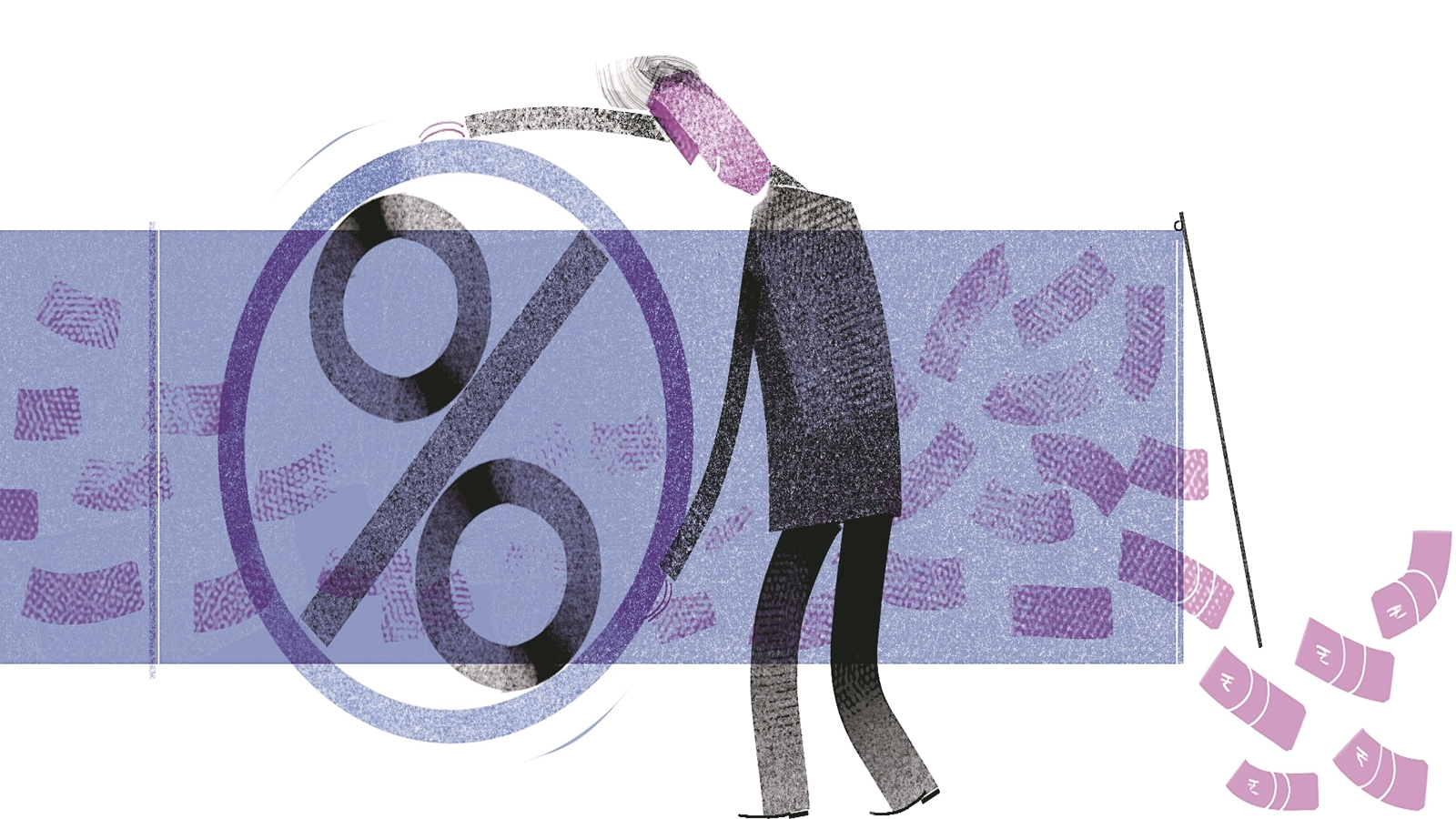
As someone said, tongue in cheek, people don’t eat GDP numbers. People eat food, wear clothes and footwear, send their children to school, buy medicines, use mobile phones, watch television, scroll social media, and want to be safe and happy — measured as Consumption. The aggregate of Consumption (C), Investment (I), Government spending (G) and net Exports (X -M) — after factoring for taxes and subsidies— is Gross Domestic Product (GDP). Measurement of GDP, especially the rate of growth of GDP, is crucial to gauge the health of the economy.
The MoSPI has released the GDP numbers for Q1 of 2026-27: the rate of growth is 10.3 per cent in nominal (current) prices and 7.8 per cent in constant prices compared to Q1 2025-26. The government and the sarkari economists are pleased. The sceptics have raised questions. There is a raging debate on the credibility of the GDP numbers. Rather than debating the desirability of ‘one nation, one election’ (which will undermine federal parliamentary democracy), it is better to debate the GDP numbers and whether the benefits of growth are percolating to the people.
Let’s assume that MoSPI’s numbers are correct. My calculations of the compounded annual growth rate (CAGR) of nominal and real GDP on two different base years are (see Table):
Notably, on the old base year and the new base year, the CAGR beginning 2022-23 is more or less the same. The growth rate in Q1 of 2026-27 is only marginally higher. Conclusion: the economy has not shifted gears in 2026-27; nor is it in overdrive. Therefore, no boast is warranted.
Let’s hold a mirror to the latest GDP numbers. The nagging question is, under the old base year, the GDP in constant prices is very depressed compared to the GDP in current prices but it is not so under the new base year. Why?
Be that as it may, the growth rate ought to be reflected in the measurable parameters of the economy such as jobs, wages, consumption, trade, investment, etc. Here are some pertinent questions:
l Why is the unemployment rate among youth of 15-29 years at a high of 16.2 per cent? CMIE has reported that the unemployment rate for graduates aged 29-34 years often touches 40-45 per cent; why? According to NITI Aayog, 8.7 crore youth aged 15-29 are ‘Not in Employment, Education or Training’ (NEET); why?
l Why are real wages growing at dismal rates of (-) 5.5, 1.7 and 3.3 per cent, respectively, among casual, salaried and self-employed workers? (source: PLFS). Twenty per cent of the workforce is casual labour and will they not be further impoverished by the negative wage growth?
l Why is net FDI so low? FCNR (B) mobilization which carried interest rates of 6-7 per cent came in truckloads, but why is foreign capital not coming as direct investment?
l When forex reserves have touched an all-time high of USD 740 billion, why has the rupee not appreciated? Since January 2026, the rupee has depreciated nearly 5 per cent against the US dollar and is reportedly the worst performing Asian currency; why?
l Exports are rising, but imports are rising too. At current prices, imports are rising faster. Merchandise trade deficit touched USD 150 billion in April-August 2026. The trade deficit with China alone in April-July was USD 44 billion. Is the trade deficit not a drag on the economy? Why are Make-in-India, PLI, ASPIRE, NMCP and other schemes not resulting in manufacture of the goods that India imports from China?
l In the sectoral composition of nominal GVA, why is ‘manufacturing’ stagnant at 13 per cent? In fact, the share of the secondary sector in nominal GVA, over many quarters, has been bound between 24 and 26 per cent. Why have the schemes not pushed up the needle?
lWhy is capital investment, as measured by Gross Fixed Capital Formation (GFCF), stuck at roughly 33.5 per cent of GDP? Of this, private corporate capital expenditure has remained unchanged at about 12 per cent. Despite cajolery, admonishments and threats, why are corporate investors not willing to make capital investment?
l Why has the growth number not resulted in more public goods such as better schools, better hospitals, better roads, better water supply, better policing, etc.? If one takes a straw poll, the overwhelming proportion of citizens will give a thumbs down on each of these areas.
There is no surprise that Gen Z is protesting against the marked deterioration all around them. We may be growing at 7.8 per cent statistically, but most citizens do not feel or believe so. Because they know that their lives are not better or easier.