
Phala Phala: Sentencing showdown looms for Ramaphosa farm thieves - IOL
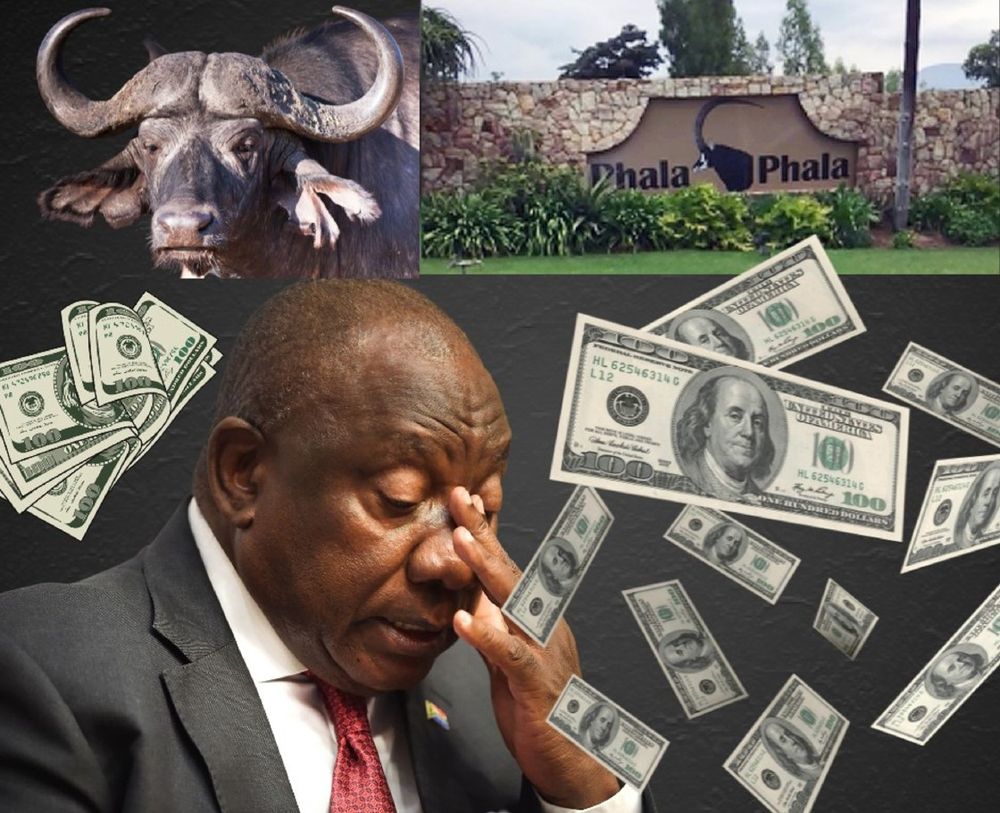
Pre-sentencing proceedings for Imanuwela David and former Phala Phala worker Froliana Joseph are expected to continue on Friday after they were convicted in connection with the theft of US$580,000 from President Cyril Ramaphosa’s farm.
Pre-sentencing proceedings for the two people convicted in connection with the theft of US$580,000 from President Cyril Ramaphosa’s Phala Phala farm are expected to continue on Friday, November 13, in the Modimolle Regional Court.
Imanuwela David and former Phala Phala worker Froliana Joseph were convicted by regional magistrate Peter Manthata following a trial into the February 2020 break-in and the movement of large amounts of money through David’s bank accounts.
David was found guilty of conspiracy to commit housebreaking with intent to steal, housebreaking with intent to steal, theft and money laundering.
Joseph was convicted of conspiracy to commit housebreaking with intent to steal.
However, her brother, Ndilinasho Joseph, who stood trial alongside them, was acquitted of all charges.
All three were found not guilty of housebreaking with intent to steal at Stokkiesdraai, a neighbouring farm.
In his judgment, Manthata criticised the investigation, saying there were no fingerprints or usable video footage identifying those who broke into the president’s house.
“This is a clear indication that the investigations of this case were poorly done,” Manthata said.
“It is in my view not understandable, as we are not talking about an ordinary house but the house of the country’s first citizen, the president.”
He also questioned why the case was only opened two years after the theft.
Manthata found that Joseph and David communicated by cellphone before and after the break-in, rejecting the defence’s argument that the state’s cellphone analyst was not qualified to provide evidence about the communications.
Joseph was a temporary worker at Phala Phala at the time and had access to the house through her duties on the farm.
“The nature of accused two’s duties on the farm enabled her to access the house, as she was working in the house,” Manthata said.
“Accused two, who was employed on the farm, had access to the house and was the only one who had substantial cellphone communications with accused one.”
The magistrate said Joseph had not explained the calls and chose not to testify. He added that two permanent employees who also had access to the house were not linked to David.
Ndilinasho, however, had never worked at Phala Phala, and there was no evidence that he knew what was happening at the farm.
Although he also chose not to testify, Manthata said the court could not infer from the state’s insufficient evidence that he had conspired with David or his sister.
Nothing was found in the siblings’ possession, and their bank accounts did not show that they had benefited from the theft.
A significant part of the judgment focused on David’s purchases of vehicles and other assets after the break-in, as well as large sums deposited into his bank accounts.
Manthata accepted the evidence of a salesman at a Benoni car dealership who testified that David approached the dealership looking for a Volkswagen Golf 7 and produced three packs of US dollars.
The salesman said this happened on February 10, 2020, the morning after the break-in.
Although the witness initially said David took the money from his underpants before later saying it came from his pocket, Manthata found the contradiction did not undermine his evidence.
“The only contradiction that emerged was as to whether the money was from the underpants or from the pockets,” Manthata said.
“Other than that, he was consistent in his evidence.”
The magistrate described the salesman as honest and reliable and rejected the dealership owner’s evidence that the Golf had been paid for in rand.
He also rejected the evidence of a man who drove David’s group to the dealership, finding that he was not truthful when he denied being paid in US dollars.
The dealership manager had testified that the same man asked where he could exchange dollars and was taken to a casino to change the money.
“After considering the totality of the evidence, I find that the accused was the one who purchased the VW Golf 7 car and the other cars, and I find that he used US dollars to purchase the cars,” Manthata said.
David maintained that the vehicles were bought on behalf of a businessman named John Pedro, who allegedly traded between Angola and Namibia, and that he had acted only as a middleman.
However, Manthata accepted the investigator’s evidence that none of the vehicles had been exported. He also found it improbable that the supposedly wealthy businessman’s own damaged vehicle remained at a mechanic.
“This is highly improbable, and this supports the position that John Pedro may be or is a fictitious person,” he said.
The court heard that David travelled from Cape Town on February 7, 2020, and was in Bela Bela, formerly known as Warmbaths, on February 8. The break-in took place the following day.
The magistrate noted that David subsequently acquired several vehicles, including a R500,000 Mercedes-Benz for his girlfriend, two Mercedes-Benz ML vehicles, a Volkswagen Polo and a Porsche. He also bought diamond-encrusted Rolex watches, teeth grills worth R250,000 and a house in Rustenburg.
The state’s financial evidence showed that more than R9.5 million was deposited into David’s accounts between February 3, 2020, and May 31, 2022.
Manthata rejected David’s explanations that his wealth came from assisting businessmen, delivering mercury, a friendship with a diamond dealer and Bitcoin trading.
The theft became public in June 2022 when former State Security Agency head Arthur Fraser laid a criminal complaint against Ramaphosa, accusing him of concealing the theft of US dollars hidden in a couch at the farm.
Ramaphosa has maintained that the US$580,000 was payment from a Sudanese businessman for 20 buffaloes.
The court accepted evidence from the farm’s former acting manager, who testified that a buyer paid him US$580,000 in cash for the buffaloes on December 25, 2019.
The manager said Ramaphosa instructed him the following day to wait for the general manager before dealing with the money. He later moved the cash from a safe to a sofa in the president’s house because too many people had access to the safe.
In November 2022, an independent parliamentary panel found that Ramaphosa may have committed a serious violation of the law and the Constitution. However, the National Assembly voted against adopting the report the following month.
The trial began in September 2025, with the state calling more than 20 witnesses. At least four were declared hostile after their evidence in court differed from their police statements.
The National Prosecuting Authority in Limpopo welcomed the convictions. The state had conceded during closing arguments in August that its case relied largely on circumstantial evidence.
Advocate Nkhetheni Munyai appeared for the state, advocate Koena Matlala represented David, while advocate Relleng Masipa represented the Joseph siblings.
