
Pharmacist who lost licence over missing drugs linked to Toronto police corruption probe - Toronto Star
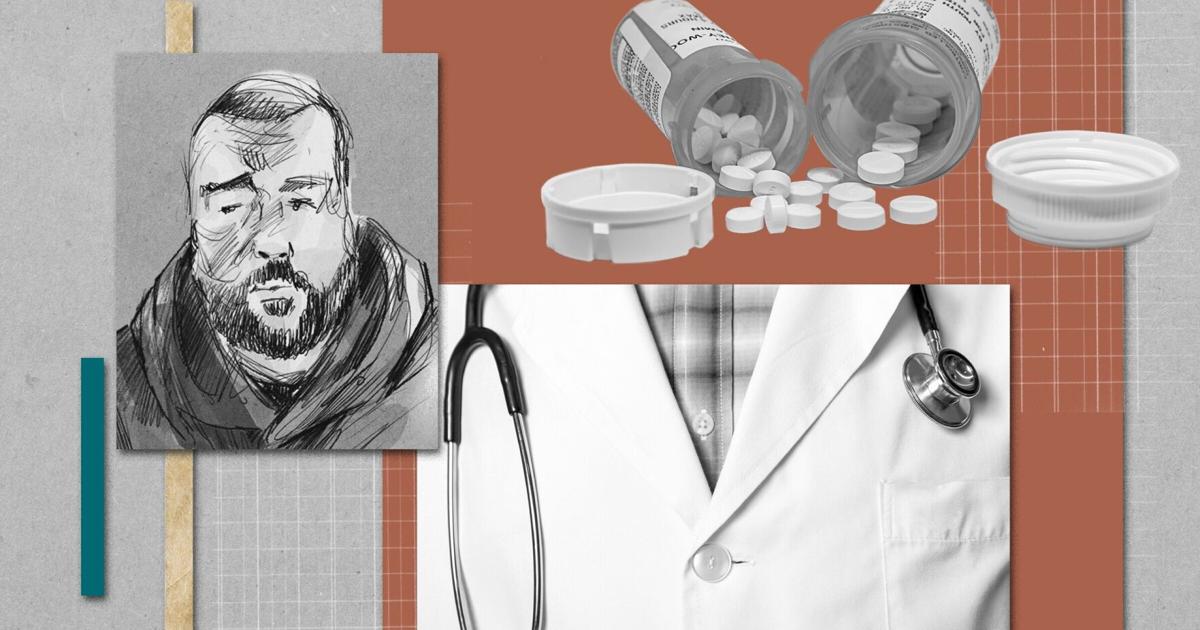
Sina Salehi hasn't been charged in Project South. At his disciplinary hearing, he denied the allegations but did not contest the evidence against him.
Sina Salehi lost his pharmacist licence over missing opioids and fraudulent insurance claims. Now he’s been linked to the Project South police corruption probe.
In deciding to revoke Sina Salehi’s licence to be a pharmacist, the disciplinary panel laid out a long list of misconduct and transgressions.
Over four years, while at the helm of three pharmacies in the Greater Toronto Area and one in Thunder Bay, Salehi diverted prescription drugs to the black market, submitted insurance claims for prescriptions he never filled and misled investigators who questioned him about it, the Ontario College of Pharmacists found. The practices, they said, were “beyond deplorable.”
During one 10-month stretch, even though one of his Thornhill pharmacies’ was closed, the college said Salehi continued to order drugs as if it was open, many of them controlled substances such as oxycodone.
The college did not detail where investigators believe drugs allegedly diverted by Salehi ended up.
However, newly released allegations provide a possible hint — as well as a connection between Salehi and the sprawling police corruption investigation known as Project South.
Brian Da Costa, a central figure in the Project South allegations.
Project South investigators allege Salehi supplied medications to Brian Da Costa, an accused drug trafficker and alleged co-conspirator of Toronto police Const. Timothy Barnhardt, the officer at the centre of the scandal who is accused of leaking confidential police information to criminals for money. Da Costa’s lawyer declined to comment.
The allegation is contained in documents known as an information-to-obtain a warrant, or ITO, filed by police in January. The ITO, which does not specify which drugs Salehi is alleged to have supplied to Da Costa, reflects what investigators believed about their targets at the time it was filed. None of the allegations in that document have been proven or tested in court.
Salehi has not been criminally charged.
At the professional disciplinary hearing in April that led to his licence being revoked, Salehi denied all of the college’s allegations, but would not contest the regulator’s evidence. In response to related lawsuits filed by an ex-business partner and pharmaceutical wholesaler, Salehi has said he did nothing wrong.
A lawyer representing Salehi declined to answer questions from the Star.
The college’s case against Salehi describes a man who turned to fraud in the pursuit of profits, disregarding professional ethics and patient care. Perhaps even more troubling, the case highlights how Salehi was able to continue his operation for years despite numerous red flags.
Salehi landed on investigators’ radars in 2020 following a York Regional Police investigation into websites selling black market prescription drugs and steroids.
Officers executed a search warrant that October at a luxurious house in Richmond Hill, tucked behind a gated driveway with trees trimmed into spirals. They found large amounts of prescription drugs: pill bottles, narcotics in vials, syringes with needles. Some bore labels from Salehi’s pharmacies. Just inside the home’s arched front door, where a grand staircase swirls around an opulent chandelier, police also found business documents from a Thornhill pharmacy with Salehi’s name on it.
Some of the drugs seized by police during a 2020 raid had prescription labels from pharmacies connected to pharmacist Sina Salehi. Salehi was not among those charged in relation to the bust.
Officers charged three people, including one person whose name appeared in documents related to the Thornhill pharmacy. But not Salehi.
York Regional Police declined to answer questions about its investigation in 2020, or why he has not been charged in connection with Project South.
The pharmacist regulator opened its first investigation into Salehi a few weeks later. It found a Pandora’s box of alleged misconduct that would eventually spark two more probes.
As the regulator started to dig, it found that during various windows of time between 2019 and 2023, Salehi diverted various drugs to unauthorized recipients and submitted claims for prescriptions he didn’t actually dispense, including claims for patients who were already dead. Some of the dubious prescriptions were billed to the publicly funded Ontario Drug Benefit Program. The provincial government revoked Salehi’s access to the program in 2022 over allegedly “unsupported and invalid claims.”
One former pharmacy assistant who worked for Salehi told the college that drugs Salehi ordered often didn’t make it to pharmacy shelves, and were instead placed in a plastic bag and ferried to the pharmacist’s car.
In one case, Salehi was accused of closing Neighbour’s Drug Mart in Thornhill for about 10 months in 2022 and 2023, but continuing to order about $1 million worth of medications.
“While the pharmacy was ostensibly temporarily closed, and in fact verified on a number of occasions to indeed be closed and not operating, it was nevertheless purchasing significant volumes of narcotics, prescription drugs, targeted substances, controlled drugs, which were not ever accounted for,” Jean-Claude Killey, a lawyer representing the college, said at Salehi’s disciplinary hearing.
“The inference we would ask you to draw is they were diverted to unauthorized sources.”

