Polaris Prize 2026: Angine de Poitrine, Slash Need, Begonia and other big moments - Toronto Star
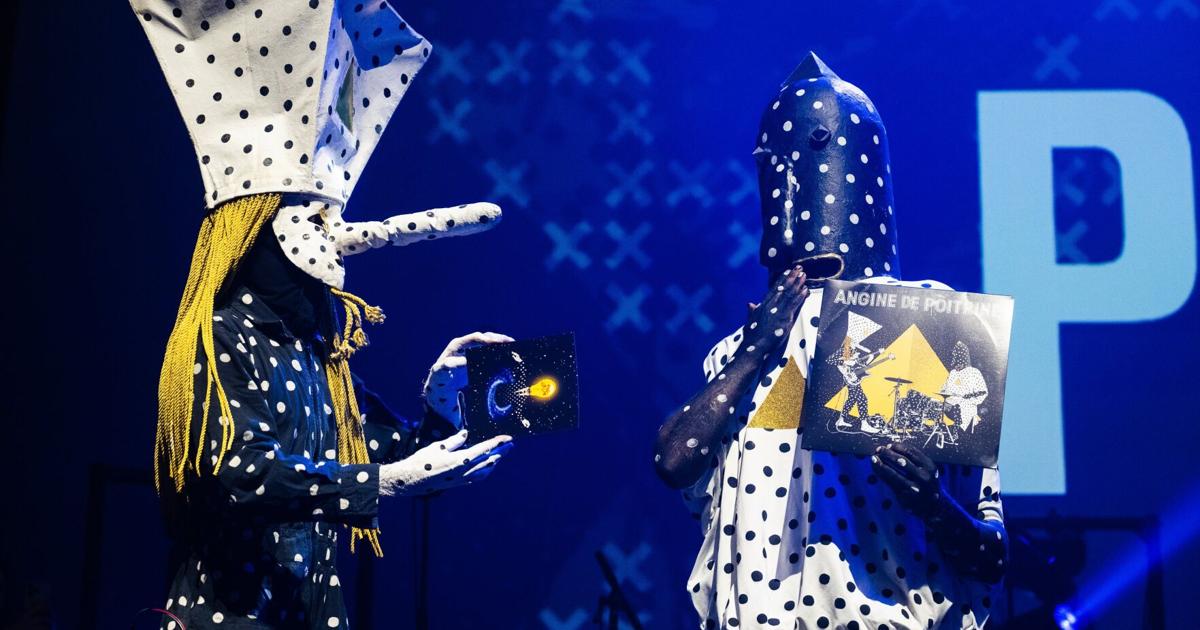
The mysterious Quebec rock duo won the Polaris album and song prizes at a gala awards show full of big moments.
Angine de Poitrine accepts their double win at the Polaris Music Prize for best album and song on Sept. 22, 2026.
Angine de Poitrine pulled off an otherworldly feat at the Polaris Music Prize on Tuesday, becoming the first act to win both of the event’s top honours.
The masked rock duo from Saguenay, Que., who conceal their identities behind extraterrestrial personas, had their second record, “Vol. II,” named best Canadian album of the year, earning them the $30,000 cash honour. The album’s opening track, “Fabienk,” also won the $10,000 song award, which was handed out for just the second time.
Both awards were handed out during a gala at Massey Hall, which featured performances by most of the 10 shortlisted artists, including Toronto singer-songwriter Charlotte Cornfield, Hamilton’s Beverly Glenn-Copeland and Quebec acts Bibi Club and Les Louanges.
Angine de Poitrine react to winning the Polaris Album Prize.
Angine de Poitrine — which is composed of guitarist Khn and drummer Klek — closed the show, then came back on stage minutes later to accept their wins. Khn and Klek blew kisses to the audience and patted their hearts in appreciation. Neither speaks publicly, part of maintaining their anonymity, so their manager Sébastien Collin stepped in on their behalf.
Collin thanked the 205-person Polaris jury for recognizing Angine de Poitrine’s “weird and complex” music.
After the show, Collin joked that the alien duo celebrated their win by sending hot dogs and sardines back to their home planet. “For them, sending a hot dog is a kind of recognition,” he said.
Beyond the night’s big winners, many of the shortlisted artists made their mark. Here are some of the memorable moments from the stage and behind the scenes.
Begonia performs at the Polaris Music Prize on Sept. 22, 2026.
Taking a cue from her own campy look, Begonia was ready to razzle and dazzle the Polaris crowd. Wearing an outfit she described as Cyndi Lauper crossed with “Toddlers and Tiaras” — with a dash of Dolly Parton — the Winnipeg pop singer was practically vibrating with energy backstage as her makeup artists applied the finishing touches.
Begonia, born Alexa Dirks, is familiar with the Polaris stage, having performed here when her previous album made the shortlist in 2023. This year, it was her latest record “Fantasy Life” in contention, and she knew the nomination was a chance to give new listeners a taste of what she can do.
Begonia prepares for her performance backstage at the Polaris Music Prize.
“I love an opportunity to do a medley,” she said before the show. “So we’ve jammed four songs into seven minutes.” On stage, those songs whizzed by, culminating in a full-length performance of her showstopper “My Fantasy Life,” an irony-dripping pop song about the highs and lows of chasing her music dreams.
Tanya Tagaq performs at the Polaris Music Prize Awards at Massey Hall in Toronto, on Tuesday, Sept. 22, 2026. THE CANADIAN PRESS/Laura Proctor
Tanya Tagaq notched a Polaris win in 2014, so the Inuk throat singer wasn’t particularly worried about the competitive side of the evening. Instead, she admitted backstage to having stage jitters after time away working on a new book and film project.
Tagaq was shortlisted for her seventh record, “Saputjiji,” an Inuktitut word meaning “designated protector.” The album is a reckoning with destructive capitalist forces, opening with the song “F — k War,” which builds its intensity through a repeated chant of its title.
The powerful song closed her Polaris performance, but Tagaq decided to make a blunt addendum to the lyrics: “F — k war. F — k Trump,” she repeatedly shouted, prompting cheers from the audience. Tagaq finished on a warmer note: she and a collaborator performed a throat song together, which ended in laughter and a hug.
Slash Need perform a tribute to Peaches at the Polaris Music Prize.
Even in absentia, Peaches knows how to cause a stir. The Toronto provocateur sent her regrets to Polaris due to a previously scheduled concert in Baltimore, and invited local industrial electropunk act Slash Need to perform at the show in her place.
The all-female act wasted little time before making an impression. At a pre-awards cocktail reception, the band’s dancers arrived in black outfits and fishnet stockings, their faces obscured by pantyhose decorated with bright red lips.
The dancers in Toronto electropunk act Slash Need strike a pose beneath the cheese platters at the Polaris Music Prize pre-show reception.
Within moments, they were crawling around on the floor, striking seductive poses beneath a table laden with cheese platters. Some attendees were shocked, others were intrigued, and it wasn’t long before all of the photographers were circling.
“When you get a gaggle of fun people together, we’re all just gonna have a little giggle,” said singer Dusty Lee.
The spectacle was merely a warm-up for the Peaches tribute, which featured several tracks from her shortlisted album “No Lube So Rude.” Lee opened the performance in shadow before tearing through the screen and joining her dancers as they tossed out inflatable beach balls made to look like giant breasts, which bounced around the auditorium. Slash Need built to a roaring finish, then made a quick escape from the stage.
Aquakultre performs at the Polaris Music Prize on Sept. 22, 2026.
When the eight members of Halifax soul collective Aquakultre learned their concept album “1783” had been shortlisted for the Polaris Music Prize, they decided to go bigger than ever for their performance. By the time they arrived in Toronto, they had nearly doubled their ranks, bringing in two horn players, three backup singers, Toronto’s former poet laureate George Elliott Clarke, and former “Canadian Idol” competitor Gary Beals who joined them on their song “Scotia Born.”
“We’re maxing it out,” said band member Jackson Fairfax before they took the stage. “We always try to do the biggest thing we can.”
Clarke said the group was inspired, in part, by East Coast kitchen parties, which are often associated with fiddles and Celtic music but have roots in the local Black communities, as well.
“We’ll get together on a Saturday night, and no matter what happens, go to church the next day,” he said. “That is part of our culture. That’s where our music comes from.”
David Friend writes about arts and culture in Toronto and beyond. Follow him on Instagram and Bluesky.