Police Officer Accused of Using Flock Cameras To Secretly Track Women - Newsweek
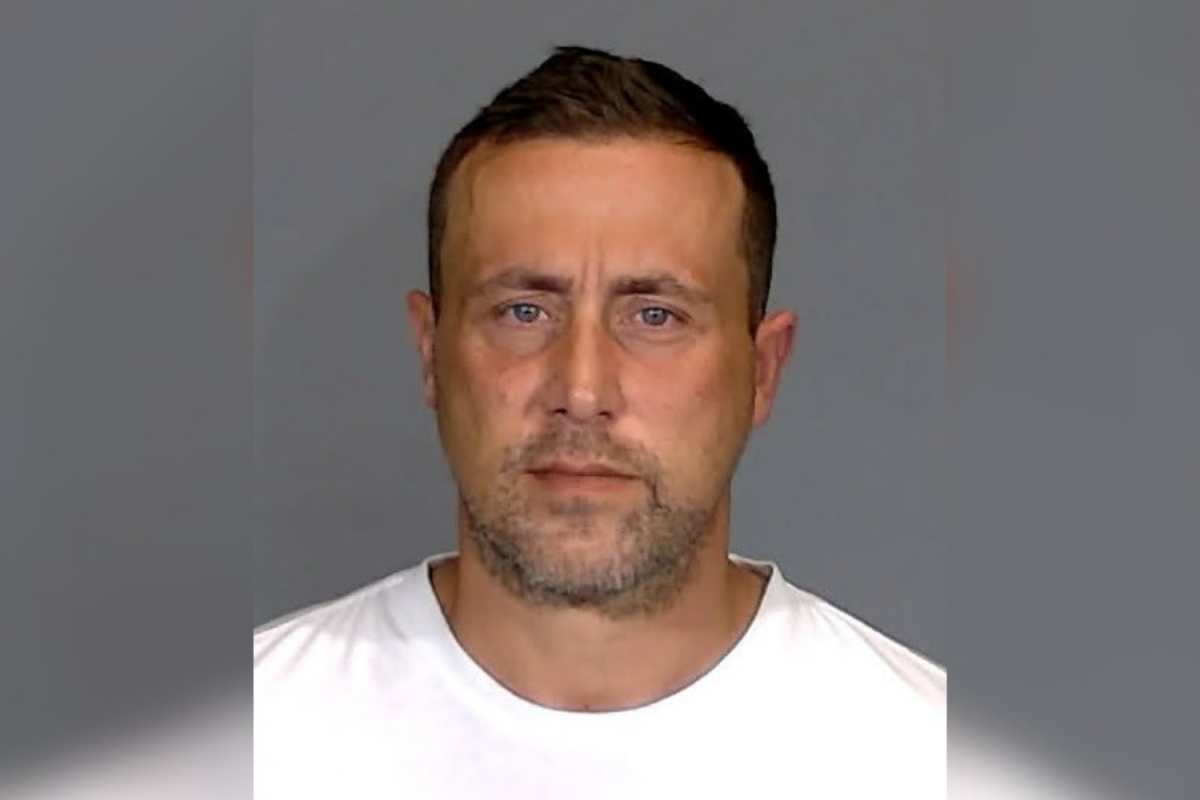
As senators call for tighter rules around Flock’s surveillance network, an Indianapolis police officer is facing 26 criminal charges relating to misuse of the technology.
Jonathan Schultz is facing 12 counts of official misconduct, 12 counts of fraud and two counts of stalking after it was found that he used Flock cameras to track the license plates of seven women and four men—most of whom he did not know.
While prosecutors allege 1,396 searches lacked a legitimate law-enforcement purpose, the charging documents contain 26 criminal counts tied to specific alleged incidents.
Schultz was taken into custody after a Marion County judge found probable cause and issued an arrest warrant, according to court records. An initial hearing has been scheduled, though no attorney had appeared on his behalf in the court file as of Thursday.
Prosecutors say that Schultz began stalking a woman in September 2023 after meeting her at a workout class at Center Grove High School. Schultz began to search her license plate in Flock just nine days later. The woman told police she believed that Schultz had a weird obsession with her based on comments he made after workouts.
The affidavit also alleges Schultz used Flock data to monitor his ex-wife and another woman he met in a parking lot where he told her he was an FBI agent conducting surveillance.
Newsweek reached out to prosecutors, Flock Safety and IMPD via email for comment.
Schultz is one of five police officers suspended by the department in the last six weeks over improper use of automated license plate reader (ALPR) technology.
They included Jonathan Schultz, who was suspended on charges of fraud, stalking and official misconduct, and Michael Rogers, Cassandra Crawley, Matthew Binford and Abigail Cramer, who were each suspended for fraud and official misconduct.
In a statement released on September 23, Chief Tanya Terry had placed all five officers on administrative duty with no police powers and revoked their access to ALPR systems.
One officer subsequently resigned, but the administrative and criminal investigations into that officer’s ALPR use continued. As additional facts emerged in each investigation, Chief Terry suspended the four remaining officers and recommended their termination to the Merit Board.
“Today is a deeply disheartening and disappointing day for IMPD. These individuals’ actions went far beyond a clerical error or a violation of department policy. These actions crossed into criminal conduct and shook the foundation of trust that our agency is built upon,” said Chief Terry in a statement shared with Newsweek.
Terry added that she refused to let the “actions of a few” define the work of the department and officers.
“We will continue serving with courage and compassion, as well as professionalism and accountability. Maintaining public trust is not optional, and it must be a daily practice. Each one of us has a role in upholding that standard," she said.
The department also added that misuse occurred before the implementation of the IMPD’s new ALPR policy in August 2026.
Under the new policy, officers searching the automated license plate readers database must enter a case number and identify the specific crime they're investigating. Data captured by the cameras themselves will be retained for 30 days, while search history will be maintained indefinitely.
Earlier this year, reports of police officers misusing Flock camera systems came from at least 12 states, including Alabama, California, Florida, Georgia, Illinois, Kansas, Missouri, North Carolina, Pennsylvania, South Carolina, Texas and Wisconsin.
Garrett Langley, Flock Safety's founder and CEO told Newsweek previously: "It's a disappointing story when I see it, but I also go, look, this is working. This is showing that if you use a tool like Flock or other tools, you should be held accountable, regardless of whether you have a badge or you don't."
On Wednesday, a Senate Judiciary Subcommittee on Crime and Counterterrorism hearing put Flock Safety in the spotlight as Republican Senator Josh Hawley said lawmakers need answers about what surveillance companies collect, who can access it, how long information is stored and how searches are conducted.
“Our Bill of Rights is still good no matter what the technology of the day is,” Hawley said.
During the same hearing, Sheriff Ross Teeple of Pinal County, Arizona shared how the cameras can support law enforcement, helping locate stolen vehicles, locate missing people and respond to alerts. Despite this, Teeple made the decision to terminate his department’s contract with Flock over new AI-powered systems.
“I will never allow technology to supersede your rights,” Teeple said. He also questioned whether an AI-generated record of a vehicle's movements should be treated differently from a physical tracking device.
“If my deputies need a search warrant to put a physical tracker on a vehicle, where is the line for camera systems that build an identical AI-driven map of a citizen's life?” he said.
Contact Newsweek editors on this story: Matthew Robinson and Cristina Diciu.