
Pope Leo wants artists to join the church and protect humanity from AI
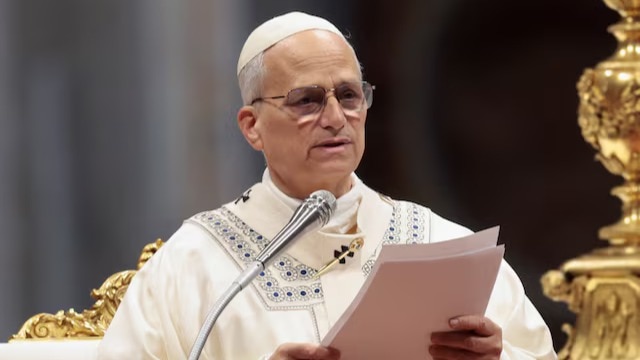
The Pope wants artists and the church to join hands to safeguard the future of humanity from AI. Art used to be understood as something that comes from the inner world of human beings for expressing ideas or feelings. But with AI, art can be made—or rather imitated—by machines on the fly. This a problem, according to Pope Leo XIV, who is now urging creatives to push back and save art.
In a post on X, the platform formerly known as Twitter, the Pope has called for a renewed partnership between the church, artists and cultural institutions. He argues that there is a fundamental difference between human-made art and content generated by machines.
“There is an ontological difference, even before an aesthetic one,” he wrote. In simple terms, before asking how an artwork looks, feels or sounds, the Pope tries to establish what it is and how it came into being. Human art comes from a person or people with experience, intention and what he calls "the spark of humanity." AI output, by contrast, he views as "statistical calculation based on millions of images created by others." He then put it more boldly, "Algorithms lack the spark of humanity."
Then he added that the church wants to “renew an alliance with artists and cultural institutions to safeguard our humanity.” Now, how will this work in practice? He didn’t make it clear in the post. He could be attempting to initiate a broader dialogue between the church and the creative world.
This is not the first time Pope Leo XIV has commented on AI. Just two days after his election in 2025, he said the church offers its social teaching in response to another industrial revolution and to AI developments that challenge human dignity, justice and labour. His choice of name reminds one of Leo XIII, who wrote a landmark 1891 encyclical on labour during the first Industrial Revolution.
The theme took its fullest form in May 2026, when he published his first encyclical, Magnifica Humanitas, subtitled "On Safeguarding the Human Person in the Time of Artificial Intelligence." Signed on May 15 and released on May 25, it marked 135 years since Rerum Novarum. Unusually, the Pope presented it in person at the Vatican, alongside Chris Olah, a co-founder of AI company Anthropic.
"Artificial intelligence needs to be disarmed," the Pope said earlier. "The word is strong, I know, but deliberately chosen because this moment needs words capable of attracting attention, awakening consciences and indicating paths forward for humanity."- Ends
I’m a journalist who loves reading and exploring diverse realms.


