
President Tinubu’s education revolution and the end of every excuse - Vanguard News
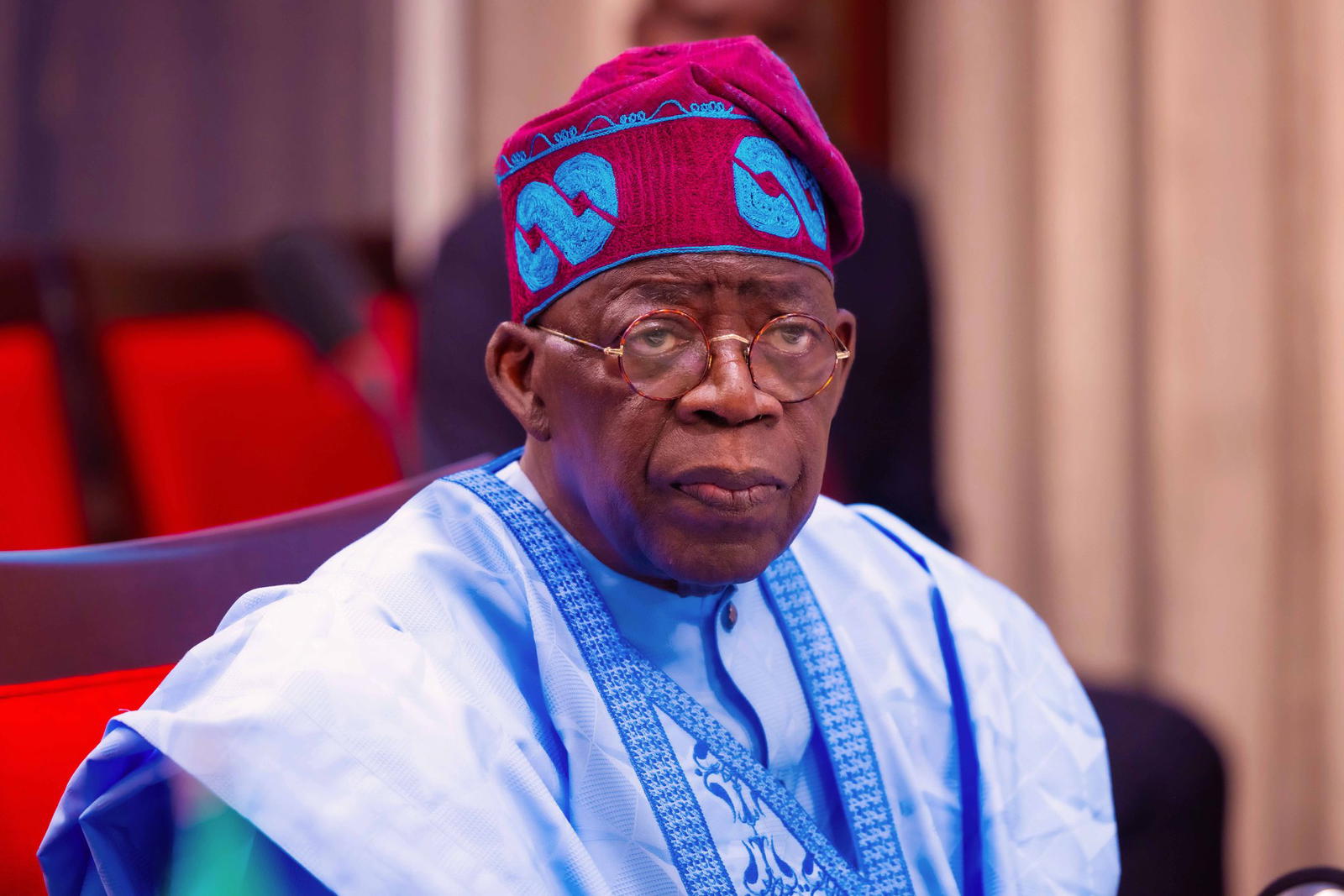
In a recent commentary, I described the Nigerian Education Loan Fund (NELFUND) as “the right peg in the right hole” the final link in an educational chain that began with Awolowo’s free primary education in 1955 and Obasanjo’s Universal Basic Education in 1999. NELFUND, however, is only one pillar of a much larger structure. A careful audit of President Bola Ahmed Tinubu’s record reveals a coherent, data-verifiable transformation across every layer of Nigerian education: unprecedented budgetary expansion, direct financial support to over a million students, a landmark welfare agreement with university unions, and critically record federation allocations that have enriched the states beyond anything their predecessors could have imagined.
For decades, Nigerian governments proclaimed education a “priority” while allocating it crumbs. That pattern has been broken and the trajectory is documented in official figures. The federal education budget rose from ₦1.54 trillion in 2023 to ₦2.18 trillion in 2024and then to ₦3.52 trillion in 2025 the largest single education allocation in Nigeria’s history, more than double the 2023 figure and 7.3 per cent of the ₦47.90 trillion national budget. TETFund’s allocation grew even faster: from ₦320.3 billion in 2023 to ₦683.4 billion in 2024 and then to ₦1.6 trillion in 2025, its highest envelope since inception. At the basic education level, the Universal Basic Education Commission’s statutory allocation grew more than six-fold in the same two-year span from ₦95.3 billion in 2023 to ₦263 billion in 2024, and ₦596.8 billion in 2025.
Within its 2025 envelope, TETFund earmarked ₦460 billion for direct institutional projects; ₦225 billion for release to NELFUND; ₦70 billion for campus mini-grid power solutions; ₦25 billion for campus security; and over ₦100 billion to strengthen medical training, with three institutions per geopolitical zone receiving ₦4 billion each to expand training in medicine, nursing, pharmacy and laboratory science. The 2026 intervention cycle has continued the momentum, with each public university allocated ₦2.53 billion, each polytechnic ₦1.87 billion, and each college of education ₦2.06 billion.
Twenty-five states and the FCT have accessed ₦92.4 billion in UBEC matching grants; ₦19 billion has supported teacher development across 32 states and the FCT; and individual state UBE grants have risen from approximately ₦1.3 billion to over ₦3.3 billion, enabling states that pay counterpart funding to access more than ₦6.6 billion each. Meanwhile, the Federal Ministry of Education has constructed nearly 4,900 new classrooms, renovated about 3,000 others, and supplied furniture to some 2.3 million learners.
The Students Loans (Access to Higher Education) (Repeal and Re-enactment) Act, 2024, signed on 3 April 2024, created Africa’s most ambitious income-contingent student financing scheme. The verified scorecard as of April 2026 speaks for itself: NELFUND has received 1,771,797 applications since its portal opened in May 2024; 1,388,592 students have been successfully funded; cumulative disbursements have reached ₦242.4 billion; ₦157.4 billion of this has been paid directly as tuition and institutional charges to 288 beneficiary institutions; ₦84.9 billion has been disbursed as upkeep allowances, with each beneficiary student receiving ₦20,000 monthly; and ₦2.2 billion in Student Venture Capital Grants has been awarded to 45 student-led startups selected from over 30,000 applications across 404 tertiary institutions explicitly linking education financing to job and wealth creation.
This is not system-level spending that touches institutions alone; it is money in the pockets of students and relief in the homes of their parents, direct, visible, and personal.
No achievement better captures this administration’s seriousness than the resolution of the sixteen-year renegotiation stalemate with the Academic Staff Union of Universities. The dispute that began in 2009 and defied the Babalakin, Jibrin and Briggs committees was finally settled through the Yayale Ahmed-led renegotiation committee inaugurated in October 2024. For the first time, a sitting President took personal ownership of the dispute and on 1 January 2026 the agreed welfare package took effect under National Salaries, Incomes and Wages Commission circulars.
The package delivers a 40 per cent upward review of academic remuneration in federal tertiary institutions, paid through the Consolidated University Academic Staff Salary (CONUASS) and the new Consolidated Academic Tools Allowance (CATA). For the first time in Nigerian history, a Professorial Cadre Allowance has been created ₦1.74 million per annum (₦140,000 monthly) for full-time Professors and ₦840,000 per annum (₦70,000 monthly) for Readers.
Earned Academic Allowances have been restructured into nine clearly defined categories;postgraduate supervision, teaching practice and industrial supervision, oral examination honoraria, external moderation, postgraduate study grants, call and clinical duty, responsibility and excess workload with supervision rates doubled. Postgraduate supervision now earns ₦50,000 per student per annum for Professors and Readers, up from ₦25,000, while postgraduate study grants of up to ₦700,000 per session (PhD, Sciences) and ₦500,000 per session (PhD, Arts and Humanities) are paid through the federal budget.
On dignity in retirement, the agreement is historic: professors may retire at 70 with pensions calculated at 100 per cent of their last annual salary, ending decades of anxiety over post-service welfare. Female academics now enjoy six months’ maternity leave, and their male counterparts two weeks’ paternity leave. A ₦30 billion Stabilisation and Restoration Fund for universities will be disbursed in three equal instalments of ₦10 billion annually from 2026 to 2028. Both parties further committed to advancing the National Research Council Bill, proposing research funding of at least 1 per cent of GDP, alongside guarantees on group life insurance, research and sabbatical leave, staff school funding, office accommodation, and a standing implementation monitoring committee.
The dividend is already visible: Nigeria is approaching three years without a nationwide university strike. A generation of students who once budgeted an extra year or two into every four-year degree is experiencing something its predecessors never had predictable academic calendars. The exodus of lecturers abroad, while not eliminated, now confronts a 40 per cent pay floor, first-of-their-kind allowances and a pension that honours a lifetime of scholarship.
The final and least discussed pillar of the Tinubu education agenda is fiscal. The petrol subsidy removal and accompanying revenue reforms have transformed the federation’s distributable pool, and with it, state treasuries. The verified figures are striking. In the first five months of 2026 alone, the 36 states received ₦3.547 trillion from the Federation Account Allocation Committee, compared with ₦3.724 trillion to the Federal Government and ₦2.513 trillion to the 774 local governments, according to data compiled from official FAAC communiqués. States’ net allocation in January 2026 stood at ₦703.26 billion for a single month, a 32.06 per cent year-on-year increase over January 2025’s ₦532.34 billion, per Office of the Accountant-General of the Federation data published by the National Bureau of Statistics. In July 2026, a record ₦3.007 trillion was distributed in a single month, the highest monthly federation allocation ever shared. Compare this with the ₦655 billion to ₦907 billion total monthly distributions to all three tiers combined in the months surrounding May 2023.
The arithmetic is sobering. At the 2026 run-rate, states are collectively receiving on the order of ₦8.5 trillion a year from FAAC alone, roughly triple what they received in 2022, about ₦2.8 trillion. Aggregate state education budgets have also risen, from approximately ₦2.41 trillion in 2024 to about ₦3.6 trillion in 2025, yet execution rates nationally hover at 66 to 67 per cent, meaning roughly a third of approved state education spending never materialises. This is not federal charity; it is the deliberate architecture of a reform that redirects resources to the tier of government constitutionally responsible for primary and secondary education, the very foundation on which NELFUND and the universities must build.
Education sits on the Concurrent Legislative List, but its first mile primary and secondary schooling, teacher recruitment and welfare, UBEC counterpart funding, state universities, and bursaries is overwhelmingly the states’ responsibility. Consider what now confronts any governor who neglects that duty. The Federal Government is paying the tuition of 1.39 million students and has injected ₦242.4 billion into household economies. Federal education spending has more than doubled in two years, with a further ₦1.6 trillion flowing through TETFund to institutions in every single state. University unions have a signed, NSIWC-circularised welfare agreement with payments effective from January 2026. State UBE grants have more than doubled, and UBEC’s pool has grown six-fold. And the states themselves are receiving record, tripled FAAC allocations.
A state that, against this backdrop, leaves classrooms roofless, counterpart funds unpaid, teachers owed salaries, and bursaries unawarded cannot plead poverty. The poverty excuse died with the subsidy. Some governors have shown the way by investing in school infrastructure, teacher recruitment and scholarship programmes, but execution remains the Achilles’ heel, with one-third of approved state education budgets routinely unspent.
The Tinubu administration has built the frame of the house. The walls must now be raised in every state. Education, like charity, begins at home, and for a governor, home is the state, not Abuja.
President Tinubu’s record on education is measurable in naira and kobo: ₦3.52 trillion in one budget year; ₦1.6 trillion through TETFund; ₦242.4 billion through NELFUND to 1.39 million students; ₦30 billion committed to stabilising universities; a 40 per cent pay rise and a full-salary pension for the scholars who train our youth; and record federation allocations that have tripled state revenues.
History will record this administration as the one that stopped merely talking about education and started paying for it, and paying for peace in its institutions. But history will also record what the 36 governors did with the windfall that accompanied these reforms. The giant strides have been taken at the federal level. It is now for the states to complement them step for step, school for school, child for child. Every figure I cited in this article says the same thing: there is no excuse left.
Prof. Temitope Babalola is the Dean of Student Affairs and Support Services at the Federal University Oye-Ekiti, Ekiti State, Nigeria. He writes on educational policy, student welfare, and national development.
Comments expressed here do not reflect the opinions of Vanguard newspapers or any employee thereof.
