Price controls may look attractive, but costs often only emerge later: PM Wong - CNA
Consumers may benefit from price controls initially, but over time, suppliers may have less incentive to produce or invest, says the prime minister.
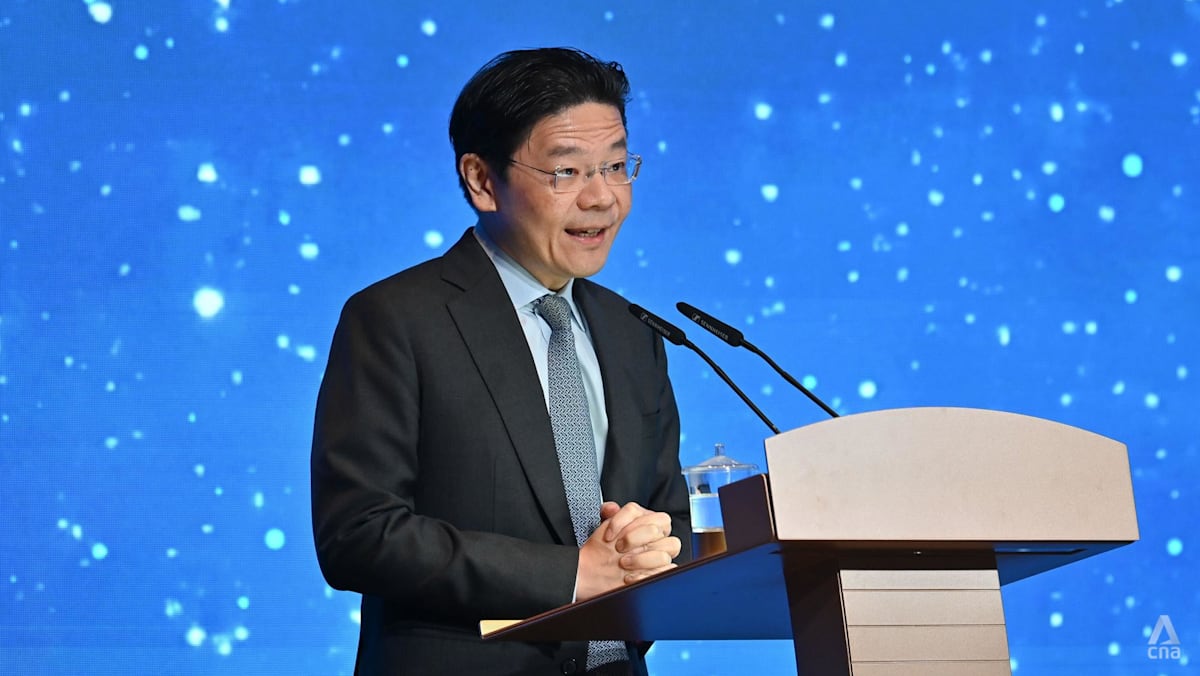
Prime Minister and Minister for Finance Lawrence Wong speaking at the Economist Service anniversary dinner on Sep 30, 2026. (Photo: CNA/Alyssa Tan)
This audio is generated by an AI tool.
Ang Hwee Min 30 Sep 2026 08:00PM Bookmark Bookmark Share WhatsApp Telegram Facebook Twitter Email LinkedIn Set CNA as your preferred source on Google Add CNA as a trusted source to help Google better understand and surface our content in search results. Read a summary of this article on FAST. Get bite-sized news via a newcards interface. Give it a try. Click here to return to FAST Tap here to return to FAST FAST SINGAPORE: Price controls may benefit consumers at first, but suppliers may have less incentive to produce or invest over time, Prime Minister Lawrence Wong said on Wednesday (Sep 30).
Speaking at the Economist Service's 25th anniversary dinner, he said the immediate effects of holding prices artificially low can look attractive, but the costs often emerge only later.
“Supply will fall short of demand, shortages will emerge and the original problem becomes even harder to solve,” he added, citing rent controls that discourage the supply of rental units and food price caps that lead to shortages.
Costs can also surface in other ways – fiscal burdens can accumulate, investments can move elsewhere and people find ways around the rules, said Mr Wong, who is also the finance minister.
CNA Games Guess Word Crack the word, one row at a time Buzzword Create words using the given letters Mini Sudoku Tiny puzzle, mighty brain teaser Mini Crossword Small grid, big challenge Word Search Spot as many words as you can Show More Show Less The Singapore government intervenes in many areas to correct market failures, pool risks and achieve “important objectives”, he added.
“But precisely because government intervenes, we need to intervene correctly.
“We have to diagnose the problem well, understand the incentives we are creating, recognise the costs and trade-offs, and think through the second- and third-order consequences,” he said.
Mr Wong said maintaining this discipline is one of the most important responsibilities of the Economist Service.
The Economist Service, headquartered at the Ministry of Trade and Industry, comprises public-sector economists who conduct economic research and analysis to support policymaking.
The Workers’ Party has previously called on the government to support small- and medium-sized enterprises “indirectly” by easing cost pressures, including rents.
During a parliamentary debate in August on a motion on Singapore’s economic growth tabled by the opposition party, its Member of Parliament Jamus Lim proposed capping annual rent increases around the historical average of 3 per cent. He said this would give businesses time to adjust to increases in fixed costs.
“This is a limit on the rate, not the level. Market rents will still prevail in the long run,” he said at the time, noting that many countries have similar restrictions. He argued that even limiting this measure to government or agency landlords would be a major step forward.
Singapore is not immune to pressures for "easy solutions" and this pressure will grow in the coming years amid an uncertain global environment and looming technological disruption, said Mr Wong.
Economists often discuss “creative destruction”, or how old activities give way to new ones, and how it is essential for innovation and growth, he said.
“That is true for the economy as a whole. But for the individual worker whose job is being displaced and destroyed, there is nothing abstract about the disruption. The costs are immediate and personal.”
“And when livelihoods are affected and people feel anxious about their future, it is understandable that they will look to the government for solutions.”
The government must respond to these concerns and help those adversely affected by change, ensuring that the benefits of growth are shared, said Mr Wong.
“But we also have to be clear-eyed about what works and what does not,” he added.
Good intentions alone do not make good policies, and leaving everything to the market is also not the answer because markets can fail, he said, adding that Singapore cares about other important things that markets alone cannot provide.
Mr Wong was one of the five economists on the team when the Economist Service was formally established in 2001, and he thanked the service for its work over the years.
He urged economists to uphold discipline in policymaking across government agencies, aided by the more advanced tools available today.
“What problem are we trying to solve? What are the trade-offs? What incentives are we creating? And what might happen next, including the consequences we did not intend?” he asked.
Doing this well takes judgment and intellectual honesty, said Mr Wong. “It takes the professional conviction to speak up when the analysis points to an uncomfortable conclusion.”
Our chief editor shares analysis and picks of the week's biggest news every Saturday.