Priced out and travelling further: Cape Town’s housing crisis hits workers in the pocket - IOL
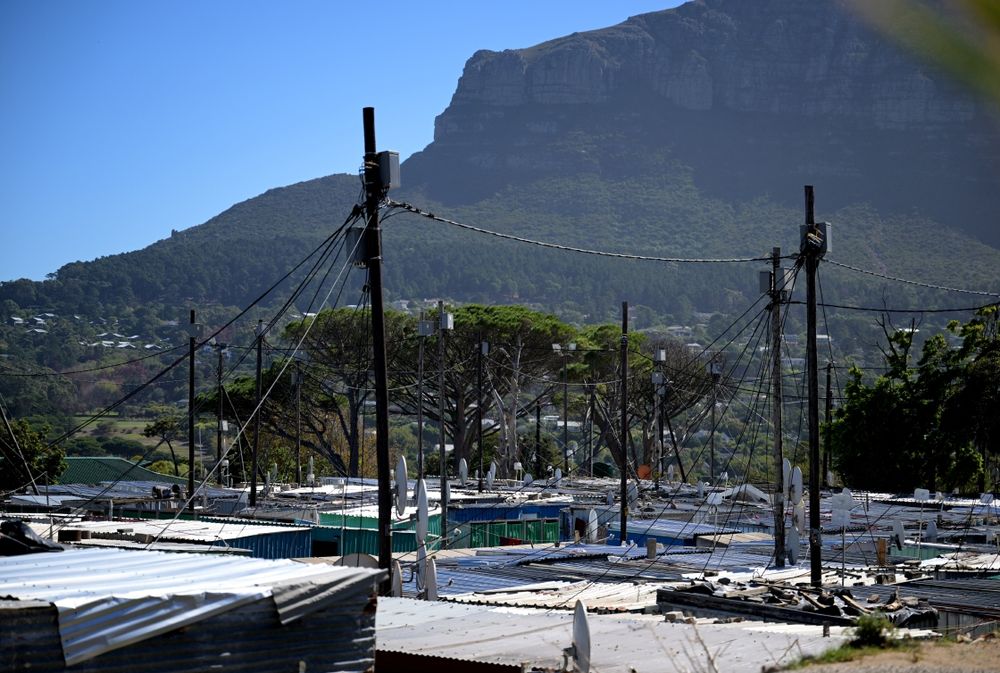
Cape Town’s housing crisis is increasingly becoming an economic and labour problem as working families are priced out of areas close to jobs and forced to spend more of their income and time travelling between home and work.
Housing advocacy organisation Ndifuna Ukwazi says the city’s affordability crisis has reached a point where large portions of the population can no longer realistically afford to live near employment, schools, healthcare and reliable public transport.
Yusrah Bardien, communications and engagements officer at Ndifuna Ukwazi, described Cape Town as facing an “extreme, escalating urban housing crisis”, arguing that decades of market-led development and insufficient use of well-located public land for social housing had reinforced existing spatial inequality.
According to the organisation, 76% of Cape Town residents earn below R22,000 a month, 58% below R10,000 and 25% below R3,500.
Using common affordability measures that housing costs should account for no more than about a third of household income, Ndifuna Ukwazi said more than half of Cape Town’s population could not afford rent or bond repayments above roughly R3,333 a month.
Bardien said this meant working-class and lower-income families were increasingly being excluded from well-located parts of the city and pushed towards overcrowded informal settlements or peripheral areas far from economic opportunities.
Ndifuna Ukwazi referred to what has been described as the “40x40x40 syndrome”: households living in homes of around 40 square metres, as far as 40 kilometres from work, while spending up to 40% of their income on transport.
Dawie Roodt, chief economist at the Efficient Group, said the affordability problem could not be separated from South Africa’s weak economic growth.
“The South African economy is not growing fast enough,” Roodt said. “If the economy is growing fast enough, more employment, rising wages, all of that will make all these other issues become irrelevant or much less important.”
He also noted that lower-income households were not seeing their earnings keep pace with rental and housing costs.
He said Cape Town could ease pressure by making residential development faster and less costly, with less red tape and more land opened up for housing development.
For employees already travelling long distances, however, the housing crisis is also filtering directly into the workplace.
Labour lawyer Wendel Bloem, of Wendel Bloem Attorneys, said employees were generally expected to arrange their own transport to work unless their employment contracts made provision for travel allowances or accommodation.
“The expectation is that the employee will make the necessary arrangements with regards to transport and to getting to the place of work,” Bloem said.
He said employers could provide travel allowances or accommodation, but these arrangements were usually contractual rather than automatic obligations.
Bloem acknowledged that increasingly long and expensive commutes could place a heavy burden on low-paid workers.
“We understand clearly that it can create challenges, and it can create a greater burden financially and even geographically on the employee, especially if it’s a low-paid worker,” he said.
He said employers and employees could negotiate transport or accommodation arrangements, adding that such measures could also benefit employers by helping ensure workers were able to report for duty.
“There must certainly be a labour-related will, by in particular employers, to make those accommodations, especially with accommodation becoming scarce and employees living further and further away from where they work,” Bloem said.
Bardien said well-located public land remained central to solving the crisis.
Ndifuna Ukwazi’s People’s Land Map identified about 128 square kilometres of vacant or underutilised public land across Cape Town.
The organisation has highlighted military-owned land at Ysterplaat, Wingfield and Youngsfield, arguing that large public sites could be used far more aggressively for affordable housing.
It has also questioned why some well-located public land continues to be used for parking, recreational and commercial purposes while thousands of families remain excluded from areas near jobs.
The affordability crisis has also become a political battleground.
GOOD Party MPL Brett Herron said Cape Town had not made sufficient progress in reversing apartheid spatial planning.
“Thirty years into democracy, the map of who lives where in Cape Town still looks very much like the map apartheid drew,” Herron said.
“Working and poor families continue to be housed on the periphery, far from jobs, and they carry the cost in time and money every day.”
Herron said public land should be used as an equity contribution to affordable housing rather than sold, and called for numerical targets for housing in areas including the CBD, Woodstock, Salt River, Observatory, Sea Point and Green Point.
Muhammed Khalid Sayed, ANC Leader of the Opposition in the Western Cape Provincial Parliament, said the housing crisis was “fundamentally a question of dignity, affordability and access to opportunity”.
He acknowledged developments such as Maitland Mews, Goodwood Station and Bothasig Gardens, but said isolated projects had not overcome the broader spatial divide.
“A family’s address should not determine its access to opportunity,” Sayed said.
“The workers who sustain Cape Town’s economy should be able to afford to live in the communities they serve.”
He said government should also consider the hidden cost of building housing on cheaper peripheral land.
“Cheap peripheral land can impose substantial costs on families through transport expenses, lost time and reduced access to employment,” he said.
Mayoral Committee Member for Human Settlements Carl Pophaim said the City’s housing strategy was aimed at reversing apartheid-era spatial planning through transit-oriented development and well-located affordable housing.
He said land parcels with a potential yield of more than 14,000 affordable units were in the active land-release or project-packaging stage, while a further 7,000 units were linked to land already awarded to developers.
More than 6,000 social housing units were already operating in Cape Town, while the City had released land valued at R1.7 billion for affordable housing over the past two years.
Pophaim said around 4,000 affordable units were entering construction phases in the central city this year.
He acknowledged that the cost and availability of well-located land remained significant constraints and said government subsidy programmes alone could not meet demand.
The City, he said, was relying on discounted land releases and private-sector partnerships to expand supply.
Pophaim also called for greater national funding and the release of large state-owned properties such as Ysterplaat, Youngsfield, Wingfield and Culemborg for housing development.
He said Cape Town would need more than one million additional housing units by 2050.