Project South drug plot planned to use Canadian airline insiders to help smuggle cannabis, documents allege - Toronto Star
Recently released court documents feature wiretap transcripts discussing alleged plan to ship drugs in suitcases tagged with GPS trackers.
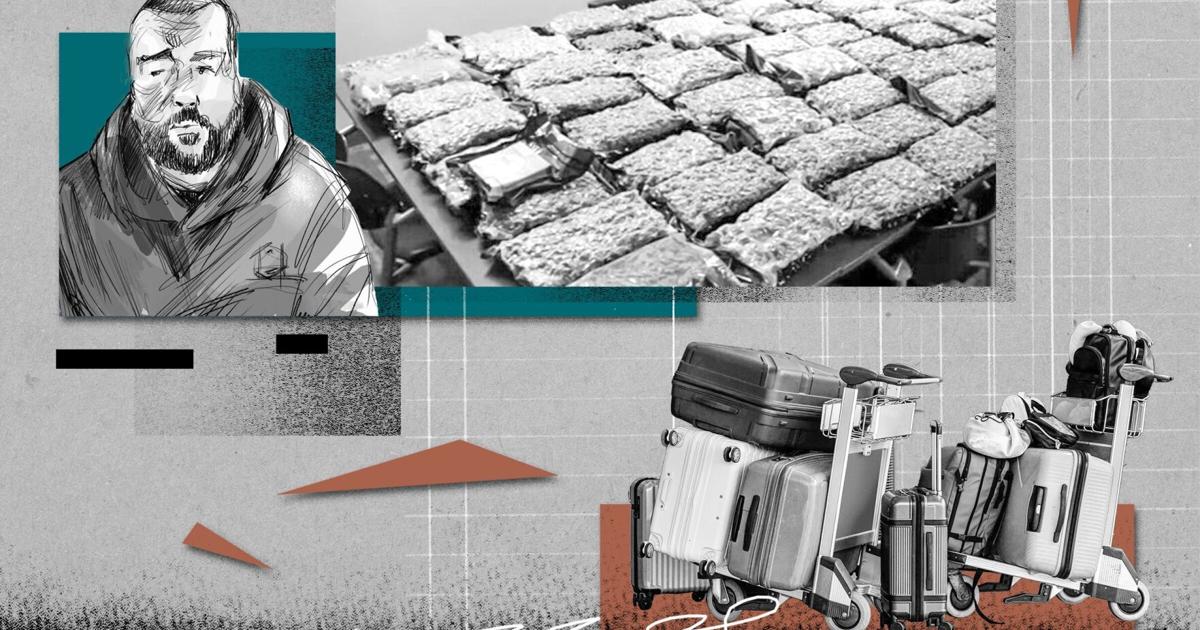
In newly released court records, Project South investigators describe an alleged scheme where cannabis would be packed into suitcases tagged with GPS trackers, then shipped through Pearson airport to Europe.
For months, officers had been covertly stationed outside the flat, red-brick plaza on Ordan Drive in Mississauga, just a short drive from Toronto Pearson airport, listening in on the conversations inside.
Investigators believed Unit D of the building was being used as a staging ground for mass amounts of cannabis; a final stop for the drugs to be packed into suitcases affixed with GPS trackers before they were smuggled through Pearson to international destinations such as Greece.
On an afternoon in mid-January, police allege a microphone hidden inside the unit captured their target — Brian Da Costa — telling an unknown individual that Air Canada was “live” at Pearson and that he had negotiated a flat rate of $14,000.
Two weeks later, Da Costa was arrested inside the unit, where police say they seized nearly 170 kilograms of cannabis.
But Da Costa is more than an accused drug trafficker; according to police, he was a key co-conspirator of Toronto Const. Timothy Barnhardt, the officer at the heart of the Project South police corruption scandal.
Investigators allege the men worked together, accessing information on confidential police databases which would be sold to criminals to facilitate violent crimes, including the alleged attempted assassination of a jail official.
The allegations against Da Costa and his alleged co-conspirators are contained in a document known as an information-to-obtain a warrant, or “ITO,” filed by Project South investigators pursuing sweeping allegations of police corruption in January.
Although the allegations of Toronto officers’ commingling with criminals have garnered the most attention since new portions of the ITO were released in mid September, the documents also reveal the international reach of the conspiracy — its tentacles, according to police, stretching far beyond the streets of the Greater Toronto Area.
Transcripts contained in the documents quote Da Costa allegedly telling his associates he had paid thousands of dollars to secure the safe transport of large shipments of cannabis through Pearson airport. The transcripts suggest Da Costa allegedly had insiders at two Canadian airlines to help with the scheme.
The ITO reflects what investigators believed about their targets at the time it was filed. None of the allegations have been proven or tested in court.
Lawyer for Da Costa, Craig Bottomley, declined to comment when reached by the Star.
In a statement, a spokesperson for Toronto Pearson said they actively support law enforcement investigations and work “closely with its security partners to detect, deter and disrupt criminal activity through access controls, security systems and other airport security measures.”
Investigators say a photograph of a licence plate, allegedly taken inside a Toronto jail, set off a chain of events that ended with masked gunmen at a public servant’s door.
Investigators say Da Costa, who faces a battery of charges in Project South including exporting cannabis and possession for the purpose of distribution, was repeatedly caught on wiretaps discussing the operation.
In one conversation, he was allegedly intercepted while boasting that his operation had already been responsible for “four to five” successful trips that year, but added that scheduling changes and “extended layovers” posed challenges.
In another conversation, police say that Da Costa emphasized that he only expected to be paid if the shipment successfully left the airport and that he did not wish to be paid if an arrest took place inside the airport. Police say he further clarified that any robbery occurring outside the airport “was not his responsibility.”
In October, investigators were granted authorization to intercept data relayed from tracking devices they suspected Da Costa had affixed to pieces of luggage allegedly used to smuggle cannabis. Analysis of that data showed repeated presence at the Ordan Drive unit, “followed by movement to Toronto Pearson International Airport and eventual loss of signal overseas in Athens, Greece,” the documents state.
On Jan. 8, a little under two weeks before his arrest, Da Costa was allegedly overheard discussing the details of an upcoming shipment.
Transcripts from those conversations allege that Da Costa emphasized the importance of “getting a door at Cartagena” — a Colombian shipping hub — and “placing a 10K deposit at the door.”
Police officers, writing the document to obtain search warrants, speculated that “door” in this context likely meant a point of entry to smuggle drugs and the money was likely an “upfront payment” to secure access to the Colombian supply chain.
Police say Da Costa advised an unknown individual to focus on Cartagena as they have “Air Transat people (...) willing to participate, as long as our guys are solid.”
In another conversation, police alleged Da Costa claimed that Air Canada was “live,” and that he’d negotiated a flat rate of $14,000.
He was allegedly observed a few days later meeting with an individual whose name is redacted from the documents, but who police say has previously appeared in two reports relating to RCMP investigations involving employees of Pearson airport.
A spokesperson for Air Canada declined to comment on the allegations while they remain before the courts.
According to police transcripts, accused drug trafficker Brian Da Costa allegedly described Air Canada as “live” and that he’d negotiated a flat rate of $14,000.
In an email, a spokesperson for Air Transat said they consider “the safety, security and integrity of its operations to be paramount” and that they “fully co-operate” in law enforcement investigations but, to-date, they have not received any requests.
Da Costa has already faced criminal proceedings in connection with alleged drug trafficking.
As the Star previously reported, he was arrested in 2019 at his condo, where police alleged they found six bricks of cocaine in the oven and another pound inside a kitchen drawer. He was charged with one count each of trafficking cocaine and possession of property obtained by crime, both of which were withdrawn by the Crown in 2023 with little explanation.
The Project South case isn’t the first time Pearson has made recent headlines, with CTV News’ investigative unit W5 publishing a report earlier this year identifying gaps in the airport’s security exploited by organized crime.
Three years ago, the airport was targeted in what is believed to be the largest gold heist in Canadian history. The gold — valued at more than $20 million — was spirited away from one of the airport’s cargo facilities in April 2023 by a driver who presented an Air Canada waybill for a load of seafood.
Investigators quickly linked the case to an international cross-border gun-smuggling ring, and said they believed the proceeds were used to fund weapons trafficking. Several suspects were arrested within months, including the alleged mastermind, who entered a guilty plea earlier this year.
The majority of the gold remains missing.
The spokesperson for Toronto Pearson said in an emailed statement that they have added 380 new cameras to the property over the last three years that “supports ongoing efforts to identify and address potential blind spots and vulnerabilities.”
Jennifer Pagliaro is a Toronto-based crime reporter for the Star. Follow her on Twitter: @jpags.
Abby O’Brien is a Toronto-based general assignment reporter for the Star. Reach her via email: abbyobrien@thestar.ca