Push to make sex pest register work and public - IOL
Nineteen months after the government committed to making the National Register for Sex Offenders (NRSO) more accessible, the register remains closed to the public.
A new campaign is now pushing for convicted sexual offenders to be identified and for greater transparency over who is listed.
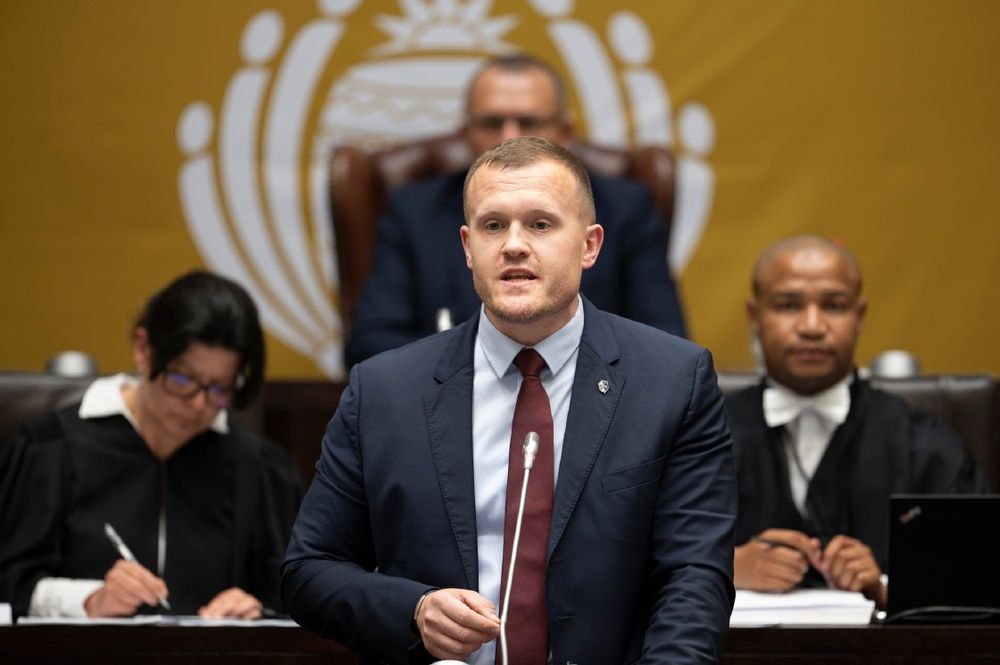
Portfolio Committee on Police chairperson Ian Cameron has launched a 30-day campaign in which he intends to publish at least one photograph, name, verified conviction and sentence of an adult sexual offender each day, using information contained in public court records.
Cameron said the campaign was not an attempt to reproduce the confidential NRSO but aimed to expose what he described as a gap between information already available through the courts and the public’s limited access to the register.
“This is not an unofficial copy of the NRSO, nor will confidential information obtained from that register be published,” he said.
He said the campaign would focus only on convictions that could be independently verified through public court records and was intended to put renewed pressure on government to address the lack of public access to information about convicted sexual offenders.
The NRSO is intended to record people convicted of sexual offences against children and other vulnerable people. While employers working with vulnerable groups can conduct prescribed checks, the register is generally not open to the public.
The issue has been under consideration by the Justice Department for more than a year.
In September 2025, Justice Minister Mmamoloko Kubayi told Parliament that the Office of the Chief State Law Adviser had concluded that the register could not simply be made public under the existing law.
She said section 52 of the Criminal Law (Sexual Offences and Related Matters) Amendment Act prohibited the publication of information from the register, except for purposes provided for in the Act or by a competent court.
Kubayi said a law of general application would therefore be required and confirmed that she had directed the department to prepare the necessary legislative amendments.
But, Build One SA (BOSA) Deputy Leader and Johannesburg mayoral candidate Nobuntu Hlazo-Webster has questioned what has happened to those amendments after the government indicated they had been drafted and circulated for comment.
She said there had still been no clear public timeline for when the amendments would be finalised and brought into effect.
“The public has a legitimate interest in knowing whether the system designed to protect children and vulnerable people is actually working,” she said.
Hlazo-Webster also questioned why the NRSO remained inaccessible more than a year after the commitment to change the law.
She said the register reportedly contained about 32 000 names, but South Africans had no meaningful way of knowing whether someone who posed a known risk was listed.
“There must be one standard for everyone,” she said, arguing that political connections, influence or power could not result in different treatment for people convicted of sexual offences.
The Kwanele Foundation backed greater public access, saying this would help protect not only women and children but also men and boys by allowing people to know who had been convicted of sexual offences.
Foundation founder Sihle Sibisi said safeguards were essential, particularly to ensure that victims’ names were never published and that information was limited to offenders who had been convicted in court.
Sibisi said the government needed to speed up the legislative process, particularly as gender-based violence remained a national crisis.
Cameron has similarly stressed that public access should not mean publishing addresses, identity numbers or victims’ details.