Putin faces growing discontent before Russia's Duma election - Newsweek
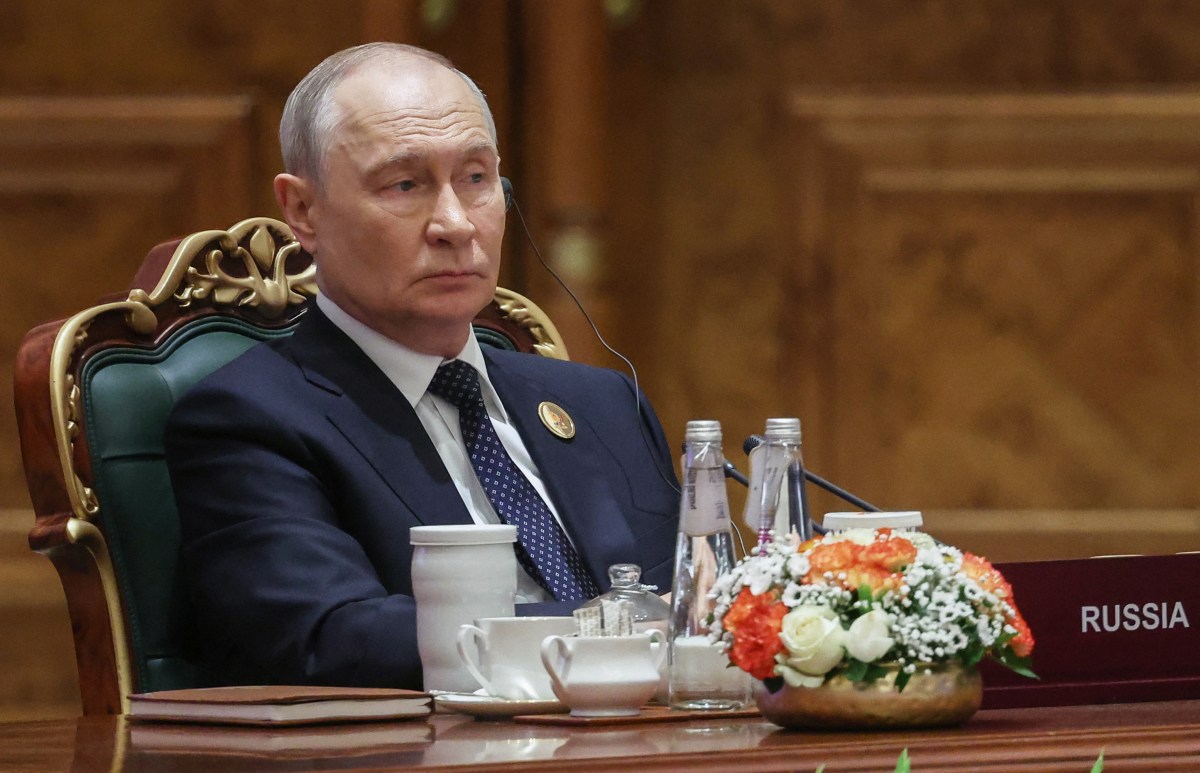
No surprises are expected in Russia’s tightly controlled parliamentary elections, but polls on Vladimir Putin's approval signal growing discontent among voters amid a sputtering economy and gas station fuel fights that show the war is affecting Russian citizens’ day-to-day lives.
The results of state polling can be taken with a grain of salt, but surveys have shown a dip in support for the Russian president, who is likely to use the three-day ballot that will return the ruling United Russia party to power in the State Duma as a mandate to continue his war.
The Levada Center is independent of the Kremlin and found that in August, Putin’s approval rating was 76 percent—still an overwhelming majority, but down 13 percentage points from the same period last year.
Other state surveys point to a dip in support for Putin as the war he started has come to Russia’s cities due to Ukrainian drone strikes on not just oil refineries and military sites, but also e-commerce businesses like Ozon and Wildberries.
“I think that Putin is unpopular— he would not win elections against basically any reasonable candidate if they were had right now,” Konstantin Sonin, a Russian-born economist who is on Russia’s Federal Wanted list for his condemnation of Putin’s full-scale invasion, told Newsweek.
In Russia, where a crackdown on dissent and criticism of the war means that polling has an obvious health warning, state surveys can point towards gradual shifts in opinions.
In May, Russia's state-controlled polling agency VTsIOM (Russian Public Opinion Research Center) changed its methodology after Putin’s approval rating dropped to 65.5 percent, a slump of 12.2 percentage points since December and the lowest level since the start of the war.
Its latest survey between August 24 and August 30 showed Putin’s approval up slightly to 66.9 percent.
These numbers would be toasted by leaders in democratic countries, but the Kremlin is taking no chances, having barred the anti-war party Yabloko, the Russian word for "apple", weeks after it had initially allowed it to run.
In August, Russia's Supreme Court banned Yabloko from running in the State Duma's party list, citing alleged violations of election campaigning rules.
Some Yabloko candidates are still running in single-seat constituencies, but have little chance of winning seats. Supporters gathered outside the Supreme Court last month to chant “shame” in a rare wartime demonstration.
“My theory of this is that there are people in the elite and maybe a lot of people in the elite who do not want Russia defeated, but they want war to end,” said Sonin, who is a professor at the University of Chicago Harris School of Public Policy, noting that pro-war Russian figures realized Yabloko could stealthily campaign for peace.
“This is more than Putin could tolerate now,” Sonin said, “this was embarrassing. It was easier not to register them at all from the very beginning.”
The election will be held in Russia and Russian-occupied Crimea between Friday and Sunday to elect 450 members of the Duma, who serve five-year terms. Half of the seats are allocated through a nationwide party-list vote, and the other half by the vote count in single-seat constituencies.
United Russia party is expected to retain its majority in the parliament, which rubber-stamps Kremlin policy. It currently has 310 seats and needs to win at least 300 to keep its supermajority.
The four other parties expected to re-enter the Duma include the Communist Party and the ultra-nationalist Liberal Democratic Party of Russia, which tend to vote with United Russia.
A survey by VTsIOM at the end of August put support for United Russia at 37 percent, well clear of the next party, the Communist Party at 11.6 percent.
“The Kremlin has taken all efforts to ensure people have no choice; every party that is still on the ballot has war veterans in their lists,” said Sonin. “They probably have their target numbers and will adjust the results so that the reported results correspond to these numbers,” he added.
The only independent nationwide election watchdog, Golos, which has condemned past elections, closed down in 2025 following pressure from authorities.
Meanwhile, Russia has not invited any monitors from the Organization for Security and Co-operation in Europe (OSCE) to observe the ballot, with Moscow insisting that voting is conducted in accordance with the law.
A briefing by the Center for European Policy Analysis (CEPA) think tank last week heard how the Duma elections were aimed at showing regime stability and loyalty to Putin and the war, not for genuine competition, and the exclusion of Yabloko reveals regime fear, not strength.
The Kremlin has repeatedly accused the government in Kyiv of being “illegitimate” for not holding wartime elections, and the elections in Russia aim to reinforce a false image of normalcy during its full-scale invasion.
“The message and the signal that everything is under Kremlin's control, is something that Russian political regime tries to signal both domestically and internationally via all electoral procedures, including these elections,” Mikhail Komin, CEPA resident fellow, said during the briefing.
“Despite the government’s declining approval rate...the rising social pessimism and Ukraine's undoubtedly successful campaign to bring the war deeper into Russia, the Kremlin, unfortunately, will, I think, achieve this goal,” he added.
Newsweek’s reporters and editors used Martyn, our AI assistant, to produce this story. Learn more about Martyn here.
Contact Newsweek editors on this story: Alfred Joyner and Gray R. Thomas