Quasi-Fiscal Burden of High-Speed Rail Debt - Tempo.co English
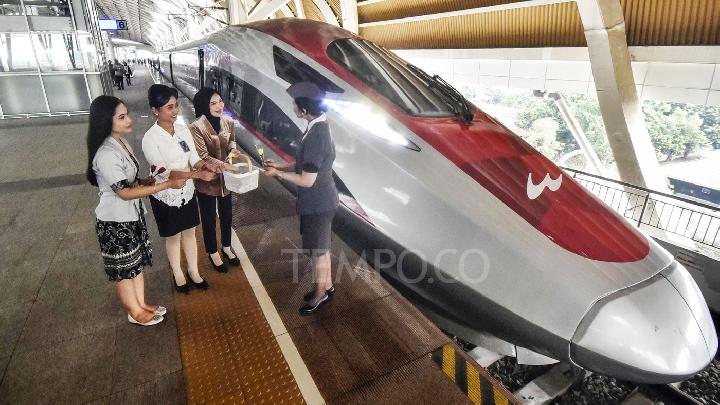
The government is finalizing a solution to the high-speed rail debt. The options would make the use of public funds less transparent.
THE high-speed rail project has truly become a burden on the Indonesian people. Not only because of its mountain of debt, but also because of the headache of dealing with it. President Prabowo Subianto’s administration has repeatedly failed to come up with options for restructuring the Whoosh debt without harming state finances.
From the outset, the high-speed rail project was commercially unviable. The route is too short to be efficient. The public has many cheaper options for traveling between Jakarta and Bandung, and even more effective ways to reach destinations within the two major cities. As a result, after three years of operation, Whoosh is still losing Rp4 trillion to Rp5 trillion a year because passenger numbers have reached only half of the ideal target of 31,000 passengers a day.
The operating losses are compounded by annual debt installments of Rp2 trillion to the Chinese government, which financed the project. Kereta Api Indonesia and three companies in the Pilar Sinergi BUMN Indonesia (PSBI) consortium, which holds shares in Kereta Cepat Indonesia China, the operator of the Whoosh high-speed rail service, must make the payments over 80 years.
The Ministry of Finance is now working on three schemes for taking over PSBI’s shares. The first option is to transfer PSBI’s shares to the Indonesia Investment Authority (INA), the state investment agency. This would mean that Whoosh’s debt would not only become a burden on the state, but also a liability for INA’s investors.
The second option is for PSBI’s shares to be taken over by a new joint venture between INA and Sarana Multi Infrastruktur (SMI), a state-owned company under the Ministry of Finance that finances infrastructure projects in the regions. This means SMI’s business earnings would be eroded by the Whoosh debt burden. The third option would hand responsibility to Danantara, the holding company for state-owned enterprises.
Whatever option the government chooses, the burden will not disappear. The state will still have to bear it. The funds managed by INA, SMI, and Danantara are public money sourced from the State Budget. These options instead push the high-speed rail burden into the quasi-fiscal sphere. The burden will be borne by the State Budget, but accountability will not go through the public parliamentary process in the House of Representatives. The effort to rescue Whoosh would instead make it less transparent.
Therefore, the complexity of dealing with the Whoosh debt should not obscure one thing: holding Joko Widodo accountable as the project’s initiator when he was President. He changed the Jakarta-Surabaya high-speed rail project into the Jakarta-Bandung route on the grounds that it would not burden state finances. Jokowi pushed the project through without adequate studies and ignored public criticism and opposition.
The high-speed rail project has now clearly harmed state finances because its burden has returned to the State Budget. State authorities should investigate the matter and bring Jokowi to justice. Without law enforcement, Jokowi’s successors will repeat the creation of similar large-scale projects that drain public funds for prestige and legacy.