Railways, fuel, insurance and more: These UPI payments to attract Rs 5 MDR
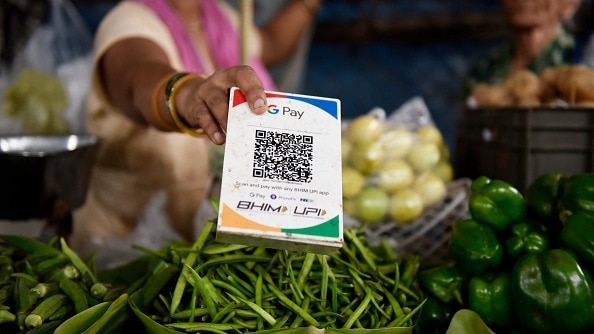
UPI payments above Rs 2,000 will soon come with a new merchant charge, but not every business will pay the standard 0.4% MDR.
Under the new Merchant Discount Rate (MDR) framework, which will take effect from October 15, 2026, certain merchant categories will get a concessional flat rate of Rs 5 per transaction. This means the charge will remain Rs 5 even if the payment amount is much higher.
Consumers, meanwhile, will continue to use UPI without paying any transaction fee.WHICH CATEGORIES WILL ATTRACT FLAT RS 5 MDR?
The flat Rs 5 MDR will apply to specific merchant categories, including railways, telecom services, insurance and fuel, among others.
For these categories, UPI transactions above Rs 2,000 will not attract the standard 0.4% MDR. Instead, merchants will pay a fixed Rs 5 per transaction. Source: NPCI
This is particularly important for sectors where transaction values can be high, but margins may be relatively low. A percentage-based fee could otherwise result in a much higher processing cost for merchants.
For example, a merchant handling a UPI payment of Rs 10,000 would pay Rs 40 under a 0.4% MDR. Under the flat-rate structure, an eligible merchant would pay only Rs 5.
Fuel purchases are among the transactions covered by the concessional flat-rate structure.
For UPI payments above Rs 2,000 at petrol pumps, the MDR will be capped at a flat Rs 5 rather than being calculated at 0.4%. Source: NPCI
The lower fixed charge is aimed at keeping digital payments affordable for fuel retailers, where even a small percentage-based fee can add up across a large number of transactions.
For fuel payments below Rs 2,000, MDR will remain zero.
This means a customer filling fuel worth Rs 1,500 and paying through UPI will continue to attract no MDR for the merchant.WHAT ABOUT ELECTRICITY AND WATER BILLS?
Government utility bill payments will also get the flat-rate treatment.
Payments for services such as electricity, municipal water and piped natural gas that exceed Rs 2,000 will attract a flat MDR of Rs 5 instead of the standard 0.4%.
For transactions below Rs 2,000, there will be no MDR. Source: NPCI
The structure is aimed at helping government utility bodies and municipal authorities continue to encourage digital bill payments without facing a large processing cost on higher-value transactions.WHY HAS A FLAT RATE BEEN INTRODUCED?
The difference between the two structures is significant.
Under the standard P2M framework, a 0.4% MDR will apply to UPI transactions above Rs 2,000. For transactions of Rs 75,000 and above, the MDR will be capped at Rs 300 per transaction.
But for selected sectors, the charge will remain fixed at Rs 5.
The flat-rate model prevents the MDR from rising sharply with the value of a transaction. This can be particularly useful for essential services, utility payments and sectors such as fuel, where merchants may process a large number of digital payments.WILL CONSUMERS HAVE TO PAY THE RS 5 CHARGE?
The MDR is a charge paid by the merchant and not directly by the consumer. The new framework does not introduce a UPI transaction fee for consumers.
So, whether you are paying a fuel bill, an insurance premium, a telecom bill or an eligible utility bill, the customer will continue to use UPI without an additional transaction charge.
The new framework is therefore mainly about how the cost of processing certain merchant payments will be shared across the UPI ecosystem, rather than about charging consumers for using the payment platform.- EndsPublished By: Jasmine anandPublished On: Sep 15, 2026 20:08 IST