
Raj Reddy: The first Asian to win AI's highest honour has roots in Andhra village
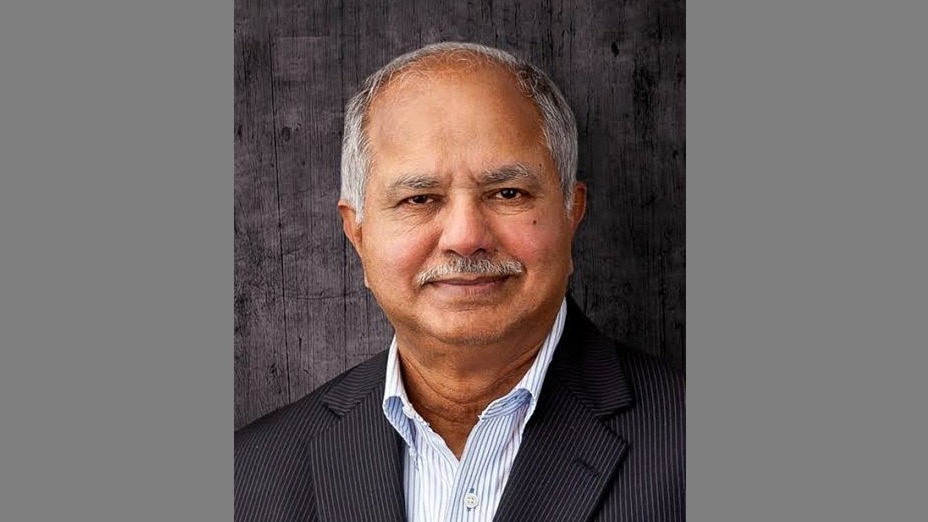
He had been studying at Stanford University in the 1960s, Raj Reddy, after completing his MTech in Australia, when he arrived at the university for a PhD under none less than a pioneer himself, the man who coined the term artificial intelligence, John McCarthy. Those years at Stanford would put him at the centre of a field that was still finding its vocabulary, and in 1966 Reddy emerged with a distinction that would become part of computing history, becoming one of the earliest to earn a PhD in Computing under McCarthy.
But Dabbala Rajagopal Reddy had much more in his bucket than just that. The recipient of the Turing Award, often described as the Nobel Prize of computing, and the first person of Asian origin to receive it, Reddy's story also runs deep into India's own technological journey.
When Hyderabad was being imagined as a technology hub and the then Chief Minister Chandrababu Naidu was putting that vision on the table, it was Reddy whom he turned to for ideas and direction.
Naidu's later speeches about Hyderabad's growth would often carry references to the man whose work had already shown how technology could transform lives.
Now, when the AI race has moved so far and is shaping the world faster, anyone could have imagined.
It was Reddy's idea that a computer could actually be taught to understand human commands and speech suddenly feels almost ordinary.
The research that helped make that possibility real had Reddy's hands all over it.FROM A SMALL ANDHRA VILLAGE TO STANFORD
The prodigious part of the story is where that journey began, because before Stanford, before Carnegie Mellon, before the Turing Award and before machines were being taught to recognise the human voice, there was a farmer's son from a small village in Andhra Pradesh who once learned to write by tracing letters into sand.
Born on June 13, 1937 in Katur village of Chittoor district in present-day Andhra Pradesh, Reddy grew up in a rural India where electricity and running water were not guaranteed parts of everyday life.
Where even something as basic as paper could become a luxury in a classroom.
His one-room schoolhouse had little paper, so children learnt to form letters by tracing them in sand.
The practice was not unfamiliar in India, with British and European accounts describing similar methods in traditional pathshalas, where children often wrote on sand or soil before moving to more permanent materials.
For Reddy, the sand became his first writing surface. At home, Reddy grew up with six siblings. (Image: Carneige Mellon University)
He has recalled later in his speeches, going barefoot through much of his childhood and not having a proper pair of shoes or sandals until he was around 16.
His father, Sreenivasulu Reddy, was a farmer and landowner in the village, while his mother, Pitchamma, was a homemaker.
Reddy became the first person in his family to attend college, eventually earning a bachelor's degree in civil engineering from the College of Engineering, Guindy, in Madras in 1958, before a voyage to Australia, where his encounter with computing would begin to change the direction of his life.
At the University of New South Wales, Reddy encountered an English Electric DEUCE computer.
The machine was built around vacuum tubes and mercury delay-line memory, a technology that today sounds almost impossibly primitive compared with the computers carried inside our pockets.
He completed his MTech in 1960 and later worked with IBM in Australia, but none of this path seemed destined to lead towards artificial intelligence until 1963, when Reddy arrived at Stanford University and entered the laboratory of John McCarthy.
In the year 1963, Raj Reddy came to Stanford University to pursue the study of artificial intelligence under Professor John McCarthy, who had given the new discipline its name at the Dartmouth conference of 1956.
He entered the Stanford Artificial Intelligence Laboratory at a time when the very question of whether a machine might be made to reason was still under examination.
Under McCarthy's guidance, Reddy turned his attention to perception and manipulation, seeking to understand how a computer might be made to deal with information and arrive at a course of action.
Three years later, in 1966, he completed his doctoral work with a dissertation entitled “A Computer Program for Playing Black Jack,” in which he examined how a machine might make decisions when the result of an action could not be known beforehand.THE VOICE THAT TAUGHT MACHINES TO LISTEN
The answer would gradually begin to emerge through his work on speech recognition, language, vision and robotics. (Image: Stanford)
Reddy and his colleagues developed Hearsay I, one of the early systems capable of recognising continuous speech, and later systems including Hearsay II and Harpy pushed the research further.
One of Reddy's students, James K. Baker, would later co-found Dragon Systems, whose work helped bring speech recognition closer to commercial reality.
Think about the distance being covered here: a child who once had to trace letters into sand because his school did not have enough paper had, within a few decades, become one of the people teaching machines to understand the human voice.
At Carnegie Mellon University, where Reddy joined the faculty in 1969 and spent much of his career, his influence expanded beyond research.
He became the founding director of the Robotics Institute in 1979, helping establish what would become one of the world's leading centres for robotics and AI, and the institute became so closely associated with him that it was affectionately known as the "Raj Mahal."
He later served as dean of Carnegie Mellon's School of Computer Science.
In 1994, Reddy and Edward Feigenbaum received the ACM Turing Award for their pioneering work in the design and construction of large-scale AI systems and for demonstrating the practical importance and commercial potential of artificial intelligence.
Reddy became the first person of Asian origin to receive the honour, marking a moment not only in the history of computing but also in the story of an Indian boy whose journey had begun in a village classroom without paper.
He also became involved in projects aimed at bringing technology and education to rural communities, helped establish the Rajiv Gandhi University of Knowledge Technologies for gifted rural youth in Andhra Pradesh, and served as founding chairman of IIIT Hyderabad.
His vision was not simply to build smarter machines for those who already had access to technology, but to use AI, speech recognition, translation and digital education to reach people at the bottom of the economic pyramid, including those who had never benefited from the information-technology revolution.
India by and by recognised him with the Padma Bhushan in 2001, while the world had already honoured him with the Turing Award, the French Legion of Honour and numerous other distinctions, but ask many Indians today who Raj Reddy is and the answer may still be silence.
That silence is perhaps the strangest part of his legacy.- EndsPublished By: Rishab ChauhanPublished On: Sep 13, 2026 17:12 ISTREAD | He came to IIT Kanpur in 1982 and never left: The journey from student to director


