Rajasthan civic polls: How Bhajan Lal Sharma turned a mixed verdict into BJP sweep
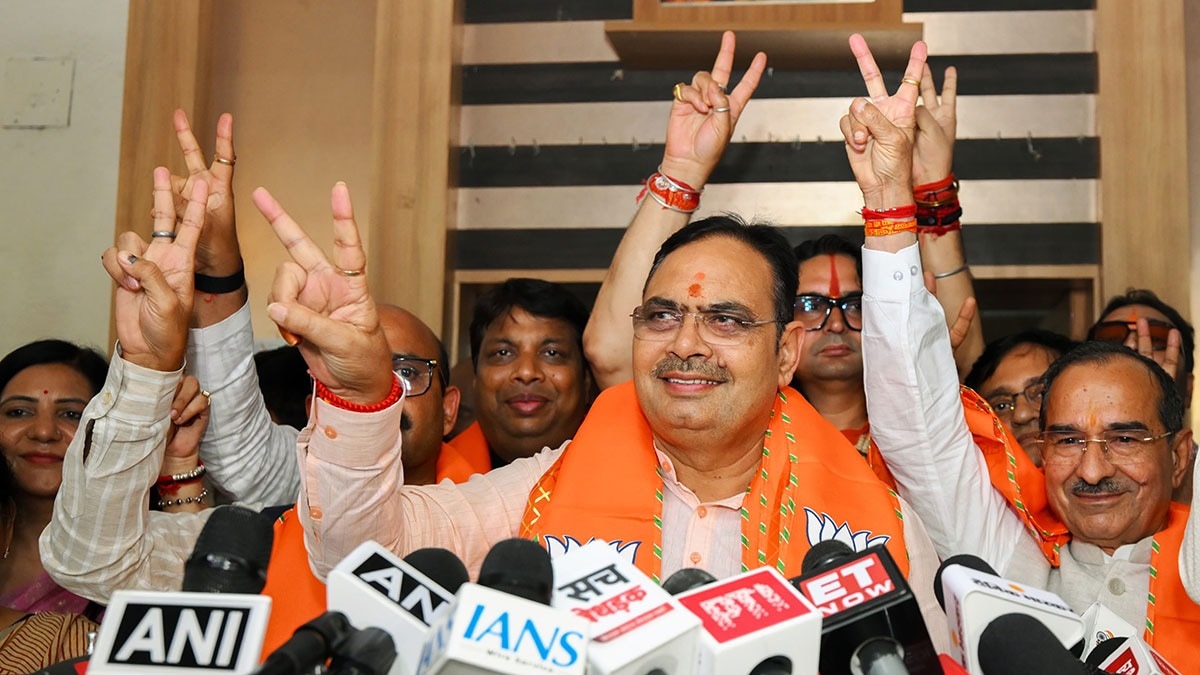
Rajasthan chief minister Bhajan Lal Sharma’s aggressive political management in the recent civic elections helped the BJP capture mayoral and deputy mayoral posts even where Congress and Independents had led in more urban local bodies. The gains strengthen Sharma’s position but the manner of victory carries risks too.
For now, Sharma has shown that he knows how to win even a lost election. Bharatpur, his home district, initially returned an uncomfortable verdict. In the 65-member municipal corporation, the BJP won 20 seats, the Congress seven, Independents 36, and the Bahujan Samaj Party and Rashtriya Loktantrik Party one each. The Independents alone had the numbers to decide the mayor.
Vichitra Singh, an Independent, initially appeared set to become mayor with the support of other Independents and the Congress. But as the contest intensified, the BJP moved to bring Independents into its camp. Minister of state for home Jawahar Singh Bedam, a trusted Sharma aide, got involved. Vichitra Singh eventually withdrew her nomination and the BJP’s Anuradha Singh was elected unopposed.
Bharatpur became the trailer for what followed across Rajasthan. The BJP had won 4,179 of the 10,235 declared councillor seats, against the Congress’s 3,613 and 2,273 Independents. Yet when it came to choosing the heads of urban local bodies, the BJP converted its position of being the largest party into something much bigger: it managed to win 200 of the 305 chairperson posts for which results were announced, against 95 for the Congress.
More surprisingly, the Congress had led in 94 urban local bodies as against 85 for the BJP. The way the events unfolded, Sunil Sharma, a key leader of the Congress in Jaipur, called it “a joke of democracy” and said that should independent inquires be held, many would be “jailed for malpractices”.
The difference became even more striking in the municipal corporations. Of the seven corporations where mayoral elections had been held, the BJP won six. The Congress was ahead of the BJP in the number of councillors in both Ajmer and Pali, yet the BJP captured mayoral posts in both.
In the deputy mayoral elections, the BJP won six of seven posts while the Congress failed to win even one. Pali went to a Congress-supported Independent after a tie. The BJP is likely to win all three mayor and deputy mayor posts in corporations for which polling will be held on September 25.
That is where the Sharma strategy becomes significant. The ward election is a direct contest between candidates. The mayoral election—since indirect—becomes a test of political management: alliances, negotiations, cross-voting, dissidence and the ability to hold one’s councillors together. The BJP appears to have played that game more effectively than the Congress.
Pali, the home base of state BJP chief Madan Rathore, offered the clearest example. The Congress had won 29 wards against the BJP’s 21, with Independents winning 15. Yet the BJP’s Namita Bubakia became mayor with 33 votes. A Congress rebel secured 29 votes while the official Congress candidate got only three. The result demonstrated how internal divisions could matter more than the arithmetic of the ward election.
Ajmer, under the leadership of legislative assembly speaker Vasudev Devnani, produced another striking reversal. The Congress had more councillors but the BJP’s Anamika Sharma won the mayoral election. The deputy mayor contest was also decided in the BJP’s favour.
The contest acquired a coercive political atmosphere. Councillors were moved to hotels and resorts to prevent cross-voting. In Hanumangarh, independent MLA Ganeshraj Bansal was arrested shortly before the civic leadership election in connection with an old case. Several newly elected councillors approached the Rajasthan High Court, alleging apprehension of arrest or coercive action. The high court granted limited protection to ensure councillors could exercise their voting rights.
Among the two deputy chief ministers, Prem Chand Bairwa could not make the BJP do particularly well in either the ward elections or the subsequent mayoral and deputy mayoral contests in his Dudu assembly constituency. In contrast, Diya Kumari overcame a strong Congress challenge and alleged internal sabotage to secure a BJP majority in her Vidyadhar Nagar constituency, where the party’s performance was among the strongest of the constituencies represented by state and Union ministers.
For chief minister Sharma, the political gains are substantial. He has demonstrated that the BJP can exercise control over urban local bodies even where its raw electoral numbers are insufficient. It strengthens his standing within the party, particularly because the results show organisational control.
Sharma’s aides increasingly describe him as the “emerging Chanakya” of Rajasthan—someone who may appear unassuming but is prepared to fight ruthlessly when the stakes are high. Sharma, in effect, has applied at the councillor level the same tactics that the BJP has used in assembling majorities and securing political control elsewhere.
But there is another reading. The ward results themselves were not a sweeping BJP mandate. The question, therefore, is whether the party’s success in assembling majorities after the election will translate into effective governance. Councillors persuaded to cross the political divide can become difficult allies. A mayor dependent on a fluid coalition may find that the same arithmetic that helped win can later make the corporation unstable. There are more tests ahead. First, the upcoming panchayat elections, which are bitterly fought with tempers running high. The bigger challenges will be the assembly polls in 2028 and parliamentary polls the following year, wherein votes matter and anti-defection laws are in place, unlike civic contests.