Ramaphosa orders four measures to strengthen fight against GBV
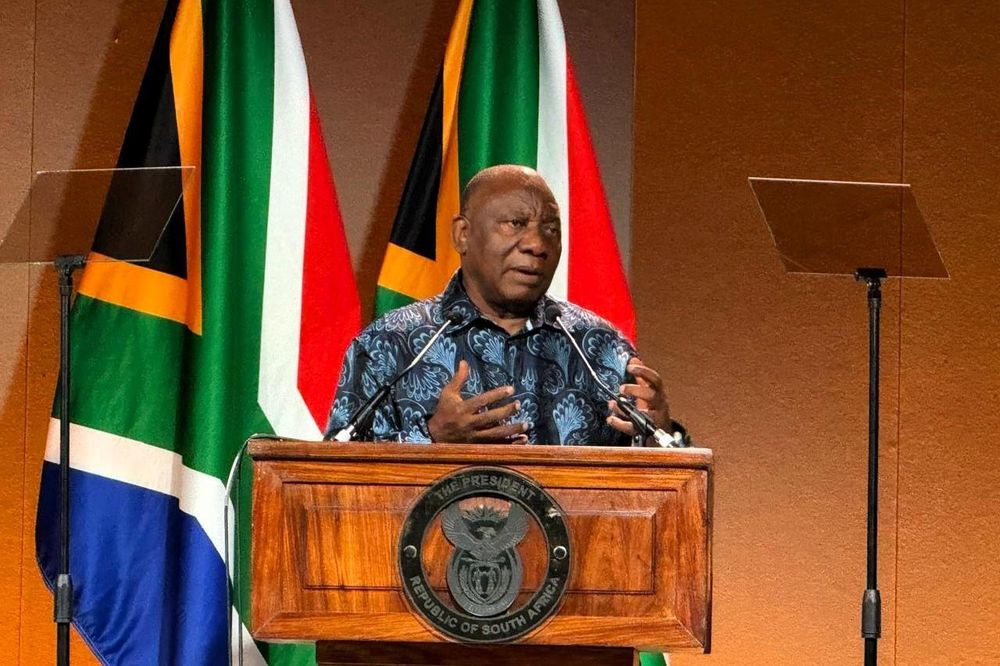
President Cyril Ramaphosa has outlined four immediate measures to strengthen the fight against gender-based violence.
The President addressed the nation last night, admitting that what the country has done so far to fight the scourge of gender-based violence has not been enough. This comes after nearly 10 women were killed in Ekurhuleni recently.
Outlining the measures, he said: "I have directed the Minister of Police, working together with the Minister of Justice and Constitutional Development, with due regard for independent prosecutions, to undertake a national case-recovery operation focused on unresolved murders, attempted murders, rapes and serious offences involving women and children."
He said that, within 60 days, the operation must identify the number and age of unresolved cases, cases awaiting forensic evidence, cases in which suspects have been identified but not arrested, and cases in which prosecutions have been unreasonably delayed.
Within 90 days, the review plan must identify the outstanding action, the responsible official and the deadline for moving each case forward, said Ramaphosa.
"Second, I have directed the Minister of Police, the National Commissioner of Police and the relevant forensic authorities to present, within 60 days, a funded plan to reduce forensic backlogs and establish clear turnaround standards for priority gender-based violence and femicide cases.
"The plan must set out the size and age of the backlog, shortages of personnel and equipment, the resources required and the dates by which the backlog will be reduced," said the President.
He stated that priority forensic samples in cases involving the rape or murder of women and children must be ring-fenced for urgent processing. Progress against the turnaround standards must be reported publicly every quarter.
"Third, every municipality must begin a women's safety audit without delay. High-risk areas must be identified in collaboration with provincial governments and the police. Within 60 days, these audits must identify broken streetlights, overgrown public spaces, abandoned buildings, unsafe transport routes and facilities, poorly secured parks and other conditions that place women at risk.
"Within 90 days of completing the audit, the most urgent hazards must have been addressed or included in a funded implementation plan with clear completion dates," he added.
He said the results of the audits, and progress in addressing the identified hazards, would be published so that communities could see what had been identified, what had been fixed and what remained to be done.
The President said provincial and municipal authorities must intensify enforcement of existing liquor laws and by-laws, particularly against unlicensed outlets and establishments that trade outside permitted hours.
"Fourth, I have directed the Minister of Trade, Industry and Competition, working with the Ministers of Health, Social Development, Police and Cooperative Governance, to submit to Cabinet within 60 days a coordinated legislative and enforcement package to reduce alcohol-related violence.
"Alcohol does not cause gender-based violence and it can never excuse it. Responsibility always lies with the perpetrator. But harmful alcohol use is a significant aggravating factor in interpersonal violence, and it must be addressed as part of our wider prevention effort.
"Women should not have to live in fear because government has failed to repair a light, clear a public space, process evidence or enforce a law. Every sphere of government must understand that the safety of women is part of its responsibility."
He added that the Inter-Ministerial Committee and the National Council on Gender-Based Violence and Femicide would monitor these measures and issue consolidated public progress reports every quarter.
The first consolidated report must be issued within 90 days, with public progress reports every quarter thereafter.
"These directives are not just a statement of good intentions. They establish responsibilities, deadlines and a duty to submit reports regularly to the nation. These directives support the accelerated implementation of key pillars of the National Strategic Plan on Gender-Based Violence and Femicide, which continues to guide the work under way across all spheres of government and all parts of society," he said.
He spoke of the need to contain the scourge.
"We must prevent the violence before it starts because programmes, stronger laws, additional resources and more police officers will not, on their own, end violence against women. Gender-based violence does not begin when a fist is raised. It does not begin when a woman is raped or when a woman is killed. It begins with attitudes that regard women as inferior.
"It begins with the belief that a man has the right to control a woman. It begins when jealousy is mistaken for love, when control is mistaken for protection and coercion is mistaken for affection."