Ramaphosa was warned of national security threats days before Mkhwanazi's briefing | Madlanga Commission - IOL
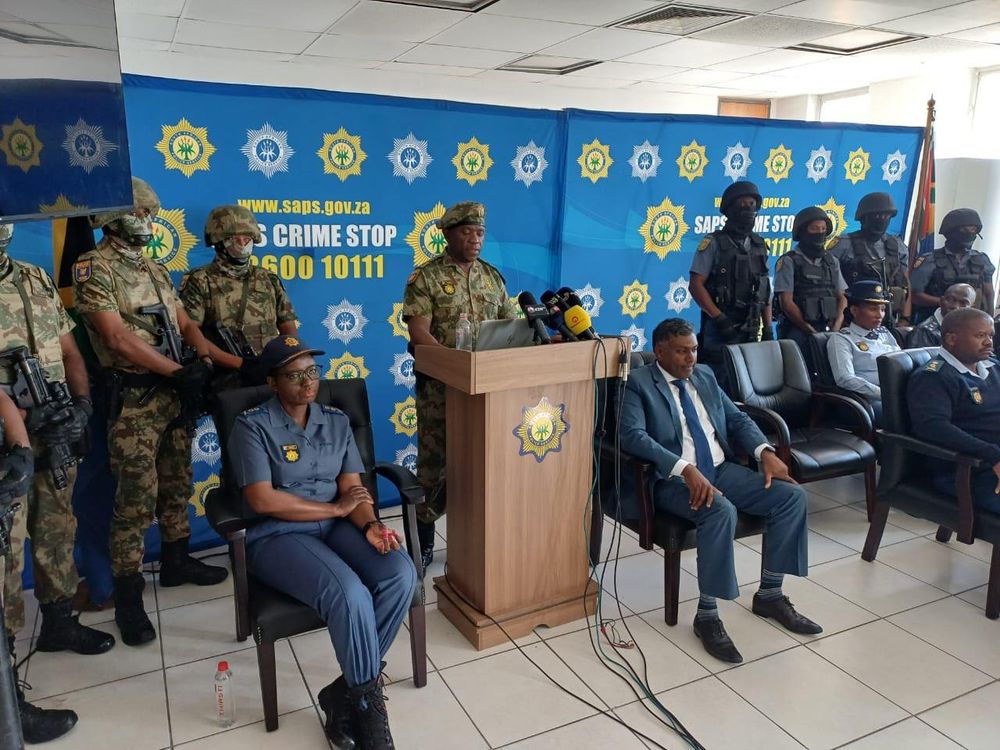
The Madlanga Commission heard that President Cyril Ramaphosa was briefed of the national security threats by National Intelligence Coordinating Committee (NICOC) before Nhlanhla Mkhwanazi’s July 6 briefing.
President Cyril Ramaphosa was alerted to potential national security threats six days before KwaZulu-Natal (KZN) police commissioner General Nhlanhla Mkhwanazi’s July 6 explosion briefing.
The Madlanga Commission heard that Acting National Intelligence Coordinating Committee (NICOC) coordinator Dr Ntandazo Sifolo and other committee members met Ramaphosa on June 30, 2025, to brief him on the arrests of senior Crime Intelligence officials.
“We were given an audience, we met the president, and we briefed the president as a committee,” Sifolo testified on Thursday.
It’s unclear whether Ramaphosa acted within the six days or not.
The meeting took place ahead of Mkhwanazi’s briefing, which triggered widespread scrutiny of alleged criminal networks operating within the police, intelligence services and criminal justice system.
When asked what action Ramaphosa took after being alerted to national security threats six days before General Nhlanhla Mkhwanazi’s July 6 briefing, Presidency spokesperson Vincent Magwenya said: “We don’t run commentary on the [Madlanga] Commission.”
Sifolo said the committee discussed the arrests and the reasons behind them, placing the June 2025 crackdown on senior Crime Intelligence officers under renewed scrutiny.
Crime Intelligence head Lieutenant-General Dumisani Khumalo and six other senior officers were arrested by the Investigating Directorate Against Corruption (IDAC) on allegations of fraud and corruption.
The charges were withdrawn in August 2026 after it emerged there was no basis to prosecute them.
The controversy intensified after allegations emerged that the operation was intended to target Khumalo, Mkhwanazi and National Police Commissioner Fannie Masemola.
Mkhwanazi subsequently alleged that a sophisticated criminal syndicate, known as the Big 5 cartel, had infiltrated key state institutions.
He described an alleged Gauteng-based network involving politicians, police officers, judges and businesspeople accused of protecting criminal interests.
He specifically accused Police Minister Senzo Mchunu and former deputy police commissioner Shadrack Sibiya of interfering with investigations and shielding criminal networks.
Another major allegation concerned the disbandment of the Political Killings Task Team (PKTT).
Mkhwanazi claimed Mchunu ordered its dissolution on December 31, 2024, resulting in 121 investigation dockets being transferred to Pretoria.
He also cited alleged communications linking alleged crime boss Vusimuzi Matlala and Brown Mogotsi to the disbandment and leaks of sensitive information.
Sifolo, meanwhile, warned against political interference in police operations, explaining that ministers should not be drawn into operational matters through intelligence briefings.
He said officials had to exercise caution when sharing sensitive information, particularly when intelligence was incomplete.
“Intelligence is not evidence,” Sifolo told the commission.
He cautioned that giving executive authorities incomplete intelligence could have serious consequences, reinforcing the need to maintain clear boundaries between political oversight and police investigations.