Real Plan architect’s monetary proposal draws sharp criticism - Valor International
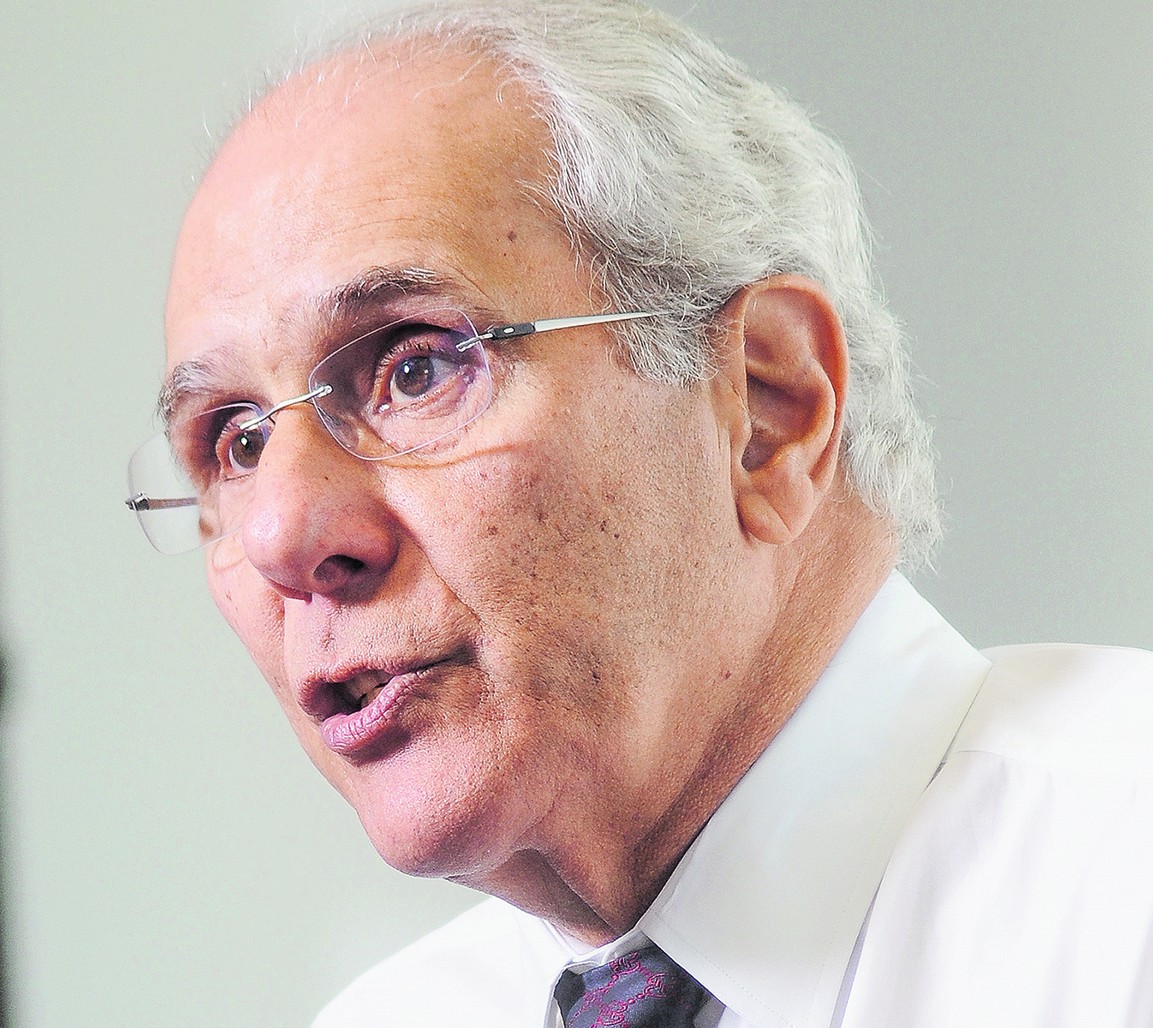
A proposal by economist André Lara Resende to sharply lower Brazil's benchmark interest rate has raised concerns among financial market participants about how President Luiz Inácio Lula da Silva's government intends to address the country's growing public debt.
Published on Lara Resende's blog a week before the first round of the presidential election, the proposal gained prominence after the runoff, amid uncertainty over the direction of economic policy during Lula's fourth term.
It has won support from members of the Workers' Party (PT), including lawmaker Gleisi Hoffmann (Paraná), who reposted an excerpt on X and called the proposal "essential." But the possibility that the ideas might appeal to Lula has alarmed members of his economic team.
On Friday (Oct. 30), Finance Minister Dario Durigan contacted the press to deny that Lara Resende would meet with Lula this week. Durigan also said the government was not considering measures such as setting interest rates by decree or drawing on international reserves.
Lara Resende, one of the architects of Brazil's Real Plan, proposes lowering the Selic to 7.5% over 12 months, then keeping it within a range bounded by the inflation target of 3% and the sum of that target and the country's potential economic growth rate, or 5.5%.
He estimates that the plan would generate fiscal savings equivalent to roughly 4% of gross domestic product annually. The fact that slightly more than half of Brazil's public debt consists of Selic-linked securities, known as Financial Treasury Bills (LFTs), would help deliver those savings, he argues.
To counter potential short-term capital flight, Lara Resende advocates using the Central Bank's international reserves, currently at $372.6 billion, to contain a rise in the dollar against the real, which could undermine inflation control.
In his article, the economist argues that Brazil's primary deficit is small, at 0.4% of GDP based on IMF statistics from April, and that "the heart of the problem, therefore, lies in debt servicing."
"So far, there is little disagreement. The problem, say those who argue there is no alternative, is that if the Central Bank lowers the benchmark rate, it will make meeting the target impossible and lose control of inflation," he writes, challenging that view.
Lara Resende also proposes establishing a National Fiscal and Monetary Council (CFMN) to set fiscal and monetary targets four to five years ahead.
Under his proposal, fiscal targets "would be guided by the rationalization and simplification of revenue collection and current and investment spending."
José Júlio Senna, a researcher at the Brazilian Economics Institute of Getulio Vargas Foundation (FGV Ibre) and former Central Bank director, rejects the proposal outright.
"I cannot agree with anything Lara Resende wrote," Senna said. "Starting with the unprecedented idea of centralizing fiscal and monetary decisions in one place. Each has its own objectives, and they should not be mixed. As far as I know, this has never been tried anywhere."
The proposed National Fiscal and Monetary Council illustrates the problem, he added.
"It would strip Congress of its authority to determine the course of fiscal policy and also weaken the Central Bank, which would no longer set monetary targets. In other words, it would radically alter the country's institutions and tie the hands of the Central Bank, which is an institution that needs to react to developments," Senna said.
"The mere announcement of an attempt like this would unquestionably push inflation expectations higher. As a result, inflation itself would rise. In other words, things would get worse from the outset. How would a Central Bank with its hands tied respond?"
Senna also disputes Lara Resende's argument that high interest rates are the sole driver of Brazil's growing public debt.
He cited a study by FGV Ibre researcher Fernando de Holanda Barbosa Filho, reported by Valor, showing that the sharp increase in public debt between 2014 and 2025 was more closely associated with successive primary deficits than with interest rate levels.
Former Treasury Secretary Ana Paula Vescovi criticized the proposals in a LinkedIn post, beginning with the idea of using international reserves to defend the exchange rate.
"Reserves are the country's insurance against external shocks. Turning them into an overdraft facility for a monetary gamble is reckless. Interventions to address temporary market dysfunctions, such as liquidity problems, can be legitimate. But if exchange rate pressure persists, smoothing volatility can turn into repeated reserve sales," Vescovi wrote.
"After 1999, the floating exchange rate began absorbing external shocks, while interest rates returned to their role of controlling inflation. Lara Resende's proposal reverses those roles once again. It is worth remembering that the fiscal adjustment between 1998 and 2002, which produced primary surpluses exceeding 3% of GDP, was what sustained the Real Plan."
Bráulio Borges, a director at LCA Consultores, sees numerous shortcomings in Lara Resende's plan, most notably its failure to acknowledge that long-term interest rates are determined by the market.
"The central argument is that lowering the Selic reduces interest payments on LFTs, which account for half of Brazil's debt. The problem is that a proposal like this would, in practice, send long-term rates soaring, affecting the remaining securities. That could more than wipe out any savings from artificially lowering interest rates," Borges said.
The FGV Ibre researcher pointed to two examples that illustrate the difficulties such a plan could encounter.
The first involves attempts by the U.S. Treasury to limit increases in long-term yields through buybacks of 10-year and 30-year government bonds. The second is the monetary policy experiment pursued by Turkish President Recep Tayyip Erdogan in 2021.
"Erdogan did essentially the same thing Lara Resende is advocating. Dissatisfied with the Central Bank's stance and with elections approaching, he replaced its governor, who lowered interest rates to single digits. The result: the Turkish lira depreciated sharply, inflation reached around 80% and, once the election was over, interest rates returned to roughly 40%," Borges said.
The proposal would create additional challenges for public debt management, said Sérgio Goldenstein, founding partner of Eytse Estratégia and former head of the Central Bank's Open Market Department (Demab).
Goldenstein acknowledged that the government could achieve immediate fiscal savings on LFTs, but warned that extremely low real interest rates could cause demand for those securities to collapse.
"Suppose the Selic is 7.5% and expected inflation is 6%. If those rates remain unchanged, the expected real return would be just 1.4% a year, lower even than the yield offered by inflation-linked bonds in the U.S. A five-year U.S. TIPS, for example, offers a real yield of around 2.3%," he wrote on X.
Weaker demand and lower real yields would likely prompt investors to demand larger discounts to buy the securities, Goldenstein explained.
"An increase in discounts would generate mark-to-market losses, which, combined with low returns, would tend to trigger redemptions from fixed income funds, sales of securities in the secondary market and additional pressure on discounts, creating a negative spiral. For the Treasury, larger discounts on new issuance would partially offset the savings obtained from a lower Selic."
Borges stressed that Lara Resende's ideas lack support even among heterodox economists.
"What concerns me is that the proposal is being framed as coming from the developmentalist camp, in opposition to a fiscally conservative camp. What actually exists are some government figures and economists who are completely opposed to the idea that any adjustment is necessary," he said.
"But some adjustment is indeed necessary. It does not have to be a [Javier] Milei-style spending slash, just something consistent with stopping the debt from growing."
Borges acknowledged that traditional explanations for Brazil's high real interest rates do not fully account for the phenomenon.
"There is an additional premium charged here that remains a puzzle, and several studies have examined it. Lara Resende's plan, however, not only fails to explain that premium but also offers a solution by decree that, as the saying goes, is simple and wrong."
Lara Resende did not respond to requests for comment.
Economist José Sergio Gabrielli, coordinator of Lula's government program, praised Lara Resende's proposal in an article published Monday (Nov. 2). He argued that Brazil's fiscal situation is "less dramatic" than proponents of a debt-stabilizing fiscal adjustment suggest, although he acknowledged the need to reduce deficits.
This article was translated from Valor Econômico using an artificial intelligence tool under the supervision of the Valor International editorial team to ensure accuracy, clarity, and adherence to our editorial standards. Read our Editorial Principles.