Record-Breaking Texas Skyscraper Marks Milestone Opening - Newsweek
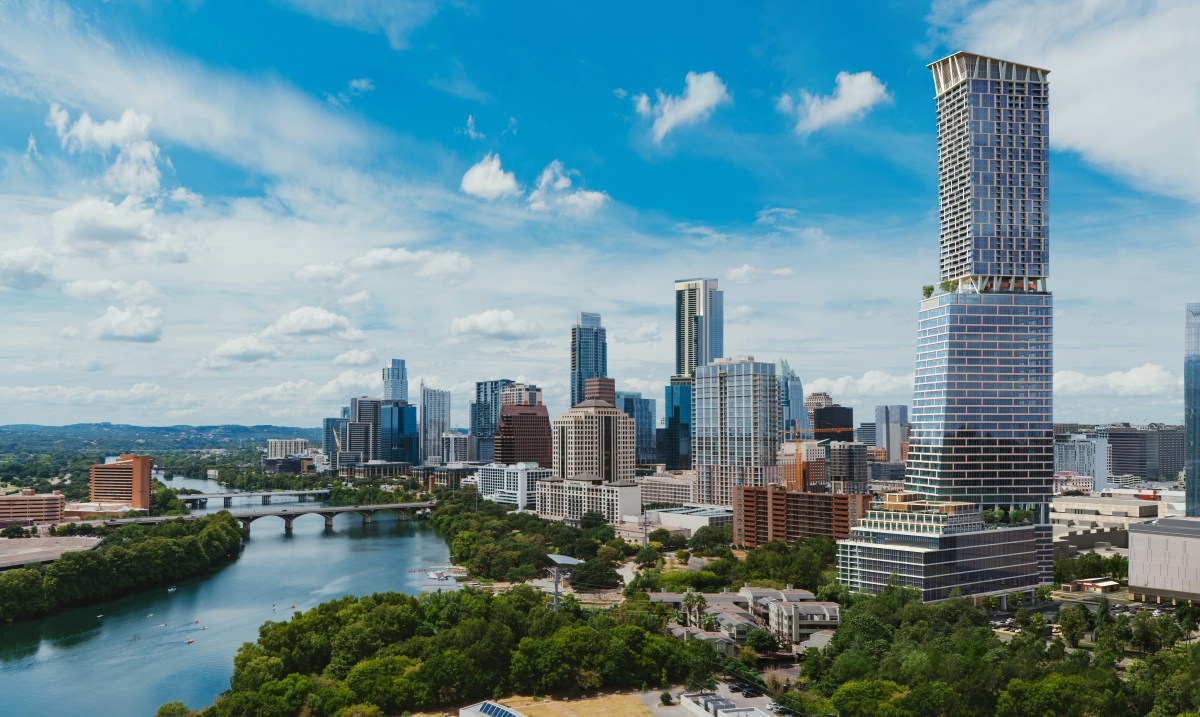
A new skyscraper in Austin has been named the tallest building in Texas, marking a new architectural milestone for the Lone Star State.
Known as Waterline, the 74-story tower stands 1,025 feet tall and appears to be the tallest in the Southern United States, based on its final height and a listing of the tallest completed buildings in the U.S. from The Skyscraper Center of the Council on Vertical Urbanism.
“At 1,025 feet, Waterline is the tallest building in Texas. We’re not aware of any buildings in the south that are taller,” Seth Johnston, the executive vice president of Lincoln Property Company, one of the tower’s developers, told Newsweek.
The new tower was designed by KPF (Kohn Pedersen Fox), the global architectural firm behind some of the world’s tallest buildings, such as the One Vanderbilt, the tallest skyscraper in Midtown Manhattan, and the Hudson Yards development in New York City, which features the Edge, the highest outdoor observation deck in the Big Apple.
Co-developed by Kairoi Residential, the construction of the skyscraper was completed at the end of August, two months ahead of its planned schedule.
The mixed-use tower offers 352 residential units on its top 33 floors, and a 252-room hotel spanning 13 floors, the 1 Hotel Austin, which opened this month, while residents have moved in around mid-August, according to Johnston.
The building also has 24 floors of empty office space, which is currently being marketed for lease.
The opening of Waterline comes as several cities in Texas have faced high vacancy rates across office buildings in the post-pandemic era.
Austin was found to have the third-highest office vacancy rate at 25.2 percent among the country's 50 largest metro areas, surpassing the national rate of 19.6 percent, according to data from Moody’s, a data and analytics firm, local media reported in March 2024. Austin was outranked by two other Texan cities in first and second place—Houston and Dallas.
Earlier this year, Gordon Gill, the architect behind the Jeddah Tower in Saudi Arabia, which will be the new world’s tallest building upon completion, told Newsweek that the future of architecture lies not in building higher, but in rethinking what we already have.
“It’s the existing building stock you have to keep your eye on…refreshing that stock and keeping them relevant, part of the sustainability legacy,” Gill, the co-founder of the Chicago-based firm Adrian Smith + Gordon Gill Architecture (AS+GG), told Newsweek.
Nearly half of America’s 125 million buildings are reported to be at least half a century old, according to the American Institute of Architects (AIA).
Research has shown that the reuse of existing buildings can avoid 50 to 75 percent of the carbon emissions associated with new construction, according to the AIA.
The “reuse and retrofit of older and historic buildings avoids the release of embodied carbon emissions—the carbon emitted by the manufacture, transport and assembly of materials—from the construction of new buildings,” the AIA said.
The Waterline won’t be the tallest building in the Southern U.S. for long. Standing 1,049 feet high, the upcoming Waldorf Astoria Hotel & Residences Miami—Miami’s first “supertall” skyscraper—will claim the title upon its completion in 2028, the developer behind the tower told Newsweek in May.
While the team behind Waterline is “certainly excited” to make their mark on the Austin skyline with the building’s height, “we want Waterline to be known more for the quality of the development and the long-term positive impact it will have on this beautiful area of downtown rather than its height,” Johnston told Newsweek.
Located between Waller Creek and the Rainey Street historic district with views of Lady Bird Lake, “Waterline offers one of the best locations in all of Austin,” according to Johnston. “But it’s a location that historically few have enjoyed due to a lack of convenient access and overall activity—particularly compared to the rest of downtown.”
Waterline aims to be a new gateway from Austin’s central business district to the Rainey Street Historic District. The development offers two new pedestrian bridges over the creek from the west, as well as three additional public pedestrian and bike access points to the Waterloo Greenway from the east.
Do you have an architecture or design-related story to share? Let us know via s.kim@newsweek.com, and your story could be featured by Newsweek.
Contact Newsweek editors on this story: Sirena Bergman and Paul Donnelley.