Regional airlines seek revised ATF relief as fuel costs force flight cuts
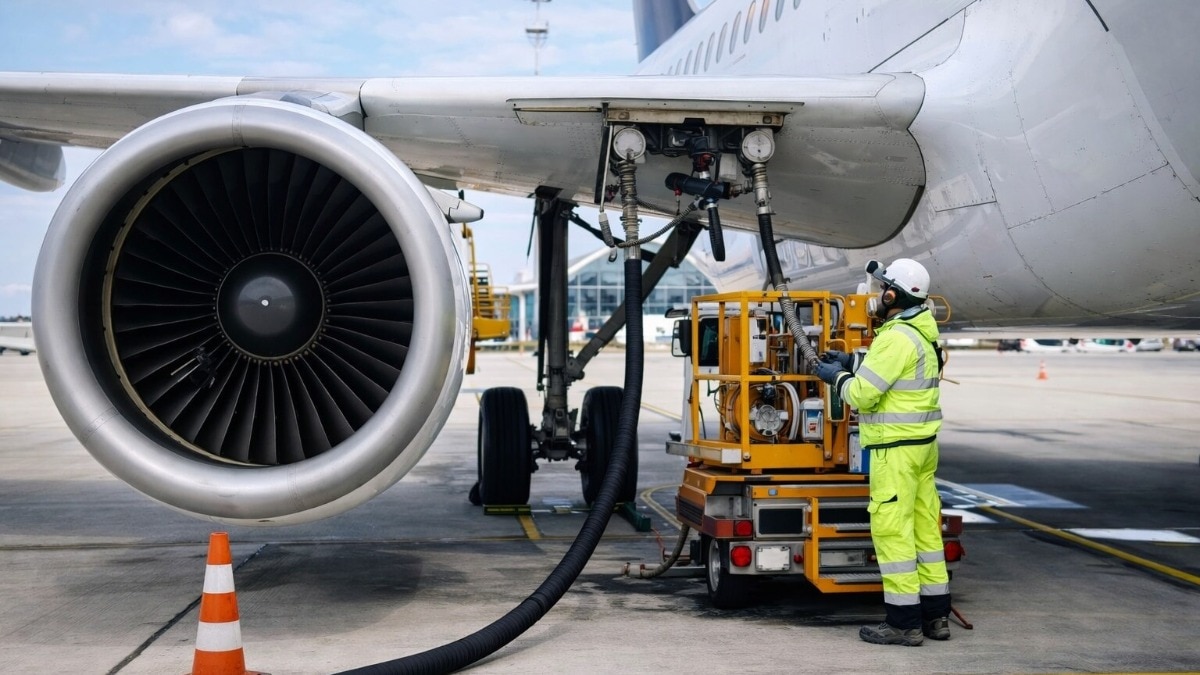
Regional airlines are hoping the Civil Aviation Ministry will bring back the aviation turbine fuel (ATF) Price Stabilisation Fund (PSF) with more favourable terms, as rising fuel costs put pressure on their operations and force some operators to scale back flights.
Industry insiders told India Today that the high cost of jet fuel is making it increasingly difficult for regional airlines to maintain operations. They said the situation has become particularly challenging for carriers operating routes that larger airlines are often unwilling to serve.
A senior official of a regional airline said that even as the fleet capacity of some operators increases, their operations are declining because of the high cost of fuel. The official said airlines are being pushed into a difficult position, with running more flights increasingly translating into higher cash burn.
Star Air, one of India's biggest regional airline operators, has reduced its operations from 68 flights in the summer schedule to 52 in the winter schedule. The reduction comes amid rising fuel costs.
An industry insider said operating more flights has become equivalent to burning more cash. As a result, regional as well as larger Indian airlines have been recalibrating their operations.
The pressure has also been compounded by geopolitical tensions in the Middle East. Higher ATF prices have coincided with airspace restrictions, affecting airline operations. Indian carriers, including Air India and IndiGo, have also been dealing with the impact of Pakistani airspace restrictions.
At the Aviation India event in Delhi, Air India CEO Tewolde Gebremariam had highlighted how international competitors were not facing similar challenges in terms of airspace restrictions.AIRLINES SEEK A REVISED ATF PRICE STABILISATION FUND
The renewed pressure on airlines has brought the government's ATF Price Stabilisation Fund proposal back into focus.
In June 2026, the Union Cabinet approved one-time budgetary support of up to Rs 10,000 crore for oil marketing companies (OMCs) to provide ATF price stabilisation support to Indian airline operators for their domestic and international operations.
The proposed support was intended to help stabilise jet fuel prices even when global rates rose sharply, providing an additional cushion to Indian carriers. However, the scheme was discontinued a month later after it failed to attract takers.
ATF prices have seen significant movement over the past few months. In March, jet fuel prices in India were nearly Rs 105 per litre. They rose sharply to around Rs 207 per litre in April. When the ATF PSF was introduced by the Civil Aviation Ministry, prices were around Rs 115 per litre and continued to rise over the following two months. In October, ATF prices stood at around Rs 137 per litre.
The renewed pressure from fuel costs has revived interest among airline executives in bringing back the scheme, this time with changes to its terms.
A senior executive of an airline operator told India Today that certain conditions in the earlier proposal had made airlines uncomfortable.
“There were certain conditions in the earlier PSF proposal which made the airlines uncomfortable, including the OMC from which we can acquire the fuel. Moreover, it required us to enter the MoU immediately and end our old commitments. We had never imagined the ATF prices will go to levels it is on right now,” the executive said.
The executive added that a revised proposal could find more takers.
“If the government comes with tweaked clauses in the PSF proposal, possibly there will be takers this time around,” the executive said.REGIONAL AIRLINES SEEK MORE FAVOURABLE TERMS
Regional airlines are also seeking a proposal that takes into account their relatively smaller fuel consumption and the role they play in connecting routes that may not attract larger operators.
A representative of a regional airline told India Today that the government should consider more favourable terms for regional players, which continue to operate routes where other airlines may not be willing to fly.
“Regional players — nearly four to five — together consume only 3% of the ATF. We contribute to 30-35% of unique routes in the country. The government could mull over providing a favourable or special treatment for the regional players under the PSF. At least we hope so,” the representative said.
The representative said regional carriers were seeking support that recognised their contribution to connectivity, particularly on routes that may not be commercially attractive to larger airlines.
Another senior executive of a regional airline said the industry would welcome the return of the stabilisation fund, even without special provisions for regional carriers.
“We would want the government to bring back the ATF PSF. While we don't want anything special, we would be happy if the government brings back the ATF PSF considering the surge in the jet fuel prices,” the executive told India Today.
For regional airlines, the demand is not just for lower fuel costs but also for a proposal with terms that allow them to participate without disrupting existing arrangements with fuel suppliers. With operating costs weighing on flight schedules, industry executives are hoping the government will reconsider the scheme with changes that make it more attractive to airlines.- Ends
Amit Bhardwaj is among the “politics-election buff” journalists redefining how news connects with a younger audience. Currently an Associate Editor at India Today, he has built a reputation for incisive on-ground reporting right from centre of politics - the Indian Parliament, to the machine of politics- high-stakes Indian elections and to civil aviation sector.
In the last eleven years, he has tracked India through a dozen state elections and consistently reported from the heart of India’s political churn, with a strong focus on the evolving dynamics of the opposition- INDIA bloc. He also tracks Aam Aadmi Party and Telugu Desam Party.
Known for blending easygoing storytelling with factual reportage, Amit Bhardwaj has delivered consistently from mines to skies. He has covered the rescue operations and rat miners in Joshimath. He extensively covered the tragic Air India 171 Ahmedabad crash in June 2025. His work on airline disruptions including the Indigo 2025 crisis, regulatory crackdowns, and aviation safety has added a distinct edge to his political reporting portfolio.
Amit was amongst few India journalists to witness Nepal's GenZ revolution firsthand as it was unfolding on the streets of Kathmandu. His documentary "Joshimath: A Cry For Help" was awarded ENBA Gold for Best In-depth Series.
Before joining India Today, he honed his craft at Newslaundry and Tehelka- in its prime, it was a thing- and has also contributed long-form pieces to The Caravan.
A distinct voice with a cheerfully incisive tone on the popular podcast Reporters Off Air, Bhardwaj brings insider perspectives and futuristic predictions .
Amit hails from Jharkhand, and often greets others with Jai Johar!