Report linking Alberta separatists to Americans sparks alarm in Ottawa - Toronto Star
The NDP asked for a debate in Parliament about whether work by Republican party-affiliated operatives with Alberta separatists is foreign interference.
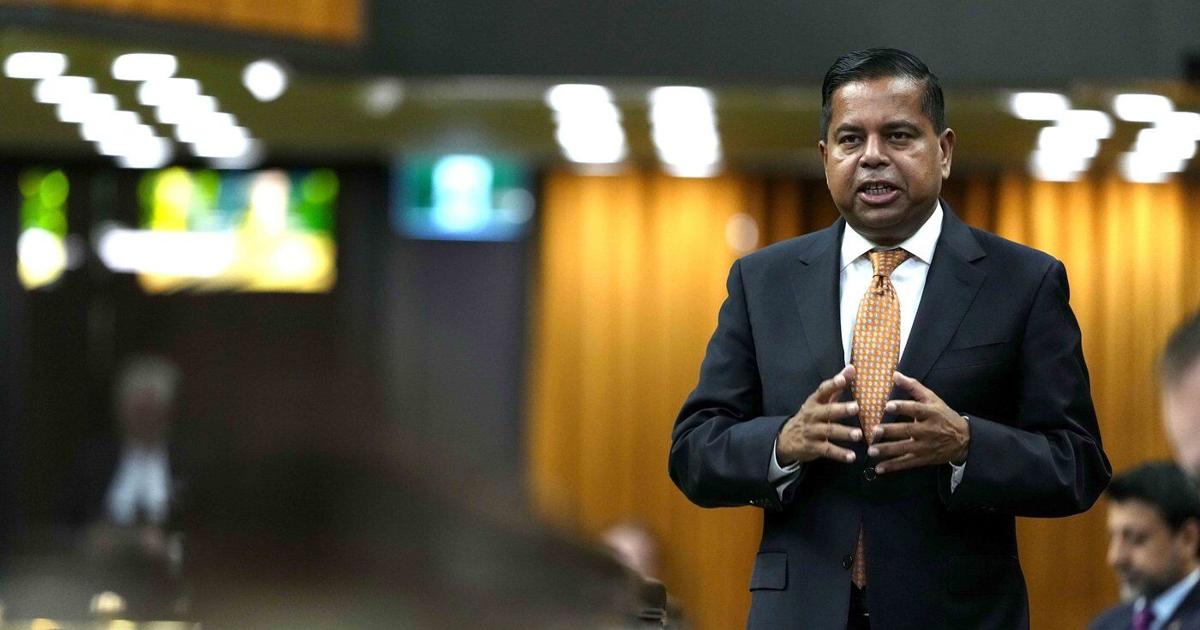
Public Safety Minister Gary Anandasangaree speaks in the House of Commons on Sept. 25, 2026.
OTTAWA —The Speaker of the House of Commons has rejected a New Democrat Party request for an emergency debate in Parliament about whether work by Republican party-affiliated operatives to help mobilize Alberta separatist votes amounts to foreign interference, as Canada’s public safety minister deferred such questions Monday to the national spy service.
Responding to new concerns raised by a Globe and Mail story that detailed the connections between Alberta separatists and Republican party strategists who developed a voter mobilization app, and that detailed the Albertans’ pitch to U.S. State Department officials about future exports of Alberta resources like water and oil to the U.S., Gary Anandasangaree declined to say whether it is foreign influence or worse, foreign interference.
He twice referred reporters to the Canadian Security Intelligence Service (CSIS).
“What I will say in general terms is, as electoral events take place, democratic events take place, we expect them to be governed in … democratic principles, where foreign interference or actors influencing local electoral events does not occur,” he said.
New Democrat MP Heather McPherson made the case for an emergency debate in Parliament, saying that the revelations, coming two weeks before Alberta’s vote on Oct. 19, are “a serious threat to our democracy and our sovereignty.”
“These are not simply Albertans having a political disagreement with Ottawa. These are extremists seeking foreign assistance to break up Canada. There is a word for people who put foreign interests ahead of their own country: traitors,” she said. “Under Canadian law, they would be investigated, and if convicted, they should face the full force of the law.”
However, Speaker Francis Scarpaleggia refused her request, saying “at this time” it didn’t meet the bar for a debate, which is usually granted when Parliament confronts a matter requiring urgent consideration.
McPherson told the Star she does not believe the federal government is “taking this as seriously as they need to.”
The Prime Minister’s Office declined to offer specific answers Saturday when the Star asked about Prime Minister Mark Carney’s knowledge of and response to the concerns raised in the Globe story.
“There is regular and ongoing engagement between national security agencies and the relevant authorities in Alberta to ensure the security of the referendum,” said spokesperson Audrey Champoux. “This is the case any time Canadians go to the polls federally or provincially, as part of a continued commitment to protecting our democratic processes.”
But Conservative MP Dane Lloyd, whose group Conservatives for Canada is campaigning for the federalist or “remain” side of the referendum question, said it is cause for concern.
“Nobody, absolutely nobody, has a right to promise away Alberta’s birthright, which is our natural resources,” Lloyd said.
“Those belong to the people of Alberta, and I will never condone even one cent of Alberta’s royalties going towards any foreign government.”
Lloyd stopped short of saying the reported activity amounts to foreign interference. “I think we have to get more information on this, but it’s obviously very concerning,” he said.
Alberta Premier Danielle Smith has not publicly addressed the concerns, but her spokesman distanced Smith from any connection to the activity that’s raising alarms.
“The premier is not affiliated with these individuals and has no knowledge of these alleged meetings. She also opposes separation or becoming a U.S. state,” Sam Blackett said in a written statement. “In fact, many of these individuals in question have been relentlessly attacking the premier for her support for remaining in Canada.”
Last week, the U.S. embassy said it had not identified which U.S. State Department officials had met with representatives of the separatist Alberta Prosperity Project, whose organizers acknowledged in January that they had travelled to Washington. The Globe reported two of the Alberta participants disputed what was discussed in Washington.
For weeks, the Star has sought clarity from the federal government about concerns around potential foreign influence or interference in the Alberta referendum, and whether it had directed the Security and Intelligence Threats to Elections (SITE) task force — comprised of officials from CSIS, the Communications Security Establishment (CSE), Global Affairs Canada and the RCMP — to report on those threats.
The Privy Council Office, answering for SITE, and CSIS have consistently offered non-responsive replies. PCO spokesman Pierre Coguen said the agencies involved take “any attempts” at foreign interference with “the utmost seriousness” and “will take action to protect Canadians … This work includes regular and ongoing engagement with relevant authorities in Alberta.”
Similarly, CSIS offered little other than to say it remains “vigilant” and declined to answer questions in any more depth.
“In order to protect sources, tradecraft and methods, we do not, however, confirm nor disclose investigative details, including whether an investigation is ongoing. CSIS will continue to release information at appropriate times about specific threats when it is able to do so and when it’s in the interests of Canada’s national security,” said spokesman Eric Balsam.
Foreign interference is a higher level of suspicious activity than foreign influence. The first is generally understood to be covert, while the latter is seen as overt activity that falls below the interference threshold.
In the wake of nationwide concern about the extent of foreign interference in Canada by countries like Russia, China, India, Iran and other players identified by a public inquiry, Ottawa established an Office of the Foreign Influence Commissioner of Canada to register people or organizations who might be subject to foreign actors trying to flex their muscles in Canada.
That office said two weeks ago that it was “aware” of concerns about foreign influence in Alberta, and had reached out to individuals and organizations there to remind them of their public reporting obligations.
But it has turned down repeated requests since then for more information or an interview with commissioner Anton Boegman, who said in August that his main job is to ensure transparency for Canadians.
Breaking news, interactive polls, video, and voice notes. Star stories you’ll want to share, delivered where you’re already chatting. Follow the Star on WhatsApp.
“We cannot disclose the identities or number of individuals and organizations contacted, nor can we comment on potential registrants or compliance matters,” said a media communications response, signed only by a “Charlaine S.”
In another email Monday, Boegman’s office said submissions about foreign influence will only be publicly disclosed on the registry after the office has evaluated whether it is required by the law. The office defended such secrecy, saying it is “committed to transparency and accountability, while complying with the Privacy Act and other legal requirements governing the collection, use and disclosure of information.
“The office does not comment on potential registrants or ongoing investigations, as doing so could compromise the integrity of those processes and affect procedural fairness.”
It said it will provide transparency “through the public registry, public reporting, and the publication of enforcement outcomes.
“Under the act, the commissioner must make public confirmed violations, including the nature of the violation, the name of the person who committed it, and any administrative monetary penalty imposed. While the office cannot comment on potential or ongoing compliance matters, Canadians will be informed of violations where disclosure is required by law.”
At the same time, the commissioner’s office defended its own secrecy even around the name of its media spokesperson, saying it “does not publicly disclose employee information to protect the safety and security of our staff.”
Anandasangaree shrugged off questions about why the office isn’t proactively providing transparency about the Alberta separatist connections with foreigners.
“The process of registration and ongoing reporting is just in the early stages, so we’re hoping in the coming months and years that (it) would become more of a robust registry for information to be gathered and for disclosures,” he said.
Error! Sorry, there was an error processing your request.
There was a problem with the recaptcha. Please try again.
You may unsubscribe at any time. By signing up, you agree to our terms of use and privacy policy. This site is protected by reCAPTCHA and the Google privacy policy and terms of service apply.
Tonda MacCharles is Ottawa Bureau Chief and a senior reporter covering federal politics. Follow her on Twitter: @tondamacc.
Mark Ramzy is a federal politics reporter in the Toronto Star’s Parliament Hill Bureau. Reach him via email: mramzy@thestar.ca
Stephanie Taylor is an Ottawa-based reporter covering federal politics for the Star. Reach her via email: staylor@thestar.ca