Republicans Losing to Democrats on 7 Major Midterm Issues, New Poll Shows - Newsweek
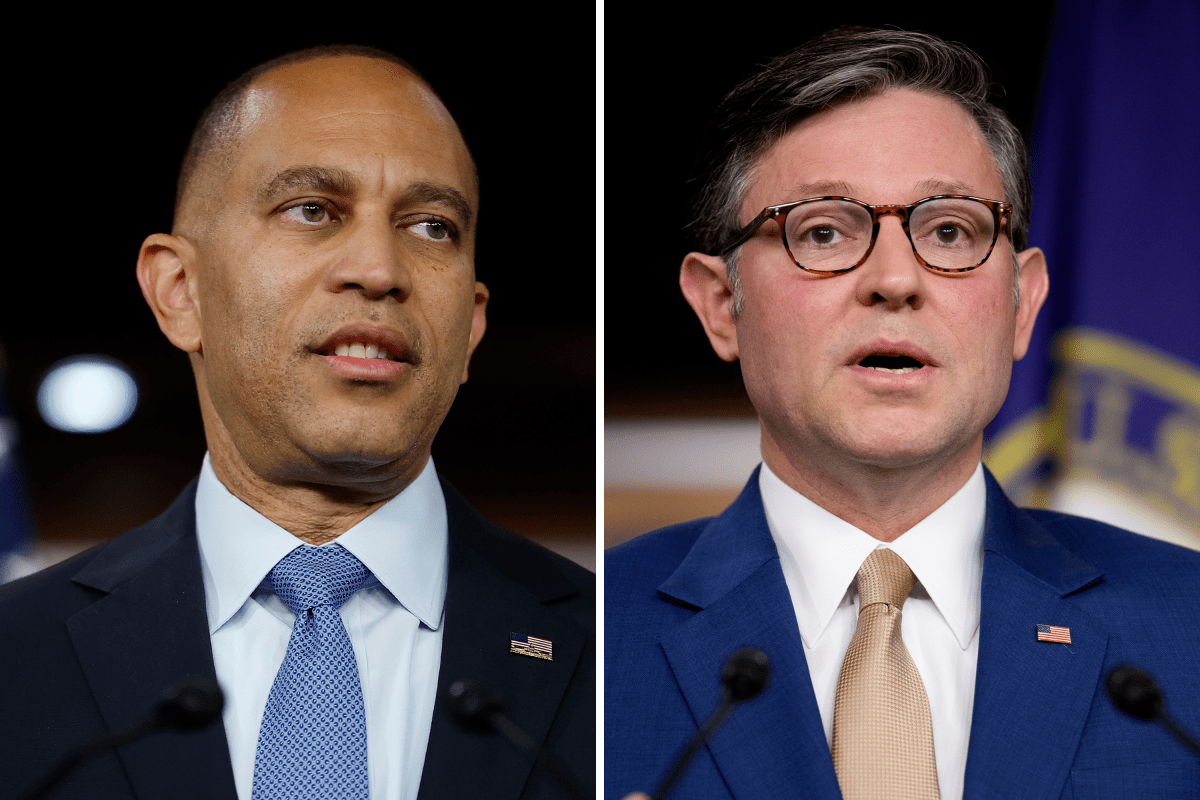
Americans trust Democrats more than Republicans on 7 out of 8 major issues, the latest warning sign for the GOP ahead of the November midterms, according to a new poll published on Tuesday.
The latest New York Times/Siena University poll found that Republicans lack trust on some of the most critical issues voters are concerned about ahead of the elections, including the economy and immigration, two issues that helped carry President Donald Trump to victory in the 2024 election.
The midterms are less than 50 days away, and Democrats are increasingly hopeful about their chances of flipping both the House of Representatives and Senate.
Historically, the president’s party loses seats in the midterms when his approval is low, and Trump’s approval has reached record lows in recent surveys. Issues like the economy, the cost of living and soaring gas prices amid the Iran war have driven the slip in his approval.
Democrats were preferred over Republicans on seven major issues, the poll found. It surveyed 1,503 likely voters from September 8 to 13, 2026, and had a margin of error of plus or minus 2.9 percentage points.
Democrats had their strongest advantage on health care, with a 24-point lead over the GOP, but also enjoyed advantages on economic issues, foreign policy and immigration, the poll found.
It comes just weeks before the midterms, as Democrats intensify their message on affordability, and as Trump faces growing scrutiny over the economy, particularly as the latest developments in the Middle East threaten to drive up gas prices even further—adding to the financial pressure faced by millions of Americans.
Here is an issue-by-issue breakdown of these seven issues.
The polling numbers are “surprising,” Anne Danhey, senior associate dean and associate professor of the practice at Boston University's College of Communications, told Newsweek on Tuesday, noting that historically, Republican candidates are perceived as being better for the economy compared to Democrats.
“This is who they think can handle it better but doesn’t necessarily say how that relates to voting behavior,” she said. “If I was advising a Democrat, I would say these numbers are really encouraging. This is great. Let’s see which of these is most important related to voter behavior, because that’s what matters.”
The economy and cost of living are likely to be two of the most important issues to voters, and the fact that Democrats are up at all is “really significant,” she said.
“To see that he’s losing ground on immigration is really a testament of what people are thinking, that they’re thinking, ‘I might have been in favor of stricter immigration, and I liked what he was saying, but it’s gone too far,’” she said.
Natalie Baldassarre, national press secretary for the Republican National Committee, responded to the poll in a statement to Newsweek, writing that Democratic candidates “are in an all-out leftward lurch to see who can be the most extreme.”
“Meanwhile, Republicans have lowered drug prices, secured out the border, created jobs, and cut taxes. Republicans will continue highlight these achievements and contrast them with Nancy Pelosi and Chuck Schumer’s plans to strip Americans of their safety, sanity, and freedom,” she said.
Newsweek also reached out to the Democratic National Committee for comment via email.
AI, an increasingly salient issue, was the notable outlier. Republicans had a +2-point advantage on the issue, 42 percent to 40 percent.
Data centers have been a major issue shaping the midterms amid grassroots resistance to their construction. Critics have raised concerns about rising electricity bills from their construction, as well as environmental impact, water use and noise pollution. More than 500 jurisdictions across the U.S. have banned data center construction, according to an analysis by The Information.
AI is also likely to become an increasingly important issue for many voters amid growing calls for Washington to focus on AI policy because advanced models could pose a catastrophic risk.
The issue of AI safety moved to the forefront of American political discourse after Jacob Coxon, a former AI researcher for Anthropic and OpenAI, warned last week that the industry is not acting responsibly. He said there will soon be “superhuman systems that can hack anything, revolutionize any field overnight, and acquire real power and resources.”
“The people building AI earnestly believe that it could kill us all by the end of the decade. This is not a marketing stunt. If anything, many executives and senior researchers will couch their phrasing in the press to sound sensible—but I hear the same people express fear privately. No other human activity poses this level of danger,” he wrote in a post on X.
Trump, however, has downplayed both AI safety concerns and calls to pause data center construction.
In a series of posts to Truth Social on Monday, Trump described safety concerns as a “hoax” and said that the only guardrail needed is a “STRONG AND SMART (High IQ!) PRESIDENT.” He earlier warned that communities opposing data centers could “end up being backwards and poor.”
Trump’s comments on Monday about how they could affect perceptions of the two parties’ approaches to AI have not yet been reflected in the latest polls, which were conducted before his posts.
The poll found that a majority of Americans are planning to vote for Democratic candidates in the midterms, giving them a 9-point advantage over Republicans. In total, 51 percent of respondents said they would vote for Democrats, while 43 percent said they would vote for Republicans.
In May, the pollster found that Democrats had a 10-point lead, 50 percent to 39 percent. However, Democrats led by only 5 points, 48 percent to 43 percent, in January and 2 points, 47 percent to 45 percent, in September 2025.
Democrats were also more motivated to report, with 61 percent saying they are “almost certain” to do so compared to 56 percent of Republicans.
This aligns with other polls showing Democrats expanding their lead compared to 2025 and early 2026, when the generic ballot was generally close.
Democrats held a 7-point lead over Republicans in the latest poll from Reuters and Ipsos, 44 percent to 37 percent. It surveyed 1,143 voters nationwide in September and had a margin of error of plus or minus 3 percentage points.
In a YouGov and CBS News poll, Democrats held an 8-point lead, 54 percent to 46 percent. It surveyed 2,460 adults from September 8 to 11, 2026 and had a margin of error of plus or minus 2.3 percentage points.
Democrats are optimistic that polls like this, along with a series of overperformances in special elections since Trump returned to office, could signal greater motivation among their base and strong support among independent voters that could translate to victory on November 3.
Trump’s approval rating was underwater in the Times poll. In total, 38 percent of respondents said they approved of Trump’s job performance, compared with 58 percent who disapproved.
Independents, a critical voting bloc, viewed him even less favorably. Twenty-seven percent said they approved of him, compared to 68 percent giving him negative marks, the poll found.
Contact Newsweek editors on this story: Jason Lemon, Sam Wilson, Gray R. Thomas.
_2026_09_16_12_51_33.jpg)