
Republicans seek daylight with Trump: From the Politics Desk
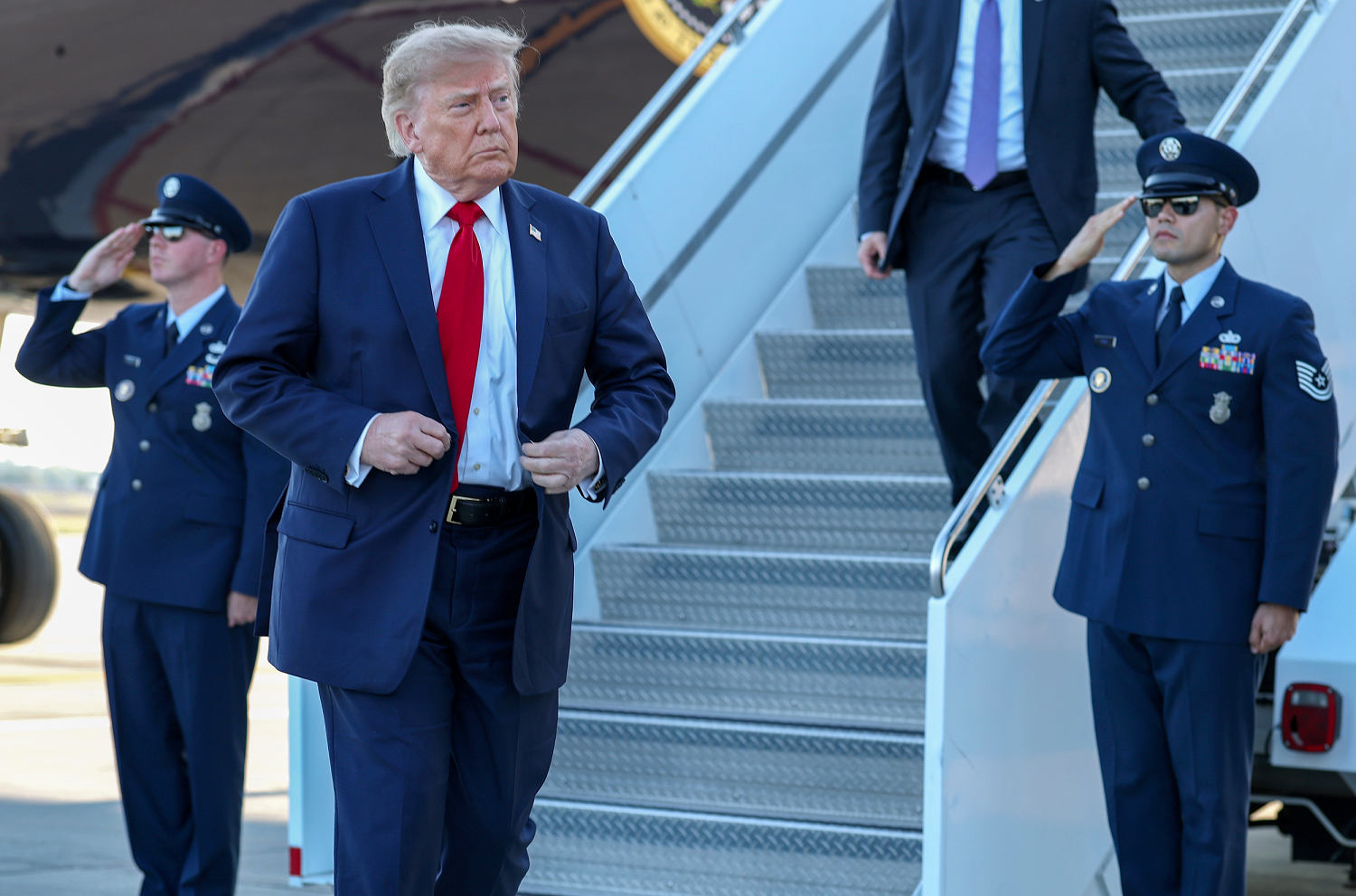
President Donald Trump on Sept. 16 in Charlotte, N.C.Anna Moneymaker / Getty ImagesShareAdd NBC News to GoogleSept. 17, 2026, 5:00 PM EDTBy The Politics DeskWelcome to From the Politics Desk, a daily newsletter that brings you the NBC News Politics team’s latest reporting and analysis from the White House, Capitol Hill and the campaign trail.
In today’s edition, Jonathan Allen digs into the growing number of Republicans on the ballot this fall who are putting distance between themselves and President Donald Trump. Plus, Bridget Bowman and Allan Smith take stock of how AI concerns are — and aren’t — manifesting on the campaign trail.
Republicans in tough re-election bids are sprinting away from President Donald Trump as the midterms draw near. The only question is whether they’re running early and fast enough.
Iowa Republican Reps. Mariannette Miller-Meeks and Zach Nunn, two of the most vulnerable incumbents in the House, both voted on Tuesday to end the Iran war. They had backed it until then, but Iowans are upset about the monthslong conflict and its upward pressure on gas and diesel fuel prices.
The next day, House Republican leaders brought a bill to the floor that would encourage companies operating data centers to bear the costs of utility-rate hikes — in the midst of a push by Trump to lionize AI and the data centers it needs. The legislation passed 417-3.
Sen. Jon Husted, R-Ohio, who is in danger of losing his seat to former Sen. Sherrod Brown, D-Ohio, tried to pass the bill immediately in the Senate today without debate, but his attempt was blocked. As lieutenant governor of Ohio, Husted was a chief proponent of building data centers without such requirements.
And House Speaker Mike Johnson, R-La., decided to send lawmakers home earlier than expected after Rep. Thomas Massie, R-Ky., tried to force a vote on impeaching Defense Secretary Pete Hegseth. GOP leaders said they had enough votes to kill the impeachment push. But they didn’t kill it.
Maybe they didn’t actually have the votes or maybe they didn’t want battleground Republicans to have to take a position on Hegseth before the midterms. Either way, it would be a sign of separation from Trump.
The hits kept coming today. Rep. Maria Elvira Salazar, R-Fla., who promised after Trump was elected that his “deportation army” would “go after the criminals first,” released an ad admonishing the president for going “too far.” Salazar’s district, which Trump carried by 15 points in 2024, wasn’t even seen as low-hanging fruit for Democrats — and clearly, she doesn’t want to become that.
It’s normal for lawmakers to distance themselves from an unpopular president of their own party before an election. Usually, the separation act is too little too late for the party in power to avoid a wipeout.
Democrats hemorrhaged House seats in 2010 and 2014 — and lost a net of nine Senate seats in the latter year — and Republicans got swamped in 2018.
Trump’s hammerlock on Republicans in Congress has kept the dam from breaking until now, a little more than six weeks before Election Day. Some Republicans in battlegrounds are sure to survive, but it is likely too late for others.
Concerns about existential threats posed by AI may be dominating discussions in Washington, but they aren’t shaking up the campaign trail — at least not yet.
In the last week, about 30 of the more than 3,500 ads running in competitive races for Congress and governor mentioned AI, according to the ad-tracking firm AdImpact.
“People need to eat and pay bills first,” said Democratic Rep. Vicente Gonzalez, who is in a tough re-election race in South Texas.
“Affordability is something that is actually more front and center for folks, though there are people who are concerned with AI as well,” said GOP Sen. Pete Ricketts, who is facing a challenge from independent Dan Osborn in Nebraska.
So far, campaigns that have touched on AI have focused largely on the economic and environmental costs of massive data centers that power the technology.
The latest NBC News Decision Desk poll found that 70% of Americans are worried about AI, while 30% are excited about the technology. That survey also found 69% of Americans oppose constructing AI data centers in their local area. Concerns about AI and opposition to data centers spanned political, socioeconomic and demographic divides.
Some Democrats also see a political opening as a number of Republicans — most notably President Donald Trump — dismiss calls for more regulation.
“For a year, Democrats have been making the case that Republicans are looking out for wealthy and powerful people and not for regular people. This just became the latest evidence in that indictment,” said Jesse Ferguson, a Democratic operative who huddled with other party strategists on AI messaging this week, a meeting first reported by Politico.
Meanwhile, Geoffrey Hinton, a Nobel laureate known as the “Godfather of AI,” issued an ominous warning to lawmakers on Capitol Hill today: Congress may only have one year left to implement safeguards on AI before it loses control of it.
📊 Related: Most American adults think artificial AI is going to do more harm than good in education, according to the NBC News Decision Desk poll. And a growing share believe schools that shun the technology will better help students grow than schools that embrace it.


