Republicans Spending Over $7M per Day To Try and Save Ken Paxton in Texas - Newsweek
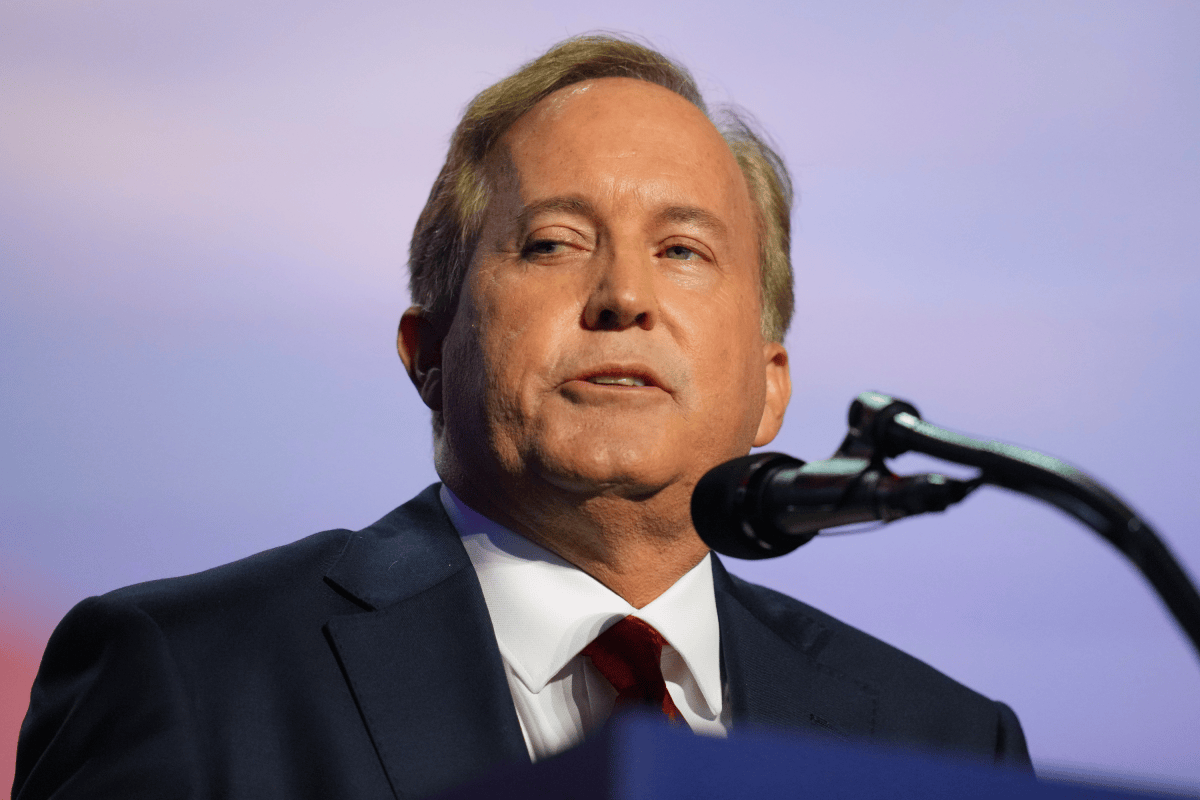
A Republican super political action committee (PAC) spent approximately $131 million in independent expenditures over 17 days supporting Ken Paxton's Texas Senate bid, an average of about $7.7 million per day, according to Federal Election Commission (FEC) filings reviewed by Newsweek.
It comes as Paxton lags behind Democratic Senate candidate James Talarico in many polls, although several results remain within their margins of error, with the November 3 midterm election approaching.
Talarico, a former Presbyterian seminarian and middle school teacher, is seeking to become the first Democrat in decades to win a Texas Senate seat. A victory would give his party a significant gain in its attempt to take control of the Senate.
The spending intervention is being led by Texas PAC, a Republican group affiliated with the Senate Leadership Fund, the principal GOP super PAC involved in Senate elections.
Because Texas PAC is legally independent of Paxton’s campaign, the money is not available for Paxton to spend directly.
Instead, it pays for independent activity such as television, streaming and digital advertising.
FEC records show that Texas PAC, which is registered with the FEC under committee number C00960211, filed several reports between September 13 and September 30 detailing independent spending related to the election.
A September 14 report names Cabell Hobbs as the PAC’s treasurer and records the spending on Schedule E.
In a previous statement to Newsweek, Senate Leadership Fund executive director Alex Latcham said: "The Republican Party is united to elect Ken Paxton and keep Texas red in November. Senate Leadership Fund’s investment through Texas PAC affirms our commitment to maintaining the Republican majority and defeating Far-Left liberals like James Talarico."
Newsweek reached out to the Talarico and Paxton campaigns for further comment on Thursday morning and is awaiting responses.
Texas has not elected a Democratic U.S. senator since 1988 and has not elected a Democrat to any statewide office since 1994.
A competitive race there is therefore forcing Republicans to devote money to a state that would ordinarily be treated as safer territory.
The scale of the outside investment shows how urgently the party is treating the contest, which threatens both its hold on the seat and its wider Senate majority.
Paxton secured the nomination by defeating incumbent Senator John Cornyn in the May 2026 primary runoff, which fractured the state's Republican establishment and heightened Democratic hopes of flipping the seat.
Federal campaign-finance law distinguishes between candidate spending and independent expenditures.
A candidate committee can decide how to use the money it raises, subject to federal contribution and reporting rules.
A super PAC can collect unlimited contributions from individuals, corporations and other groups, but cannot legally coordinate its electoral spending with the candidate it supports.
That distinction matters in Texas. The $131 million attributed to Texas PAC should not be described as money raised or directly spent by Paxton’s campaign. It represents outside spending intended to help elect him.
FEC Form 24 notices can also disclose advertising obligations when they are incurred, rather than only after every advertisement airs.
The total may therefore include future airtime reserved during the reporting period.
Previous Newsweek reporting found a sharp contrast between the official campaigns’ finances.
FEC data through June 30 showed Talarico’s campaign had raised $31.85 million, compared with $9.15 million for Paxton’s campaign.
The same reporting found that 55 percent of Talarico’s money came from Texas, while approximately 82.9 percent of Paxton’s came from within the state.
Those figures concern the candidates’ committees, not the later Texas PAC expenditure notices.
Republican-aligned groups are expected to spend more than $300 million across the full Texas contest, including spending during the primary and the general election, according to CNN.
That broader total may include spending by multiple organizations, different phases of the race and advertising reserved for future broadcast.
Republican groups had planned $166 million in pro-Paxton advertising between the beginning of September and Election Day, compared with approximately $32 million by Democratic-aligned groups, CNN reported.
Those figures describe advertising commitments tracked by a commercial monitoring service rather than an FEC total.
Texas PAC previously spent more than $51 million supporting Paxton, according to AdImpact data cited in earlier Newsweek coverage. That money included broadcast reservations in the Austin, San Antonio, Houston and Dallas-Fort Worth markets.
Other Republican-aligned organizations had also entered the race. Earlier Newsweek reporting cited $2.6 million in advertising from America PAC, $10 million in Texas reservations by MAGA Inc., and an additional $5 million contribution from MAGA Inc. to Paxton’s campaign.
The RealClearPolitics average for surveys conducted between September 8 and September 26 placed Talarico at 47.6 percent and Paxton at 44.7 percent, a 2.9-point Democratic advantage.
Polymarket traders currently price Talarico at a 63 percent probability of winning and Paxton at 38 percent, with more than $1.6 million traded on the market.
On Kalshi, traders give Talarico a 62 percent chance of defeating Paxton, compared with a 42 percent chance of a Paxton victory.
Those prices represent traders' expectations rather than voter preferences. They can move rapidly in response to polling, campaign developments and individual transactions, so they should not be presented as an election forecast.
The principal test is whether the advertising changes the race rather than merely preventing Paxton from losing ground. Texans are scheduled to vote on November 3.
Newsweek’s reporters and editors used Martyn, our AI assistant, to produce this story. Learn more about Martyn here.