Resistance to Christian Nationalism Could Help Decide Midterms | Opinion - Newsweek
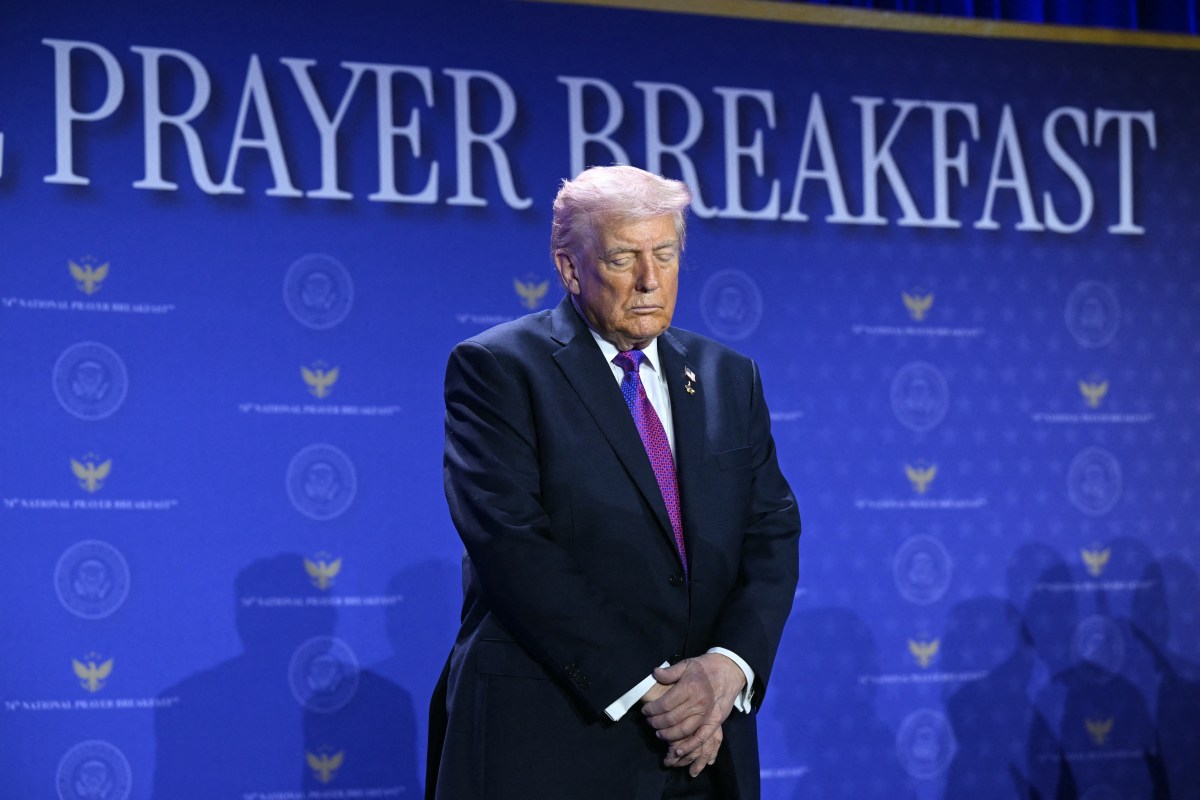
Since the start of the second Trump administration, Christian nationalism—a political movement asserting that the U.S. was founded as, and should remain, a nation of, by and for Christians—has gained unprecedented influence in American politics, challenging long-established lines between church and state and promoting a policy agenda aligned with its right-wing vision of “Christian” values.
Several Trump cabinet officials have deep ties to the movement. Russell Vought was a primary architect of the Heritage Foundation’s Project 2025, widely considered a “Christian nationalist blueprint” for remaking the federal government. As head of the Office of Management and Budget, he has targeted programs the movement views as contrary to Christian values.
Defense Secretary Pete Hegseth has led Pentagon prayer sessions featuring Doug Wilson, an avowed Christian nationalist who supports repealing the 19th Amendment, outlawing all abortion and homosexuality, and has downplayed the horrors of Southern slavery. Under Hegseth's leadership, the Defense Department has also led a propaganda blitz that incorporates Christian nationalist symbolism and directly links American military actions to passages from Christian Scripture.
Yet their worldview remains deeply unpopular. A new joint survey report from the Public Religion Research Institute (PRRI) and the Meanings of Democracy Lab of the SNF Agora Institute at Johns Hopkins University finds that nearly two-thirds of Americans reject this worldview. That could be important come November, when voters get their first chance to weigh in on Trump's second term performance, including the many overtures he's made to Christian nationalists while in office.
While 56 percent of Republicans support Christian nationalism, only 32 percent of Americans overall do. Majorities in all but four states reject Christian nationalism. In Iowa—where Trump won by 13 points in 2024—a strong majority (60 percent) oppose Christian nationalism, as do 57 percent of Texans and 56 percent of Alaskans.
A potential electoral backlash to Trump’s appeals to Christian nationalism may also be spurred by the rising prominence of progressive religious voices on the campaign trail. In key races, some Democratic candidates are openly embracing their Christian faith and challenging Christian nationalism's claim to be the true embodiment of Christianity. Two Black pastors, Senator Raphael Warnock and Representative Emanuel Cleaver, currently serve in Congress, and routinely challenge Christian nationalists’ claims to speak on behalf of all Christians. This election cycle, a number of white pastors and seminarians have also won Democratic primaries, offering voters from a wider range of Christian traditions a view of how Christian values connect to more progressive policies, while rejecting Christian nationalism as antithetical to Biblical teachings.
In Iowa, Democrat Sarah Trone Garriott, an ordained Lutheran minister running in her state’s 3rd Congressional District, argues that Democrats have long avoided religious language because “all they've seen is the religious right and religious extremism.” Presbyterian minister Lindsay James says she was moved to run for Congress after the 2025 "Big Beautiful Bill" put 27,000 Iowans in her district at risk of losing health coverage, noting that her chaplaincy work showed her firsthand what that loss would mean for families struggling to get by.
In Alaska, congressional candidate and Presbyterian pastor Matt Schultz says he feels a moral obligation to speak out against Trump-era GOP policy, often invoking the parable of the Good Samaritan: "It's important to remember that if someone is hoping to just be an innocent bystander, that's not an option. You're either helping or you're part of the problem."
The most high-profile race featuring an outspoken Christian progressive is Texas’ Senate race, where Democratic state Representative James Talarico—a seminary student who argues Christian nationalism has “hijacked” Christianity—has described Christian nationalism as "the worship of power, social power, economic power, political power in the name of Christ, and...a betrayal of Jesus of Nazareth." Talarico routinely rejects Trump's anti-LGBTQ+ policies as violations of the gospel's message of inclusion and love, arguing that God stands with the marginalized.
These progressive Christian candidates have also rooted their opposition to Trump’s immigration crackdown explicitly in faith. Garriott, responding to the fatal shooting of two protesters by ICE agents during a Minneapolis immigration operation, said, "[Jesus] welcomed the stranger, he fed the hungry, he stood up for the vulnerable, he cared for the poor, and that is our calling as Christians."
Democratic Party leaders have traditionally avoided Christian language for fear of alienating religiously unaffiliated and non-Christian voters, but our survey shows that these alternative religious narratives may not be as off-putting as leaders feared. Unaffiliated Americans and non-Christians reject Christian nationalism at extremely high rates, as do at least 60 percent of Hispanic Catholics, white Catholics, white mainline Protestants/non-evangelical Protestants and Orthodox Christians. Resistance to Christian nationalism may be a tie that binds members of the Democratic coalition together across their profound religious differences.
Most pollsters now project Democrats will retake the House, and their odds of flipping the Senate have improved dramatically since the start of the year. Yet many of these races remain razor-tight. A voter backlash against Christian nationalism, combined with Democrats’ embrace of an alternative vision of Christian politics, could help tip the scales toward the Democrats and contribute to a broader transformation of the nationwide political landscape.
Melissa Deckman is CEO of the Public Religion Research Institute. Ruth Braunstein is director of the SNF Agora Institute and professor of sociology at the institute.
The views expressed in this article are the writers' own.