Resisting ‘invaders’ to swords of goddesses: NCERT revises book on medieval history for Class 9 - The Indian Express
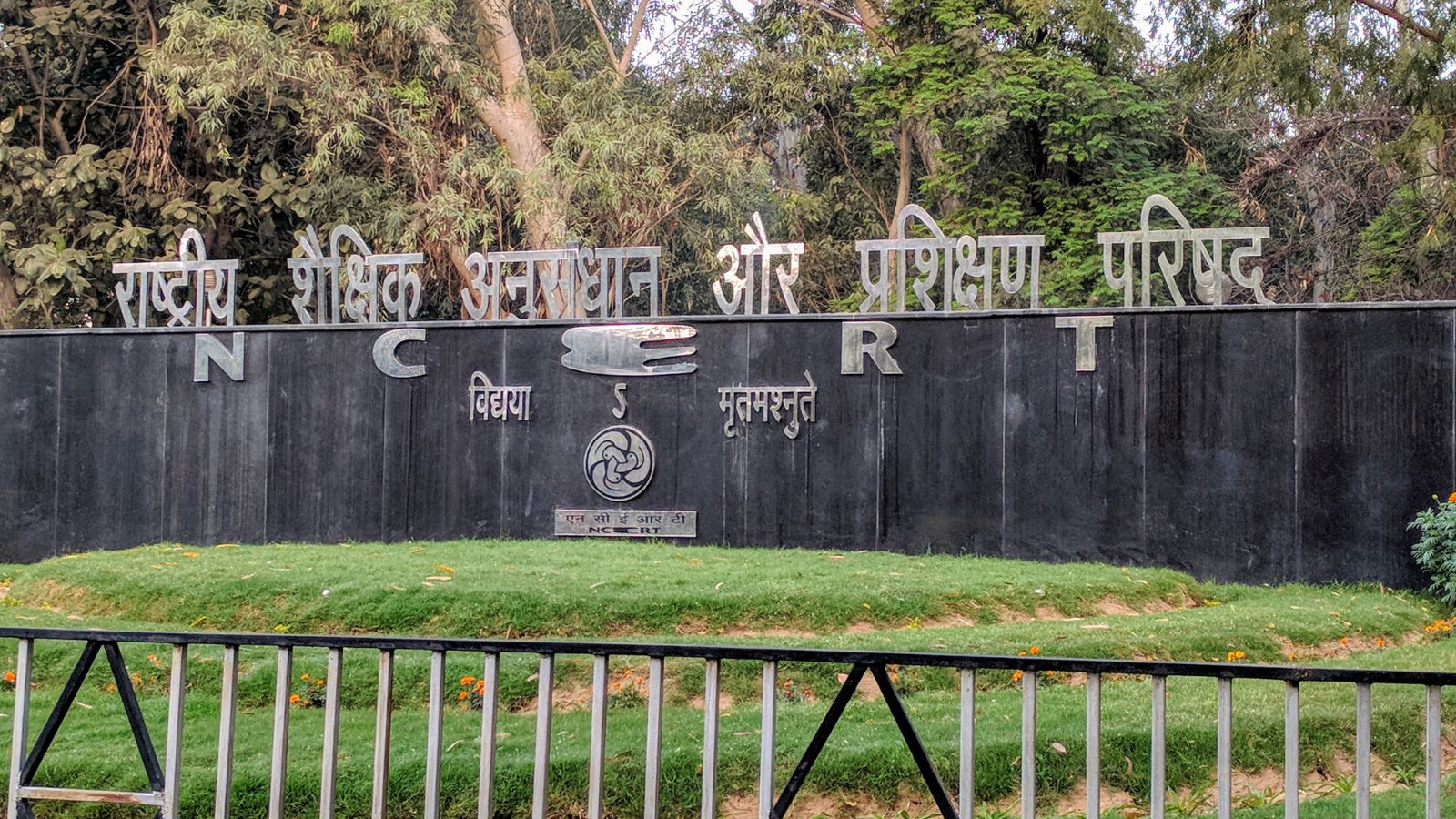
The NCERT’s new social science textbook for Class 9, released Tuesday, describes 700 years of medieval Indian history from 1000 to 1700 AD as a period of “Resistance and Resilience”, one during which “Indian society not only defended itself from external threats but also preserved its traditions”.
Part 2 of the social science textbook Understanding Society: India And Beyond — Part 1 was introduced in June and dealt with themes across disciplines, including history, political science, geography and economics — while mentioning “both conflict and cooperation” focuses on acts of resistance, not of cooperation or the development of a composite culture, themes that were central to Indian historiography for over 50 years.
Documenting successive invasions of the subcontinent, the history section describes religious traditions in warfare, and how Indian rulers — be it the Rajputs, the kingdom of the Ahom, the Vijayanagara empire, Marathas, Sikhs, Jats and others — put up strong resistance against the Turks, Mughals and European forces at different points of time.
“Worship of goddesses was a long standing tradition in India and many kings and princes since the seventh century continued to invoke goddesses such as Kali, Durga, Bhavani and other forms of Shakti as protectors in times of conflict,” states the ‘Don’t miss out’ column in the sub-section (Bhakti Tradition: affirmation of the spirit of resilience) of the chapter “Resistance and Resilience”.
“Annamaraja, ruler of Bastar is believed to have received his sword from Manikyadevi (Danteshvari) while Kumara Kampana (Vijayanagara) was believed to have used a goddess-given sword against the Sultanate forces at Madurai. Similarly, Shivaji is also traditionally believed to have obtained a sword from goddess Tulja Bhavani,” it states.
In the foreword to the textbook, NCERT chief Dinesh Saklani writes: “Social Science learning at this stage is expected to cultivate analytical and discursive abilities, encourage critical inquiry, promote intercultural understanding, and enable learners to participate with confidence and responsibility in civic and social life.”
“It is in this spirit that Understanding Society: India and Beyond, the Grade 9 Social Science textbook for the Secondary Stage, has been conceptualised and developed,” he writes.
The new textbooks replace four older textbooks: ‘India and The Contemporary World’ which dealt with themes like French Revolution, Socialism in Europe, Russian Revolution, the Rise of Nazism, and Democratic Politics-1, a book on political institutions, geography and economics.
The new chapters frame the medieval period largely as a story of “resistance” against foreign forces.
“The Indian subcontinent experienced repeated invasions and wars accompanied by religious discrimination and social distress. Regional powers frequently resisted invaders who were making inroads into their territories. This resistance took both military and cultural forms,” it states.
“Nonetheless, this period manifested the resilience of the Indian civilisation, which safeguarded its core ideas and values. Indian society not only defended itself from external threats but also preserved its traditions.”
It devotes one page to the period of the Delhi Sultanate, mentioning acts of resistance by local kings. The Mughal period is somewhat more elaborate, but focuses on resistance rather than cooperation with the Mughals.
It briefly mentions the “cooperative relationships” of the Kachwahas of Amber with the Mughals, saying the latter also had a “strong incentive to collaborate with the Rajputs”. One section is devoted to Mewar and Maharana Pratap’s resistance to Mughal emperor Akbar. The second section discusses the Ahom kingdom of Assam, underlining that it maintained its political independence for almost six centuries and successfully defended its territories from the Mughals. It makes specific mention of the battle of Saraighat, where “the Ahom commander Lachit Borphukan defeated a Mughal fleet”.
The next section is devoted to the resistance of Vijayanagara, underlining that “resistance to foreign invasions was not confined to northern India”. The next section moves to the Marathas and their idea of Swarajya, and explains it “as the idea of an independent, self-governing territory free from external control”.
It also has the “story of the spiritual and political resilience” of the Sikhs, mentioning the martyrdom of Sikh gurus and the “rigid religious and discriminatory practices of the Mughals”. From the Sikhs, the story moves to the Jat resistance against the Mughals because of economic hardships and Aurangzeb’s religious practices.
The textbook refers to multiple instances of temple destruction and construction of mosques on these sites. It refers to the reconstruction of the Kashi Vishwanath temple by Todarmal and Man Singh, and its destruction later by Aurangzeb, following which it was reconstructed by Ahilyabai Holkar.
Bhakti is credited with providing devotees non-material forms of worship when temple construction got restricted or temples could be destroyed, and it says that Chaitanya Mahaprabhu once led a public sankirtan in Bengal against restrictions “imposed by a Qazi on devotional practices”. Sufism, while being seen as a comparatively liberal dimension of Islam, is also credited with contributing to its spread.
Vikas Pathak is deputy associate editor with The Indian Express and writes on national politics. He has over 17 years of experience, and has worked earlier with The Hindustan Times and The Hindu, among other publications. He has covered the national BJP, some key central ministries and Parliament for years, and has covered the 2009 and 2019 Lok Sabha polls and many state assembly polls. He has interviewed many Union ministers and Chief Ministers. Vikas has taught as a full-time faculty member at Asian College of Journalism, Chennai; Symbiosis International University, Pune; Jio Institute, Navi Mumbai; and as a guest professor at Indian Institute of Mass Communication, New Delhi. Vikas has authored a book, Contesting Nationalisms: Hinduism, Secularism and Untouchability in Colonial Punjab (Primus, 2018), which has been widely reviewed by top academic journals and leading newspapers. He did his PhD, M Phil and MA from JNU, New Delhi, was Student of the Year (2005-06) at ACJ and gold medalist from University Rajasthan College in Jaipur in graduation. He has been invited to top academic institutions like JNU, St Stephen’s College, Delhi, and IIT Delhi as a guest speaker/panellist. ... Read More