Returning Springboks will boost SA rugby in the short and long term - Daily Maverick
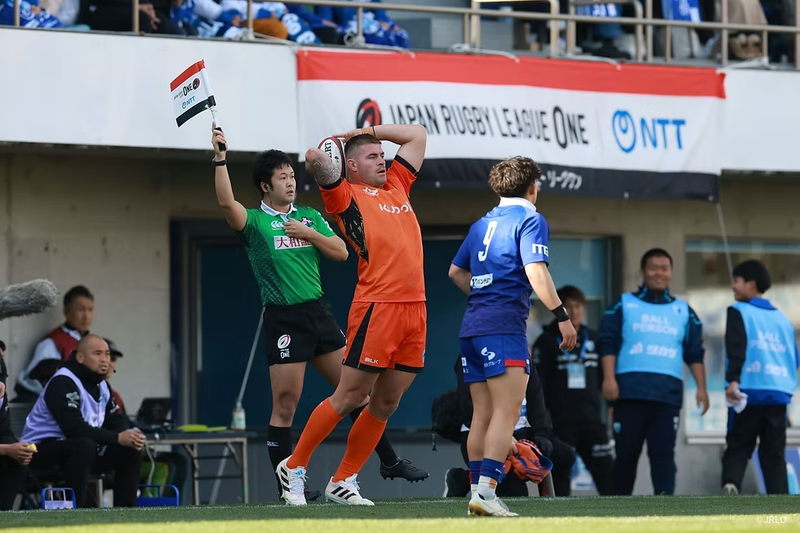
Several World Cup winners are heading back to South Africa after their lucrative stints in Japan and will boost the local franchises.
It’s been six months since the Stormers announced the signing of double World Cup winner Cheslin Kolbe, and now five more Springboks are returning from Japan.
Malcolm Marx (Kubota Spears), the 2025 World Rugby Player of the Year, and Bomb Squad regular Kwagga Smith (Shizuoka Blue Revs) have committed to the Bulls ahead of next season, although Smith could feature in the coming months once he’s recovered from a serious knee injury.
Flyhalf Manie Libbok has signed for the Sharks and will join the coastal franchise once his contract with the Hanazono Kintetsu Liners expires at the end of the Japanese season.
After a long spell abroad, Bok legends Pieter-Steph du Toit (Toyota Verblitz) and Damian de Allende (Saitama Wild Knights) are eyeing a return to the Western Cape – although it’s yet to be confirmed whether they will play for the Boland Kavaliers in the 2027 SA Cup and possibly the Stormers thereafter.
No South African franchise has the resources to match the money on offer abroad, but there are other rugby-related opportunities in the republic that can supplement a leading player’s income.
The aforementioned players will take salary cuts of at least 50% when they return to South Africa in the coming months, according to Rapport. And yet, these decorated veterans stand to earn as much as R10-million more if they align with local sponsors and attend corporate events in person.
Lucrative commercial opportunities are linked to the continuing success of a golden generation of Springboks, who have already won back-to-back World Cups, a British & Irish Lions series, three Rugby Championships and the Rugby’s Greatest Rivalry series against the All Blacks since coach Rassie Erasmus came to power in 2018.
The decision to return to South Africa may also be influenced by Marx, Smith, Du Toit and De Allende nearing the end of their careers – all four are 33 or older – and looking to settle their young families in the country.
What’s more, the respective franchises are starting to get things right with regard to their squad building and results in top tournaments like the United Rugby Championship (URC) and Champions Cup, and they may benefit from the well-travelled veterans’ input.
The never-ending exodus to Europe and Japan is linked to the socioeconomic situation in South Africa. The South African Rugby Union (Saru) has long conceded that it cannot compete with the euro or pound, and that many players in their prime are likely to explore overseas opportunities sooner rather than later.
That said, several high-profile players have made their way back to South Africa in recent years, boosting the respective franchises and the national team. And it shouldn’t come as a surprise to see how many are aged 33 or older. After making money abroad, they have returned to South Africa to contribute to the local cause and raise their children here.
Willie le Roux, Wilco Louw and others have been at the heart of the Bulls’ effort since returning from their respective stints abroad. André Esterhuizen and Thomas du Toit are driving the Sharks’ revival, and Siya Kolisi and Cobus Reinach are complementing a young and talented group at the Stormers. Boan Venter has bolstered the Lions’ front-row stocks in recent months, and Faf de Klerk has provided leadership and star value at the Cheetahs.
Consider what Kolbe will offer the Stormers once he returns from injury in December, or what Pieter-Steph du Toit and De Allende could do for the Cape contingent in terms of mentoring the younger forwards and midfielders.
Marx and Smith will reunite with their old mentor, Johan Ackermann, who was head coach during the Lions’ golden era in the mid-to-late 2010s. The Bulls have struck out in a bold direction over the past two seasons, and the addition of Marx and Smith should amplify their attacking strategy in the years to come.
Libbok will work closely with younger flyhalves at the Sharks, with Vusi Moyo and former SA A utility back Gianni Lombard among the beneficiaries. After playing in Japan’s second division for the past two seasons, Libbok should take the development of his own game further when he competes in leading tournaments such as the URC and Champions Cup.
More players may return in the coming years, particularly those in their mid-to-late thirties who are looking to build a life after rugby in South Africa. There was talk of Franco Mostert returning to Gauteng, and another Japan-based lock in Lood de Jager may eventually return too.
It would be naive to assume that all South Africa’s stars – young, old or in their prime – will remain here indefinitely. South African rugby waved goodbye to regular Bok squad members such as Aphelele Fassi, Kurt-Lee Arendse, Grant Williams, Ruan Nortje and Salmaan Moerat at the end of last season. All these players are aged between 28 and 30 – and are essentially in the prime of their careers.
And although the recent return of six players from Japan may sound significant, there are still nine Boks in the Far East. Five more in Erasmus’s wider squad are based in France, and two apiece in England and Ireland.
This number may grow. Springbok and Bulls flyhalf Handré Pollard was recently linked with a move to Japan, and after the 2027 World Cup, several more South Africans across the age groups may consider a move abroad.
As many Springboks have noted, the schedule is more forgiving in Japan and players are not subjected to a never-ending season as they are when juggling their club responsibilities in Europe or South Africa with their Test obligations. This will remain an attractive proposition for players until a global calendar is implemented and player welfare – and a definitive off-season – is prioritised.
It’s also worth noting that South Africa has a surplus of talent, and the improvements made to the junior and school programmes in recent years may lead to a bigger player pool and further departures in future.
It’s encouraging to note, however, that most of the top players are being locked down from an early age at franchise level. And in the wake of the Boks’ successes, more senior players are making their way back to the local franchises after a formative stint abroad.
With all this in mind, the period between 2027 and 2031 could be particularly prosperous for South African rugby as the franchises welcome the input of returning legends and look to match the standards set by the national team. DM
This story first appeared in our weekly DM168 newspaper, available countrywide for R39. The e-edition of Daily Maverick’s weekly newspaper, DM168, is now free for readers who are signed into their Daily Maverick account. Click here to access the latest e-edition.