Rick Salutin: I might be changing my mind about elections - Toronto Star
Elections viewed with a judicious skepticism can give you a feeling of partial total redemption and help you carry on toward future disasters.
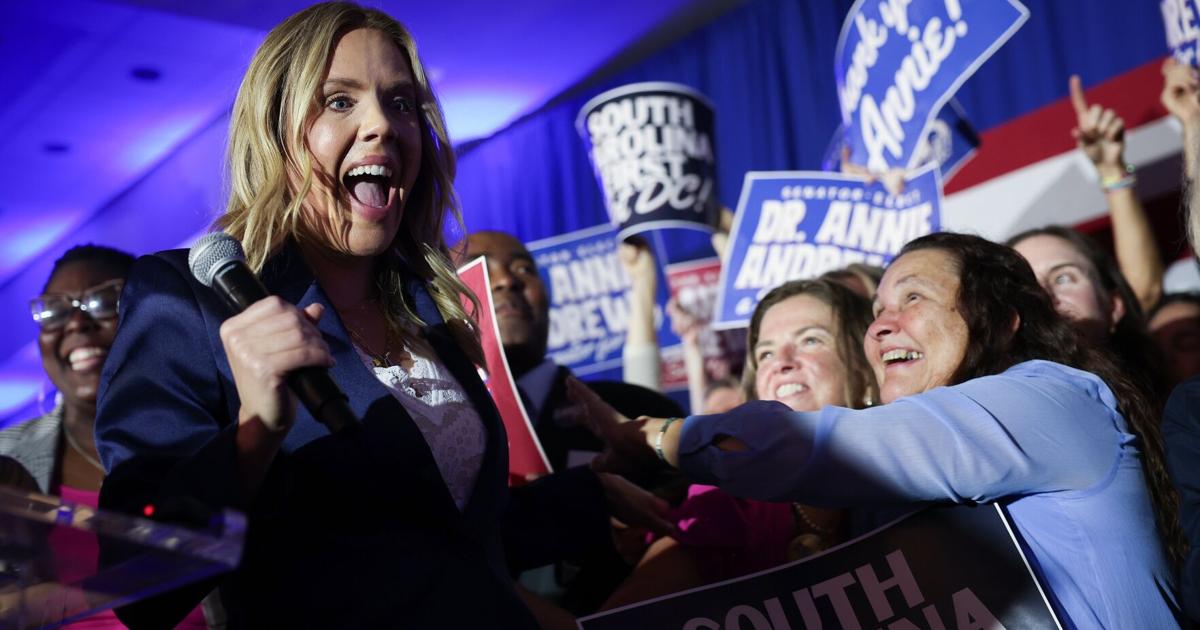
Democratic U.S. Senate candidate Annie Andrews celebrates during an election-night watch party at the Charleston Marriott on Tuesday in Charleston, South Carolina. Andrews defeated incumbent Sen. Darline Graham (R-SC), who was filling out the term of her late brother Sen. Lindsey Graham.
Rick Salutin is a freelance contributing columnist for the Star. He is based in Toronto. Reach him via email: salutinrick@gmail.com.
Speaking generally, there’s little to say in praise of elections. Elections are what they give us instead of real democratic participation. We mark an X beside a name, then go away for years with no involvement in the political process till another flimsy moment comes and goes. You could call it Democracy Minus.
I’ve been whining about this for decades and even wrote a book about one of Canada’s liveliest elections. It was called “Waiting for Democracy.”
Elections, however, have been on an impressive run lately. Viktor Orban, Hungary’s dictator in all but name, who’d seemed to block all electoral routes to tossing him, was voted out by a mass movement led by a former colleague.
In Serbia, students, outraged by a construction scam that killed 16, paused their careers for two years and managed to defeat an ensconced autocrat. Former union leader and three-time Brazilian president Lula was beaten in a first round, yet came back with millions of new voters for round two and won.
I’d include Toronto Mayor Olivia Chow, re-elected despite a listless campaign. Somehow voters found their way to her. And then there were the midterms, AKA Trumpism, on Tuesday.
Brazil’s President and re-election candidate for the Workers’ Party (PT) Luiz Inacio Lula da Silva reacts next to his wife, First Lady Rosangela da Silva (left), Minas Gerais federal deputy-elect Andre Janones and Vice President Geraldo Alckmin (second from right) after knowing the first results of the presidential runoff election, in Sao Paulo, Brazil, on Oct. 25. Lula da Silva pulled off a dramatic comeback as he clinched election victory against right-wing senator Flavio Bolsonaro, who trounced him in the first round.
Some of these campaigns had leaders, some were leaderless. They have yet to be tested and some or all will fail. I’m also aware that I’m choosing the good guys here, but you’re free to do that too.
My point is different. Elections have other virtues than advancing good causes. Even if they fail at that, they can subvert the worst. Ordinary voters often eloquently call this making “the least worst choice.”
Even as elections routinely overpromise and underdeliver, they spare you from settling even more deeply into the pit.
Consider the recent round. It’s been like a series of referenda on neo-liberalism in the last 50 years, Reagan to Trump. The lowly, disrespected voters, had seen enough to judge it based on experience. They called a halt.
There’ve already been more than 6,000 arrested in France, 300 students and staff hurt and 700 cops too. As an exercise in democratic engagement