Right to protest cannot destroy livelihoods: Traders' body attacks Rahul Gandhi
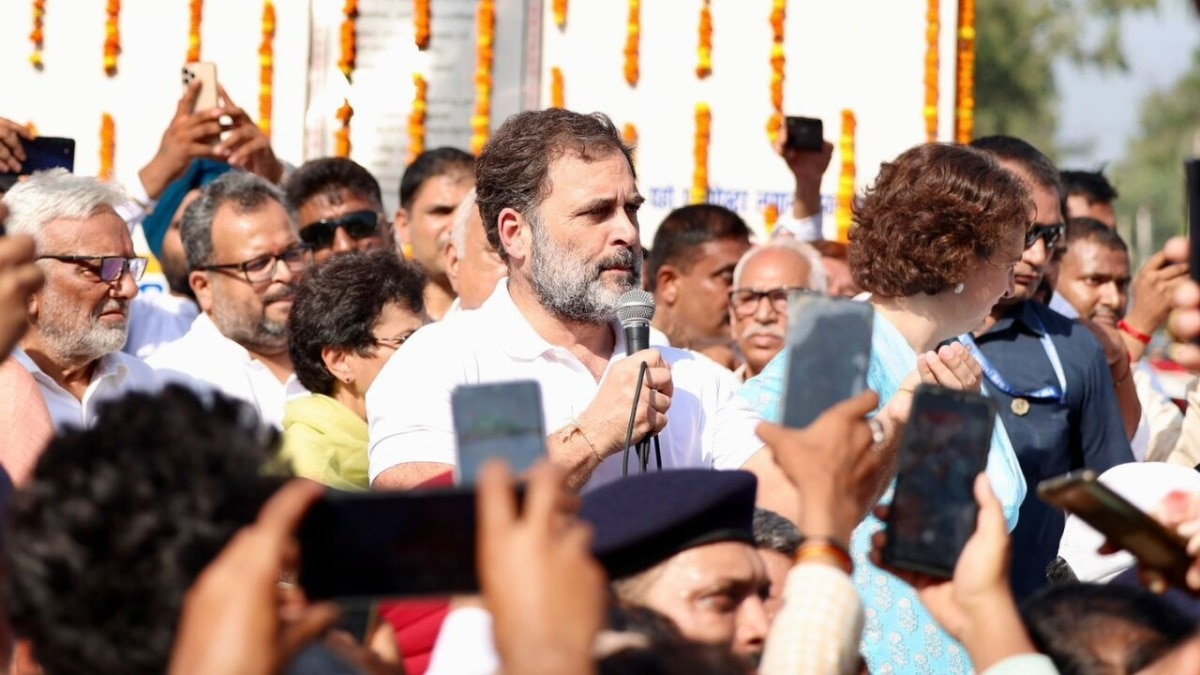
The Confederation of All India Traders (CAIT) has questioned Congress leader Rahul Gandhi over the repeated disruption of commercial activities in Delhi due to political rallies, protests and demonstrations, arguing that the right to protest cannot become a licence to destroy someone else's livelihood.
In a strongly worded letter to the Leader of the Opposition in the Lok Sabha, CAIT National President BC Bhartia raised five questions concerning the economic losses suffered by traders and shopkeepers because of demonstrations in the national capital over the past month.
CAIT particularly questioned the Congress rally held on November 1, and the continued support extended by the Congress and other political parties to demonstrations organised by various groups during this period.
The traders' body said the disruptions had severely affected commercial activities during the crucial festive and wedding shopping season. It also questioned the political and moral responsibility of Rahul Gandhi and the Congress for supporting protests that affected customers' access to markets.
"Rahul Gandhi cannot hold two contradictory positions simultaneously. On one hand, he appeals to people to purchase from local markets, while on the other, he supports political activities and demonstrations that prevent customers from reaching those very markets. This is not merely political inconsistency; it is a glaring contradiction that directly hurts the livelihoods of ordinary traders," Bhartia said.
Invoking Articles 19(1)(a) and 19(1)(g) of the Constitution, which respectively guarantee the freedom of speech and expression and the right to practise any profession or carry on any trade or business, CAIT accused political leaders of selectively interpreting constitutional rights.
"Does Rahul Gandhi believe that the Right to Protest is superior to the Right to Trade and Earn a Livelihood? Is Article 19(1)(g) of the Constitution meant only for speeches and books, or does it also protect the millions of small traders, shopkeepers, street vendors and working families whose livelihoods depend on their daily earnings? Political leaders cannot selectively invoke constitutional provisions while conveniently disregarding the rights of others," Bhartia said.
CAIT also asked who would compensate traders and working families for the economic losses suffered because of the demonstrations and whether the Congress and its political allies accepted responsibility for the resulting hardship.
1. Is the Right to Protest more important than the Right to Trade and Earn a Livelihood?
2. Is it politically and morally justified to hold the commercial life of the national capital hostage? Who will compensate the affected traders for their losses?
3. How can Rahul Gandhi appeal to people to shop from local markets while supporting demonstrations that prevent customers from reaching those very markets?
4. Does the Congress Party and its political allies accept responsibility for the economic hardship caused by demonstrations that they have supported?
5. Would Rahul Gandhi accept the same kind of prolonged disruption if his own business, livelihood or daily earnings were affected?CAIT PLANS NATIONWIDE 'DHIKKAR DIWAS'
CAIT said it would await Rahul Gandhi's response to the letter. However, it announced that a national-level meeting of Delhi traders and prominent trade leaders from across the country would be convened in New Delhi after Diwali to decide the future course of action.
The traders' body also announced a nationwide 'Dhikkar Diwas' (Day of Condemnation), with the date to be decided at the proposed meeting.
Emphasising that the issue extended beyond Delhi, CAIT said disruptions affecting commercial activity in the national capital could happen in other cities as well, making it a national concern.
"India's traders are not punching bags for anyone's political battles. They are the backbone of the country's domestic economy, major generators of employment and partners in nation-building. They are not asking for any special privileges; they are simply demanding respect for their constitutional rights," Bhartia said.
He added that opposing the government was a democratic right, but destroying another person's livelihood in the name of political opposition was neither democracy nor responsible political leadership.
CAIT clarified that it recognised the right to protest as an integral part of democracy and one that belonged to every citizen. However, it argued that no individual, political party or organisation could claim the right to disrupt another citizen's business, employment or livelihood while exercising that freedom.- Ends