Rs 2.5 crore as carbon credits: In a first, farmers reap harvest of good practices - The Indian Express
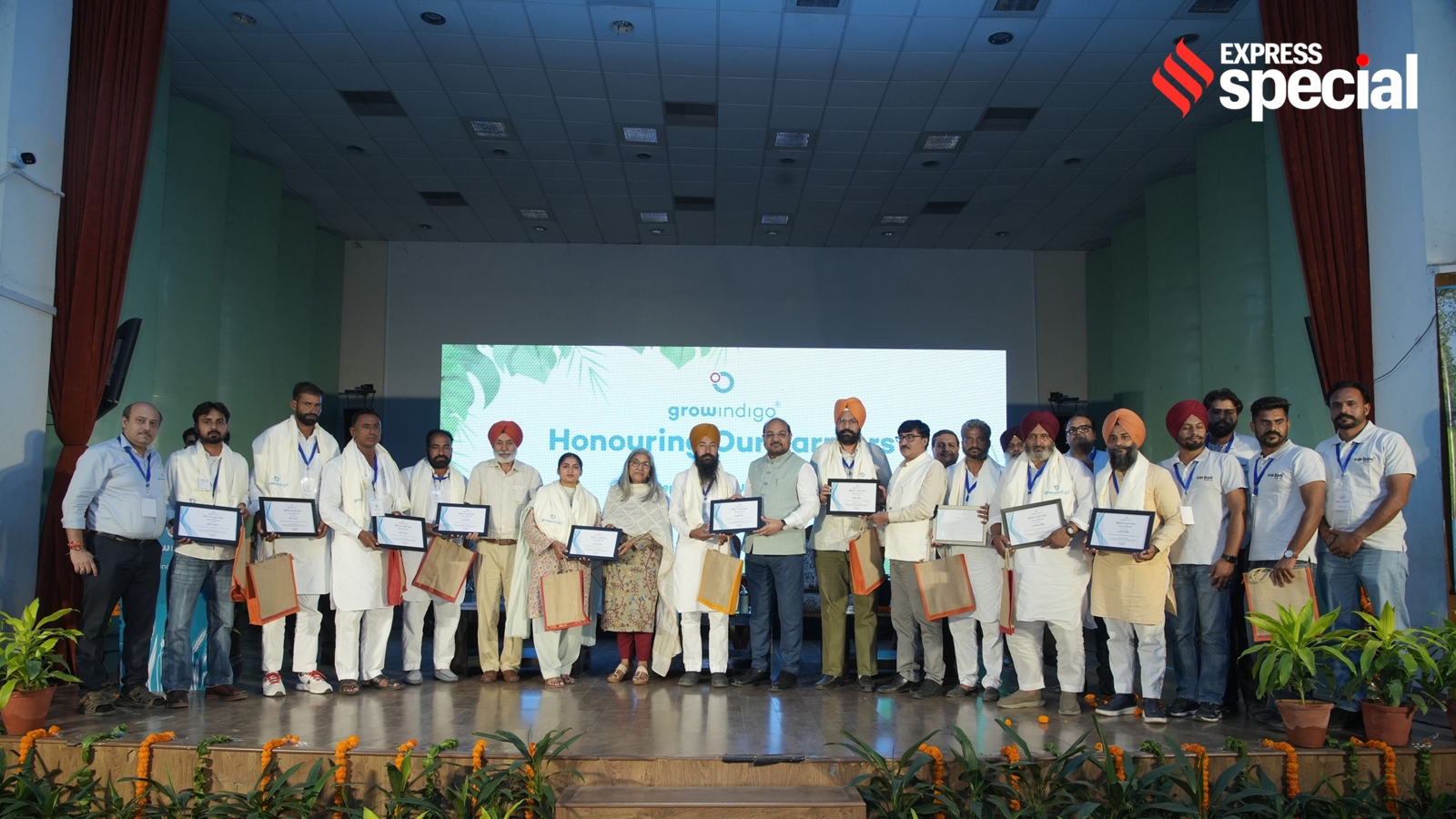
For the first time in India, farmers have earned carbon credit payments for improved agricultural practices. The first beneficiaries are around 2,500 farmers — 1,400-odd from Punjab and the rest from Haryana.
The payment is based on verified carbon credits attributed to a farmer, and not linked to acreage. The first set of payments covered thousands of acres, with over 50,000 carbon credits generated. Farmers received around Rs 3,000-Rs 15,000, with the total amounting to around Rs 2.50 crore.
A 45-year-old farmer from Kothe Lal Singh Wale village in Bathinda, Sahib Singh received Rs 5,700 for having stopped burning paddy residue on his fields for the past 7-8 years. Jagmail Singh and Nishan Singh, who belong to the same village, earned Rs 19,000 and Rs 14,000, respectively. Sahib, who owns around 13 acres, has been using direct seeded rice (cutting water use) and managing crop residue instead of burning it. “My way of farming has finally acquired an economic value,” Sahib said.
The programme that seeks to put an economic value to farming practices that reduce emissions and conserve soil and water was initiated by agro-tech firm Grow Indigo in 2019, with technical guidance from the Indian Council of Agricultural Research (ICAR). There is also an MoU between the ICAR-Agricultural Technology Application Research Institute (ATARI), Ludhiana, and Grow Indigo.
The recent BRICS Summit in New Delhi adopted a declaration on the establishment of a BRICS Network of Centres of Excellence on Agroecology and Regenerative Agriculture for Climate Resilience and Productivity, as well as of a BRICS Network on Digital Agriculture. The farmers who received the payouts were also felicitated at an event in Ludhiana — attended by scientists.
Punjab incidentally has seen a sharp decline in farm-fire incidents, from over 83,000 in 2020 to fewer than 5,000 in 2025, as per the ICAR. There is a pre-existing carbon credit scheme, launched in August 2024, as part of which Punjab pays farmers for raising and maintaining trees on agricultural land under an agroforestry-based programme. Under the programme, farmers are required to maintain trees for at least five years, with the carbon benefit linked to the trees’ growth and their subsequent use in products such as paper, furniture and plywood.
Under the current scheme, farmers earn credits for changing agricultural practices in ways that reduce greenhouse-gas emissions and increase or retain carbon in the soil. These can include the use of direct seeded rice, reduced or zero tillage, better residue management, and more efficient fertiliser use — measures that are particularly relevant in Punjab’s rice-wheat-based agricultural system.
Dr Rajbir Singh, deputy director general (Agricultural Extension), ICAR, said, “Carbon credits can provide farmers an additional economic incentive to adopt climate-smart practices. Our role is to educate farmers and ensure that these practices are properly documented and verified through field evidence and technology.”
ICAR-ATARI Director Dr Parminder Singh said experts and field teams are helping farmers adopt the new practices and document them. “Satellite and remote-sensing systems, including geo-fencing, are used to monitor fields and residue burning, while soil sampling can help assess changes in soil properties, including soil organic carbon,” Dr M L Jat, Secretary, DARE (Department of Agriculture, Research, and Education), and Director General, ICAR, said.
At Sherpur Kalan near Jagraon, Baldev Singh (54), who grows wheat, paddy and vegetables on around 20 acres, including leased land, received Rs 6,070. He said he had kept his fields free from paddy stubble burning for around eight years.
At Bathinda’s Tungwali, Gurpreet Singh (25), who farms around 8.5 acres, got Rs 9,075. He grows wheat and paddy, has put his fields through soil testing, uses recommended fertilisers, and says he has not burnt stubble for around five years.
Bhim Singh received Rs 12,000. Farming around 90 acres, including eight acres of his land, he grows wheat and paddy and uses ex-situ residue management, with bales removed from fields. His fields are in Mithu Sureran village, Sirsa.
Varinderpal Singh of Mandianai village in Ludhiana and Surendra Kumar of Mithanpura village in Sirsa received Rs 3,000 each.
Grow Indigo Executive Director Dr Usha Barwale Zehr said the programme was moving the focus beyond simply preventing stubble burning. According to officials at the firm, the programme is designed as a continuing process rather than a one-time payment, and farmers can continue adopting good practices.