Russia adapts a training missile to lead its ballistic onslaught of Ukraine
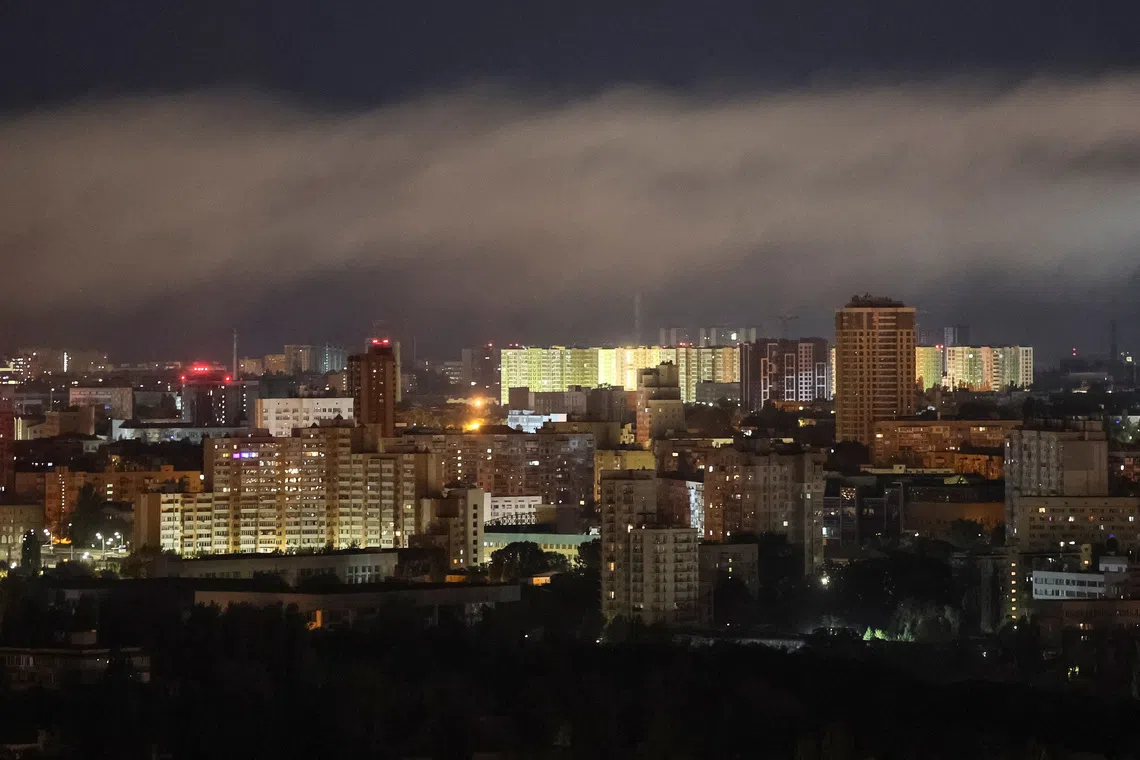
LONDON/KYIV, Sept 18 - The bodies of passengers strewn across a bloodied suburban railway platform near Kyiv last month bore grim testament to the escalating air war dominating the conflict in Ukraine.
They were among eight people killed in a barrage of Russian missiles that was mainly focused on industrial facilities in the Brovary district, where the station is located, according to local officials. The attack that hit the railway wasn't carried out by Russia's main Iskander strike missile, Ukrainian investigators said, but by a less accurate weapon originally designed to serve as target practice for air defense crews.
Russia's mass deployment of these repurposed training missiles, or RM48Us, has driven its aerial onslaught to record levels in recent months, official Ukrainian data seen by Reuters shows. RM48Us made up more than half of the 228 ballistic and hypersonic missiles fired at Ukraine in July and early August, according to the figures compiled by military analysts at the General Prosecutor's Office.
The scale of the RM48U deployment, which hasn't been previously reported, helps show how Russia has been able to expand its attacks over the summer without running down its stocks of Iskanders and other primary strike missiles.
Moscow has been able to keep up a daily air barrage during a critical window in which Ukraine finds itself highly exposed: It has virtually exhausted its stocks of U.S.-made Patriot interceptors, the only weapons in its arsenal capable of downing Russian ballistic missiles. There is little clarity on when fresh supplies might arrive, with more Patriots being funneled to the U.S. military and its allies in the Gulf than to Ukraine.
Russia's defense ministry didn't respond to questions about its use of RM48Us and other missiles in Ukraine. Moscow has denied intentionally harming civilians, saying it only targets military infrastructure. On August 5, the day of the railway deaths, the defense ministry said it struck a logistics center in Brovary that was being used to store drone components.
Firing large numbers of RM48Us serves as a way for Russia to drain any remaining Ukrainian interceptor stocks and attack lower-value targets without using up its precision strike missiles, according to Sidharth Kaushal, a senior research fellow at RUSI, a London-based defense think-tank.
"Their use allows the Russians to husband the more capable missiles they have, the Iskanders, but also the KN-23s and the Zircons, for winter when they would want to really lean into their ballistic missile campaign," he said.
Indeed, as the RM48U attacks surged in July, the number of Iskanders fired fell to 38 from more than 100 the previous month, the Ukrainian data showed.
The war in Ukraine has entered yet a new phase.
With battle lines on the ground locked across a ferocious "kill zone", both sides have launched intensifying air campaigns. Russia has fired hundreds of ballistic missiles over the summer and is widely expected to pound critical infrastructure including heating and power sites this winter. Ukraine, which has a far smaller arsenal of missiles, has unleashed hundreds of long-range drone attacks on Russian refineries, ships and ports.
July saw the deaths of at least 437 civilians in Ukraine, the largest toll recorded in a single month since the early months of the invasion, according to the United Nations, which pointed to missile and drone strikes as a key factor.
Russian civilian casualties, while far lower than in Ukraine, are also at record highs. The Conflict Intelligence Team, an independent open-source investigation group, said 327 civilians were killed in Russia in the first seven months of 2026, compared with 145 in the same period last year.
The RM48U - RM for "raketa mishen" or "missile target" - flies on a ballistic trajectory at high speeds, Ukraine's prosecutor's office and the country's GUR military intelligence agency told Reuters. But it is less powerful and accurate than the Iskander, Russia's primary short-range ballistic missile, the prosecutor's office said.
The Ukrainian missiles data shows this summer was the first confirmed time the munitions, which are fired from Russia's S-400 air-defense systems, have been deployed in large numbers.
The prosecutors linked the RM48U and its lower precision to several strikes that have caused high civilian casualties in the last few months, including the Brovary district railway platform. They said their military experts found that RM48Us deviate from their intended targets by around 300 metres on average and that their exploding warheads can unleash metal fragments over a large area.
Forensic investigators concluded the railway strike was conducted with an RM48U after analyzing the crater near the rail line beside the platform, metal fragments and damage to the platform, trees and bodies, the office said.
Reuters couldn't independently verify the Ukrainian findings.
Volodymyr Bihun, head of Brovary's military administration, said the rail attack happened shortly after midnight. Russia also fired a number of missiles that hit logistics facilities in the district, he said.
Overhead imagery obtained from commercial satellite company Planet Labs showed that a warehouse complex near the Kvitnevyi railway platform had been damaged. Two plumes of smoke could be seen rising into the air.
In July, Russia fired the largest number of ballistic and hypersonic missiles in a single month since its 2022 full-scale invasion, according to the official Ukrainian data, which only includes strikes confirmed by on-the-ground analysis. Of those 158 strikes, 87 were from RM48Us, the data showed.
The pace of the aerial assault has only intensified; there were 70 Russian ballistic and hypersonic strikes in the first eight days of August, the Ukrainian data showed, with 36 of them from RM48Us.
Last month, the Ukrainian air force stopped publishing regular readouts of the number of missiles fired and shot down during enemy attacks. It said the decision was taken to prevent Russia parading reports about the poor performance of Ukrainian air defenses for propaganda purposes.
Russia has a stockpile of about 100 Iskanders available, compared with 400 RM48Us, the US-based Institute for the Study of War estimated last month. According to Ukraine's GUR, the country also has smaller stocks of KN-23 and KN-24 ballistic missiles and Zircon and Kinzhal hypersonic missiles, which can travel faster than five times the speed of sound.
RUSI's Kaushal put Russia's Iskander production at around 750 missiles a year. The solid rocket motors are a limiting factor, pushing Moscow to use the weapons judiciously, he said.
Kaushal said Russia could use the cheaper RM48U to attack lower-value and more easily struck targets such as food warehouses, which Ukrainian officials say have been systematically targeted and heavily damaged in recent weeks.
The GUR said Russia plans to more than double production of the RM48U to 480 missiles this year from 200 last year.
Ukraine has been urging the U.S. and other Western allies to supply Patriots to replenish its defenses, although production of the munition has failed to keep pace with spiking demand during the Iran war.
A senior US administration official said Washington has more than enough munitions to meet its strategic goals, adding that it must prioritize protecting its critical weapons systems and expanding production. The US is exploring potential pathways for future defense industrial cooperation with Ukraine, although nothing has been decided, the official added.
Ukrainian President Volodymyr Zelenskiy stressed his country's dire need for Patriots just hours after the August 5 attacks, which struck Brovary and other targets in the Kyiv area and involved both Russian missiles and drones.
"Ballistic missile interceptors could have saved the lives of those killed today," he said. REUTERS