Russia says no plague found in contacts of Siberian lab worker who died
Add to GoogleMystery death in Russian lab01:42Get more newsonShareAdd NBC News to GoogleOct. 6, 2026, 9:01 AM EDTBy Yuliya TalmazanPlague had not been detected among close contacts of a worker in an anti-plague laboratory in Siberia who died last week, with 60% of the identified group tested so far, officials in Russia said Tuesday.
News from Russia’s consumer and health watchdog on Sunday that a female staffer at the Irkutsk Anti-Plague Institute of Siberia and the Far East had died from a “pneumonia of undetermined” origin last week has raised public health fears worldwide.
“Laboratory testing identified two cases of Covid-19 and two cases of rhinovirus infection,” watchdog Rospotrebnadzor said in a statement, referring to the virus that causes the common cold. “No other infectious disease pathogens were detected among the contacts,” the statement said, without mentioning the word “plague.”
Regional and national Russian authorities have not confirmed that plague was involved in the woman’s death. But American officials have urged more transparency from Moscow, with a State Department spokesperson saying Monday there had been “reports of a fatal case of suspected pneumonic plague” in Irkutsk oblast.
Lab workers at the Irkutsk Anti-Plague Research Institute of Siberia and Far East, in an undated photo. via APThe World Health Organization, which oversees global public health matters, said Tuesday that Russian health officials had informed the agency in response to its request on the lab worker’s death that no case of plague has been recorded in Irkutsk.
“According to the authorities, the woman’s illness initially presented as a typical acute respiratory viral infection,” it said.
FOR SUBSCRIBERSThe FDA may soon approve its first psychedelic drug. But how to regulate it?FOR SUBSCRIBERSTheir town was ‘Almost Heaven.’ Residents say a proposed Buc-ee’s tore it apart. FOR SUBSCRIBERSThe Data Dive: Steve Kornacki on how Kansas became a surprise midterm battlegroundFOR SUBSCRIBERSBaltic nations brace for Russian attacks as border threats escalateFOR SUBSCRIBERSLatino voters feel buyer’s remorse in battleground TexasFOR SUBSCRIBERSTexts show worried Cornell fraternity brothers coordinating responses as accusations came to lightFOR SUBSCRIBERSTips came in just minutes after Cornell alerted students to an alleged sex assault at a frat houseFOR SUBSCRIBERSWhat’s on the Supreme Court’s docket this term?FOR SUBSCRIBERSFord CEO says ‘it’s our responsibility’ to make sure affordable cars are sold in the U.S.FOR SUBSCRIBERSDOJ moves to revoke U.S. citizenship for 40 foreign-born AmericansFOR SUBSCRIBERSThe U.S., Denmark and Greenland reached a security deal. Here’s what to know.FOR SUBSCRIBERSFamily of Epstein victim appears in campaign attack ad in ColoradoFOR SUBSCRIBERS‘Things the average pilot avoids’: Why NASA has been sending planes into ‘fire clouds’FOR SUBSCRIBERSSusan Collins and Troy Jackson brace for debate gantlet in close, pivotal Maine Senate raceFOR SUBSCRIBERSIs ‘bad’ cholesterol actually good? Cardiologists set the record straightFor SubscribersFOR SUBSCRIBERSThe FDA may soon approve its first psychedelic drug. But how to regulate it?FOR SUBSCRIBERSTheir town was ‘Almost Heaven.’ Residents say a proposed Buc-ee’s tore it apart. FOR SUBSCRIBERSThe Data Dive: Steve Kornacki on how Kansas became a surprise midterm battlegroundFOR SUBSCRIBERSBaltic nations brace for Russian attacks as border threats escalateFOR SUBSCRIBERSLatino voters feel buyer’s remorse in battleground TexasFOR SUBSCRIBERSTexts show worried Cornell fraternity brothers coordinating responses as accusations came to lightFOR SUBSCRIBERSTips came in just minutes after Cornell alerted students to an alleged sex assault at a frat houseFOR SUBSCRIBERSWhat’s on the Supreme Court’s docket this term?FOR SUBSCRIBERSFord CEO says ‘it’s our responsibility’ to make sure affordable cars are sold in the U.S.FOR SUBSCRIBERSDOJ moves to revoke U.S. citizenship for 40 foreign-born AmericansFOR SUBSCRIBERSThe U.S., Denmark and Greenland reached a security deal. Here’s what to know.FOR SUBSCRIBERSFamily of Epstein victim appears in campaign attack ad in ColoradoFOR SUBSCRIBERS‘Things the average pilot avoids’: Why NASA has been sending planes into ‘fire clouds’FOR SUBSCRIBERSSusan Collins and Troy Jackson brace for debate gantlet in close, pivotal Maine Senate raceFOR SUBSCRIBERSIs ‘bad’ cholesterol actually good? Cardiologists set the record straightNo case of plague or other high threat pathogen has reportedly been found among the woman’s close contacts, the WHO said, quoting the response from the Russian officials, adding that it’s awaiting confirmation from the Russian side about “what pneumonia-causing pathogen had led to the individual’s death.”
On Friday, Maksim Modin, mayor of the Shelekhov municipal district near the border with Mongolia, said that the inpatient facility where the worker is said to have been treated had been closed for quarantine. Russian media cited officials saying that nearly 200 people who had been in contact with the woman had been placed under precautionary medical observation.
Russian media outlets have named the woman and identified her as being 28 years old. These details have not been announced by officials.
Irkutsk’s governor, Igor Kobsev, said Monday that no “microorganisms linked to the employee’s professional activities were detected” in her body.
The Irkutsk regional branch of Rospotrebnadzor on Tuesday denied what it called “fake” reports circulating online that an “enhanced sanitary-epidemiological regime” and strict restrictions have been imposed in the region.
“No such decisions have been made at this time,” it said in a statement, saying the situation in the region remains stable.
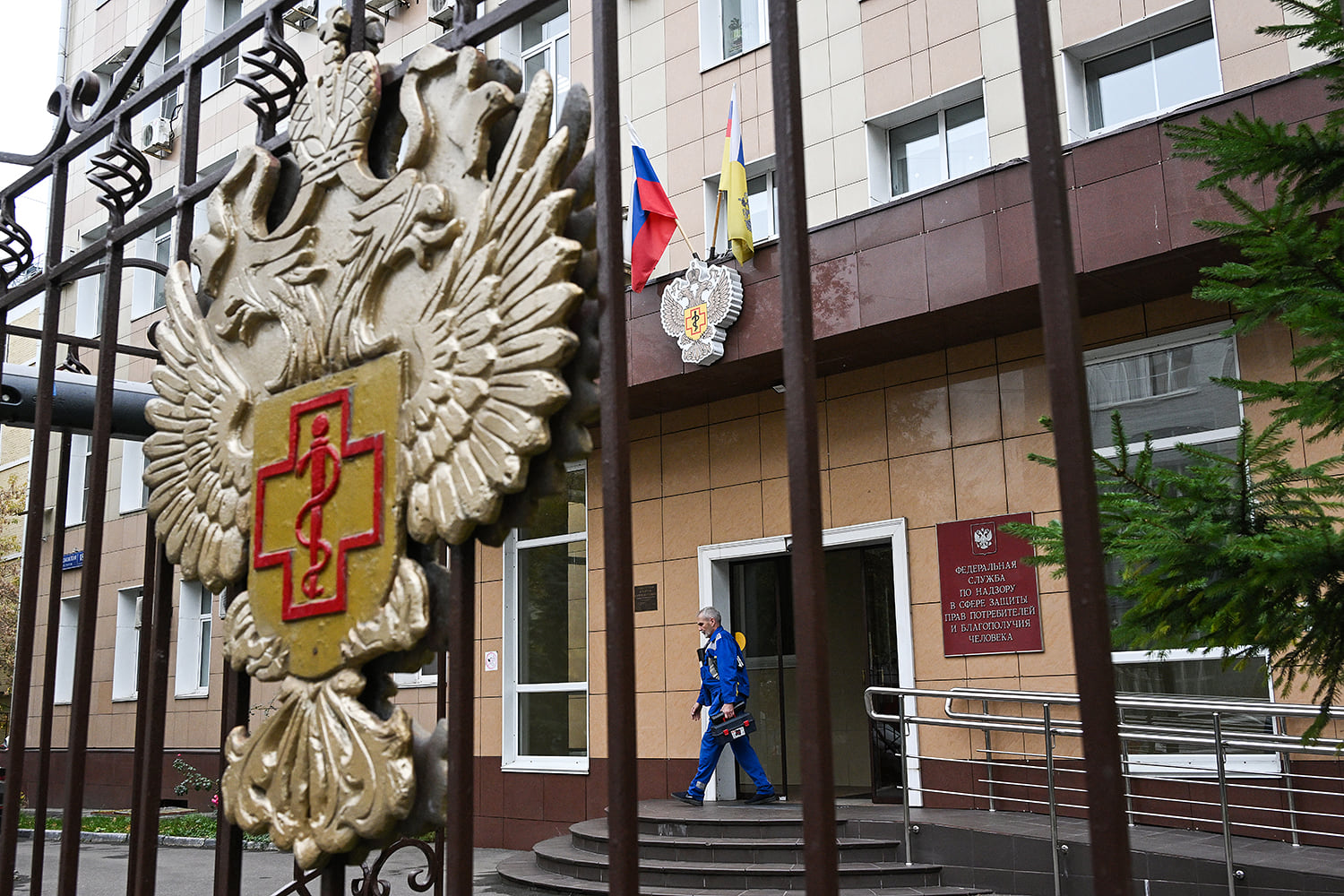
The headquarters of Russia's consumer and health watchdog, Rospotrebnadzor, in Moscow on Monday.Igor Ivanko / AFP via GettySecretary of State Marco Rubio said Monday that even though there is “very limited travel between the U.S. and Russia,” if “something like that gets out, it could quickly spread.”
President Donald Trump told reporters Monday the United States would do what it could to help Russia.
“I hate to see them having it,” Trump said. “It’s a rough disease.”
Meanwhile, some of Russia’s neighbors have been stepping up preventive measures and quarantine controls at border crossings.
The Kremlin has called for those concerned to heed official statements.
“Rospotrebnadzor provides comprehensive information,” Kremlin spokesman Dmitry Peskov said when reporters pressed him about rumors spreading amid sparse official statements.
Peskov also deferred to Rospotrebnadzor when asked if the worker’s lab results would be released or if an autopsy has been conducted.
On its website, the Irkutsk Anti-Plague Institute of Siberia and the Far East says it was founded in 1934 “as a scientific and operational body for combating plague,” but over the years, its scope of responsibility expanded to include “other highly dangerous diseases,” including cholera and anthrax.
The institute says it’s a “multidisciplinary research and anti-epidemic facility” that helps ensure epidemic safety in the region.
Yuliya TalmazanYuliya Talmazan is a reporter for NBC News Digital, based in London.